Getting Started with BankSync
Complete guide to setting up BankSync and syncing your financial data to Notion, Airtable, or Google Sheets.
2 min read
On this page
BankSync lets you automatically sync your banking data to tools like Google Sheets, Excel, Notion, and Airtable. This guide walks you through the complete setup process.
Your workspace is organized into tabs along the top: Feeds, Banks, Integrations, Enrichments, Portals, and Settings. You will spend most of your time in the first three.
Feeds
Your data sync configurations
Banks
Connected bank accounts
Integrations
Connected apps like Google Sheets, Excel, Notion, and Airtable
Enrichments
Sixteen processing steps that clean, categorize, guard and watch your data as it syncs
Quick Start Guide#
Get syncing in 3 steps
Connect Your Bank
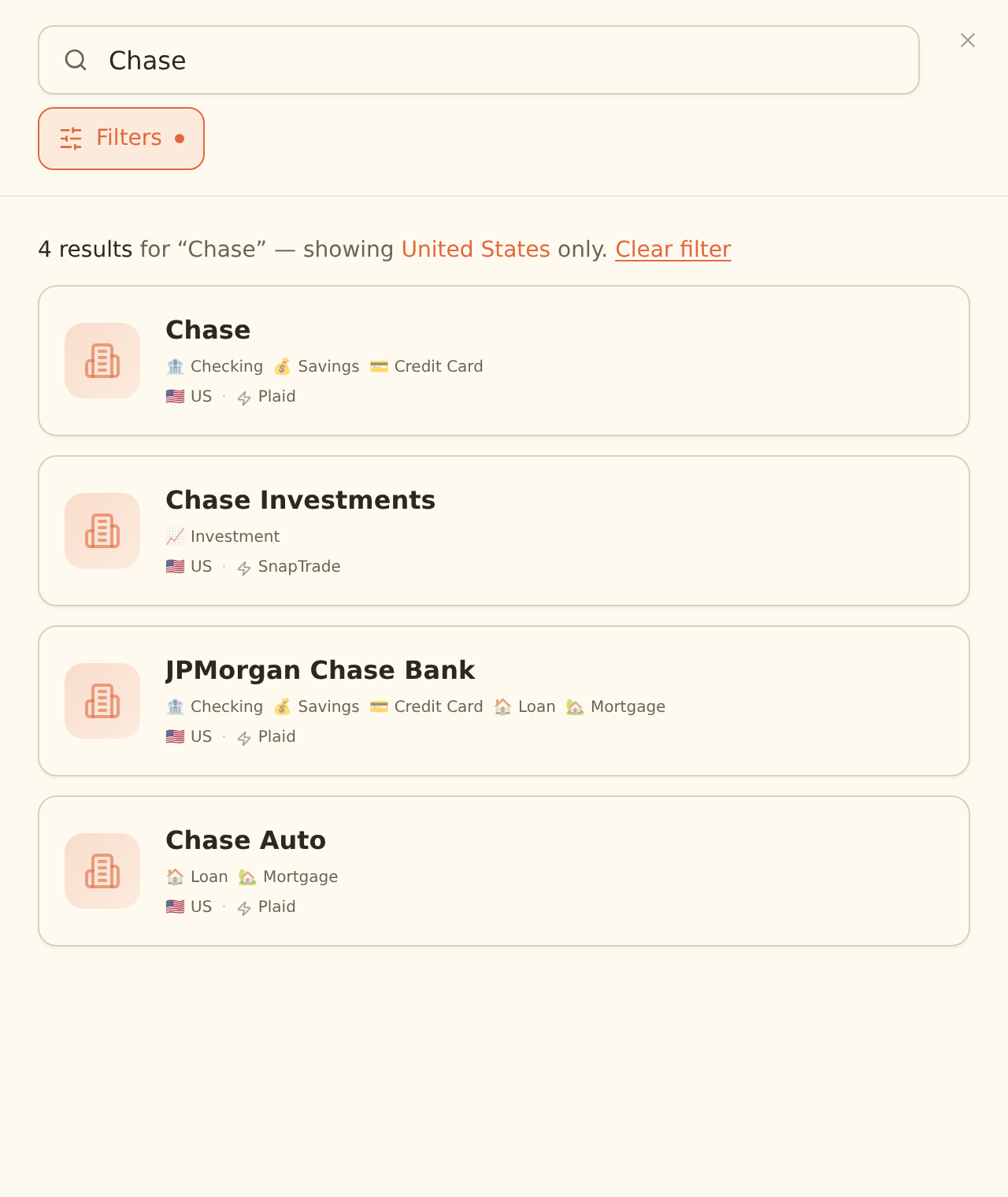
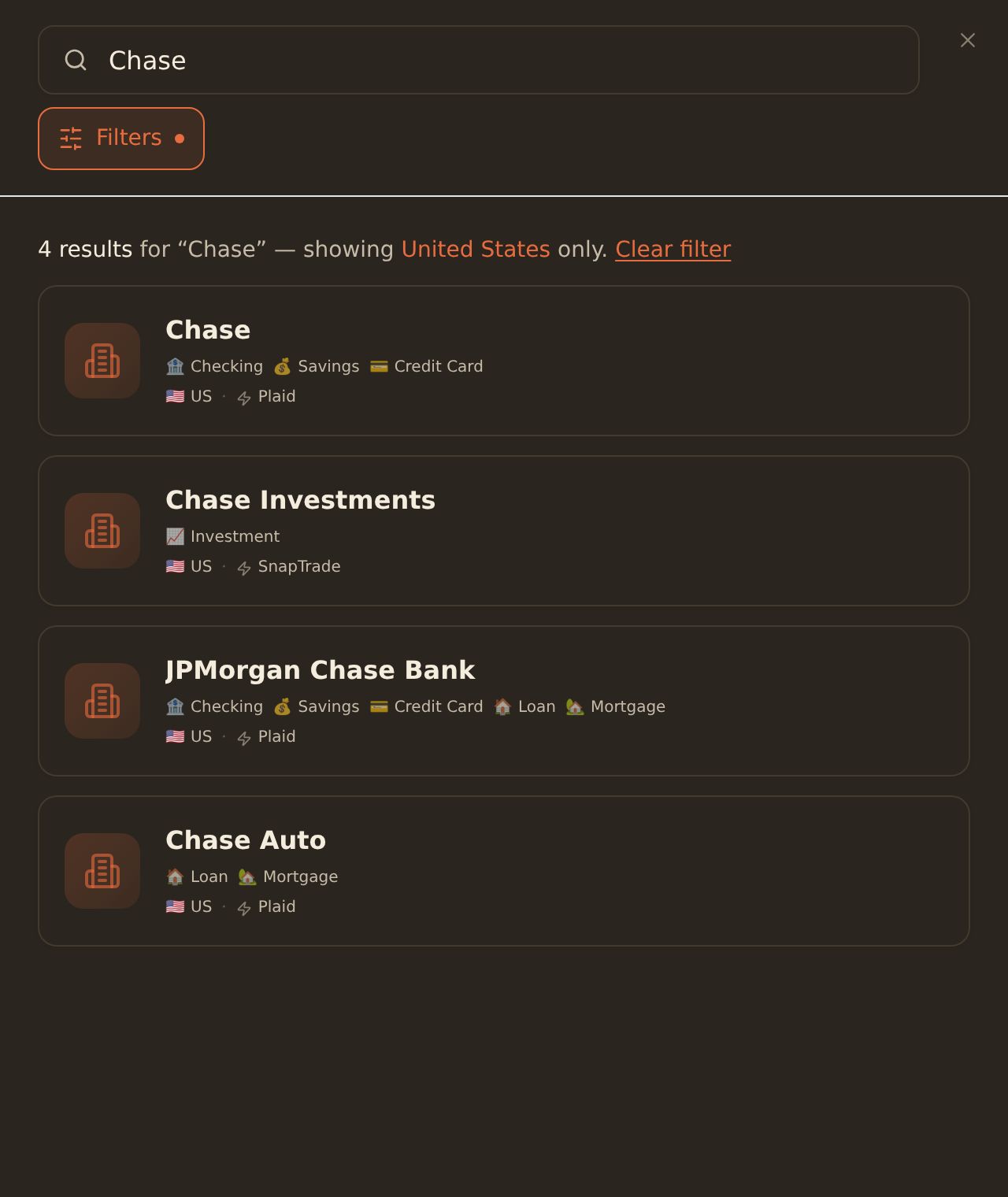
Go to the Banks tab and click "Add Bank". Select your region, search for your bank, and complete the secure authentication flow with your institution.
Add an Integration
Go to the Integrations tab and connect Google Sheets, Excel, Notion, or Airtable by completing the authorization flow.
Create a Feed
Go to the Feeds tab and click the + button. Configure your feed across its tabs: Overview, Sources, Destination, Mapping, and Schedule.
Bank connections start on the Starter plan
Auto-Save
What Can You Sync?#
Transactions
Individual transaction records from checking, savings, and credit card accounts
Balances
Account balance snapshots for net worth tracking over time
Trades
Investment transactions like buys, sells, and dividends from brokerage accounts
Holdings
Current portfolio positions including quantity, value, and cost basis
Loans
Loan and credit card data including balances, rates, and payment info
Creating a Feed#
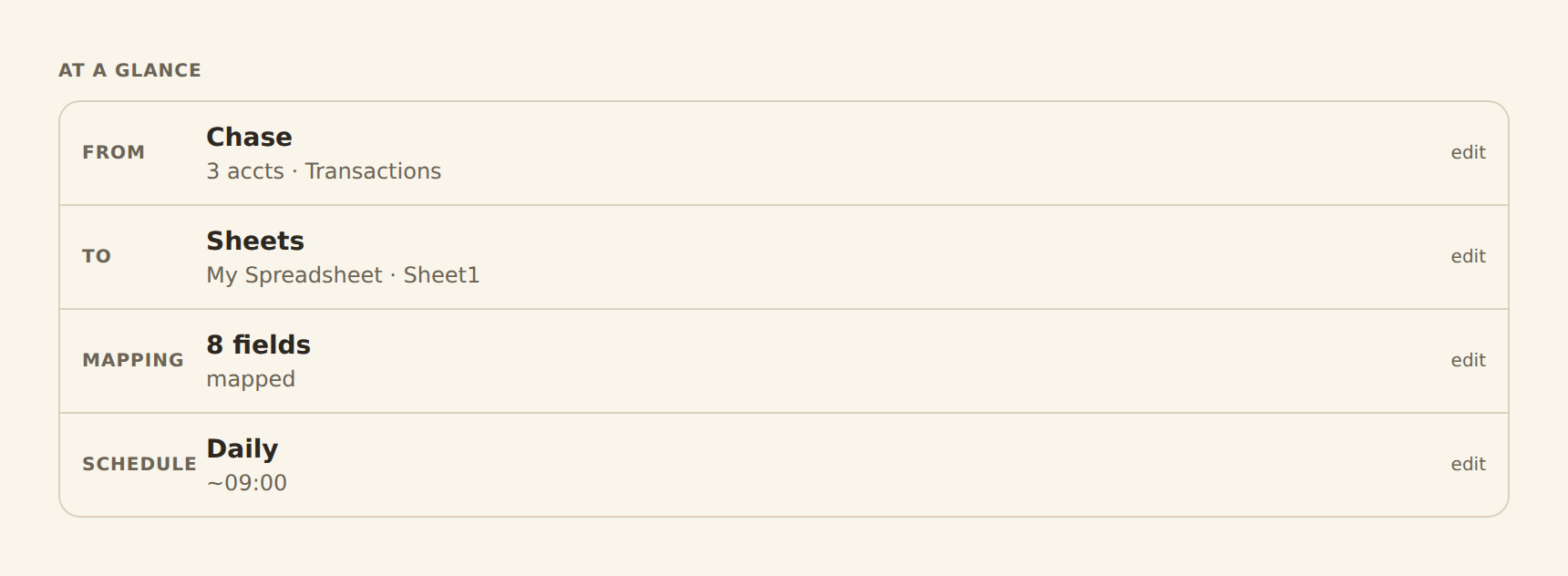
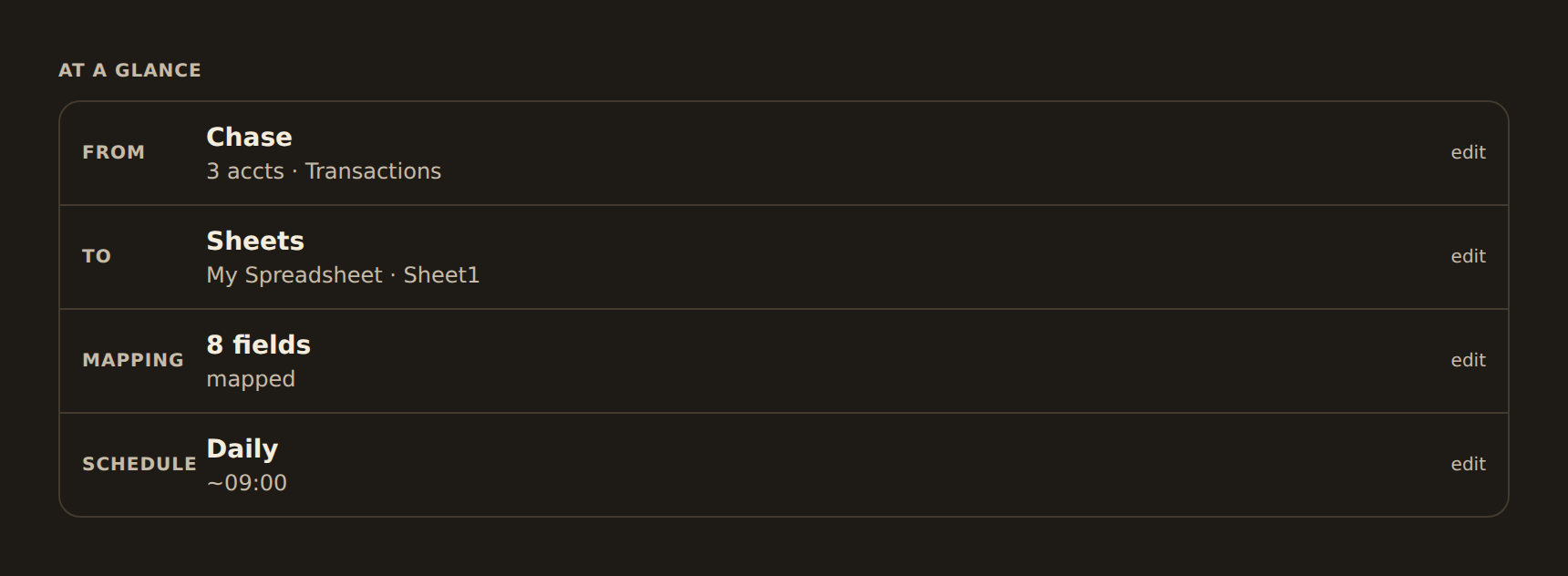
When you create or edit a feed, the editor is organized into five tabs:
Overview
A summary of the feed and its sync statusSources
Select which bank accounts to pull data fromDestination
Choose where to send the data (Google Sheets, Excel, Notion, Airtable, or a database)
Mapping
Map data fields to the columns or properties in your sheet, database, or table
Schedule
Optionally set up automatic Hourly, Daily, or Weekly syncs (or leave it Manual)
Sync cadence by plan
Running a Sync#
Once configured, you can run your sync in two ways:
Incremental Sync
Fetches only new data since your last sync. Fast and efficient for regular updates. This is the default option.
Date Range (Backfill)
Fetch historical data for a specific date range. Useful for initial setup or filling gaps in your data.
Security & Privacy#
Bank-Grade Security
- Read-only access: BankSync can only read your transaction data, never move money
- Credentials never stored: your bank login goes directly to your bank, not our servers
- Encrypted in transit and at rest: all data is protected with industry-standard encryption
Get Started Now
Related guides#
- Connecting banks: a detailed guide for connecting your financial institution, region by region.
- Google Sheets integration: connect and configure the most popular integration.
- Creating your first feed: the step-by-step walkthrough of your first data sync.
- Managing your plan: plan limits, usage meters, and billing.
Use this page with your AI assistant
Every BankSync doc is available as plain Markdown for agents and LLMs.