Indian financial tools
Tools built on Income Tax Department rules and figures, in INR. Global tools — compounding, loan repayments — work the same everywhere and are listed under every country.
37 free tools. No sign-up, nothing stored.
82 tools · page 1 of 4
Compounding, goals, term deposits, and emergency funds.
Compound interest
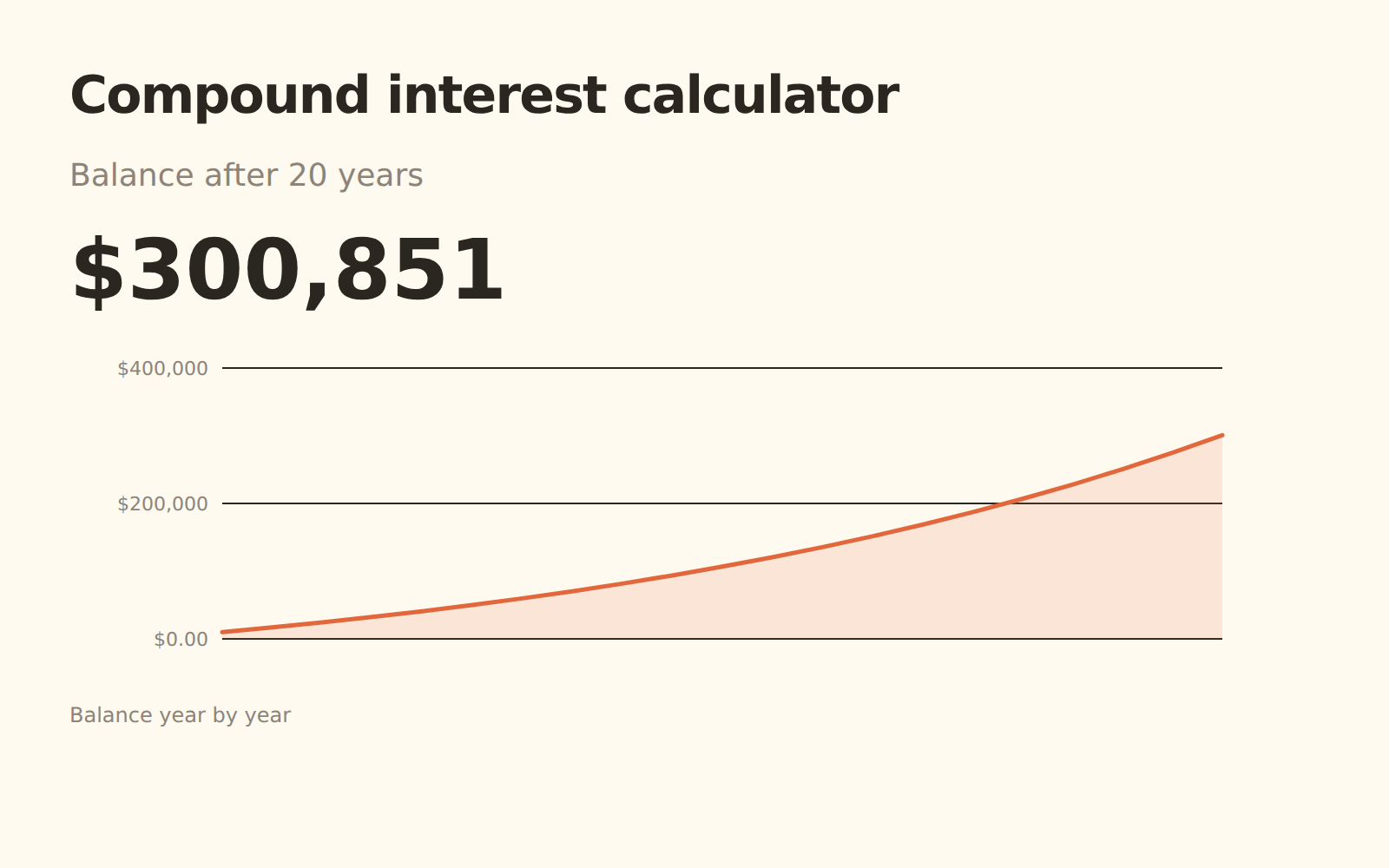
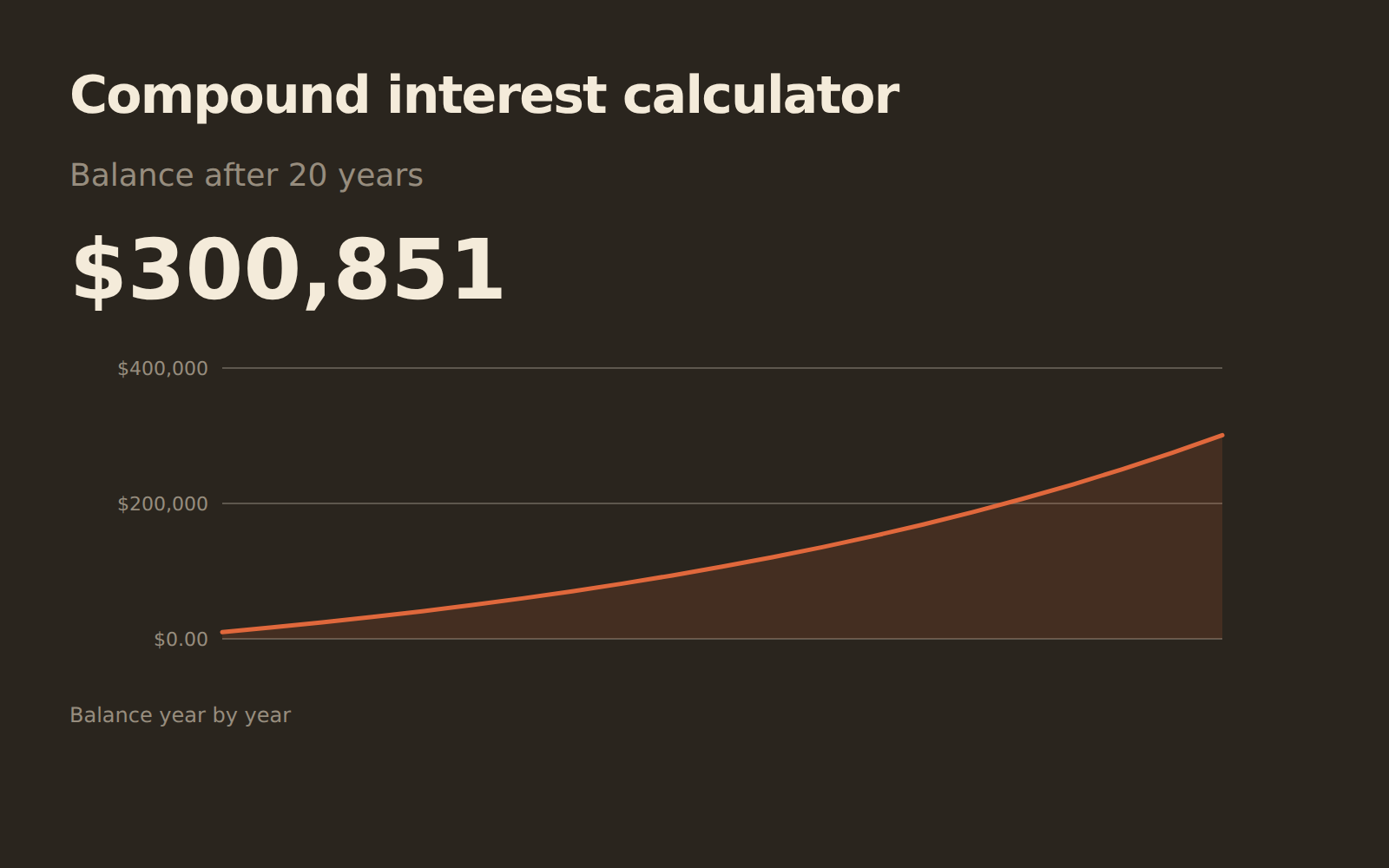
See what a starting balance plus regular deposits grows into, and how much of the final figure is interest rather than your own money.
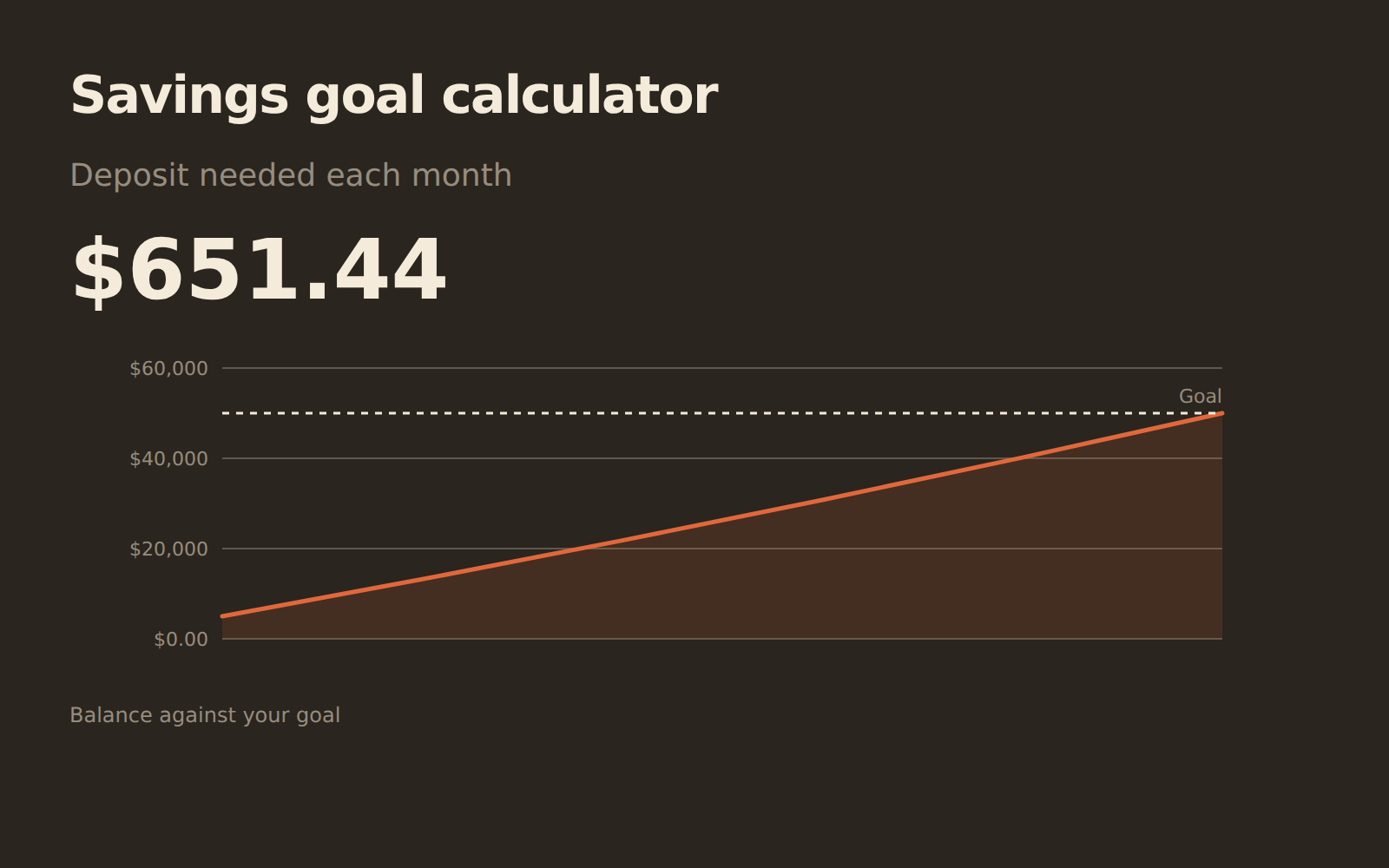
Savings goal
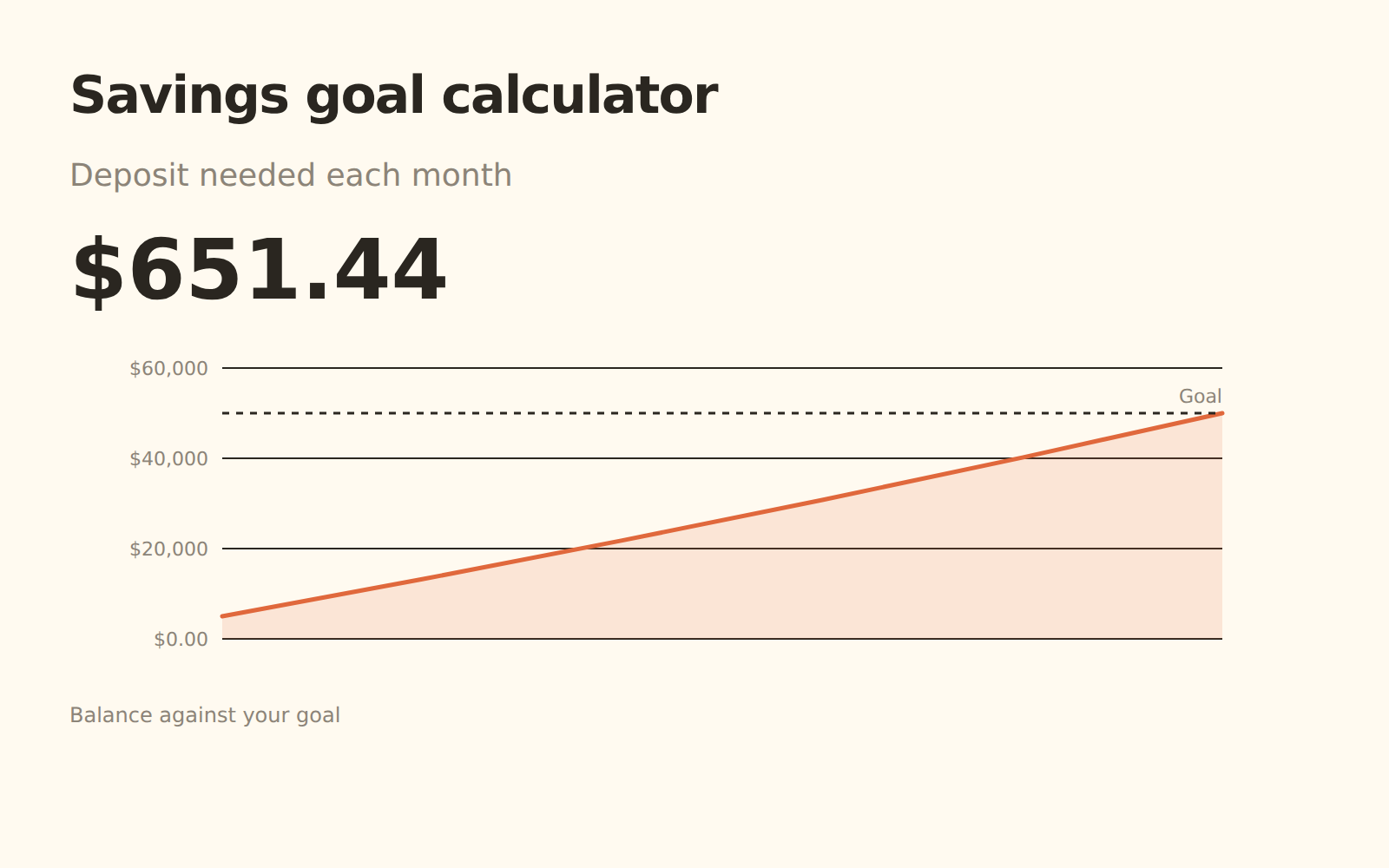
Pick a target and a deadline to get the monthly deposit, or pick a deposit to see when you get there.
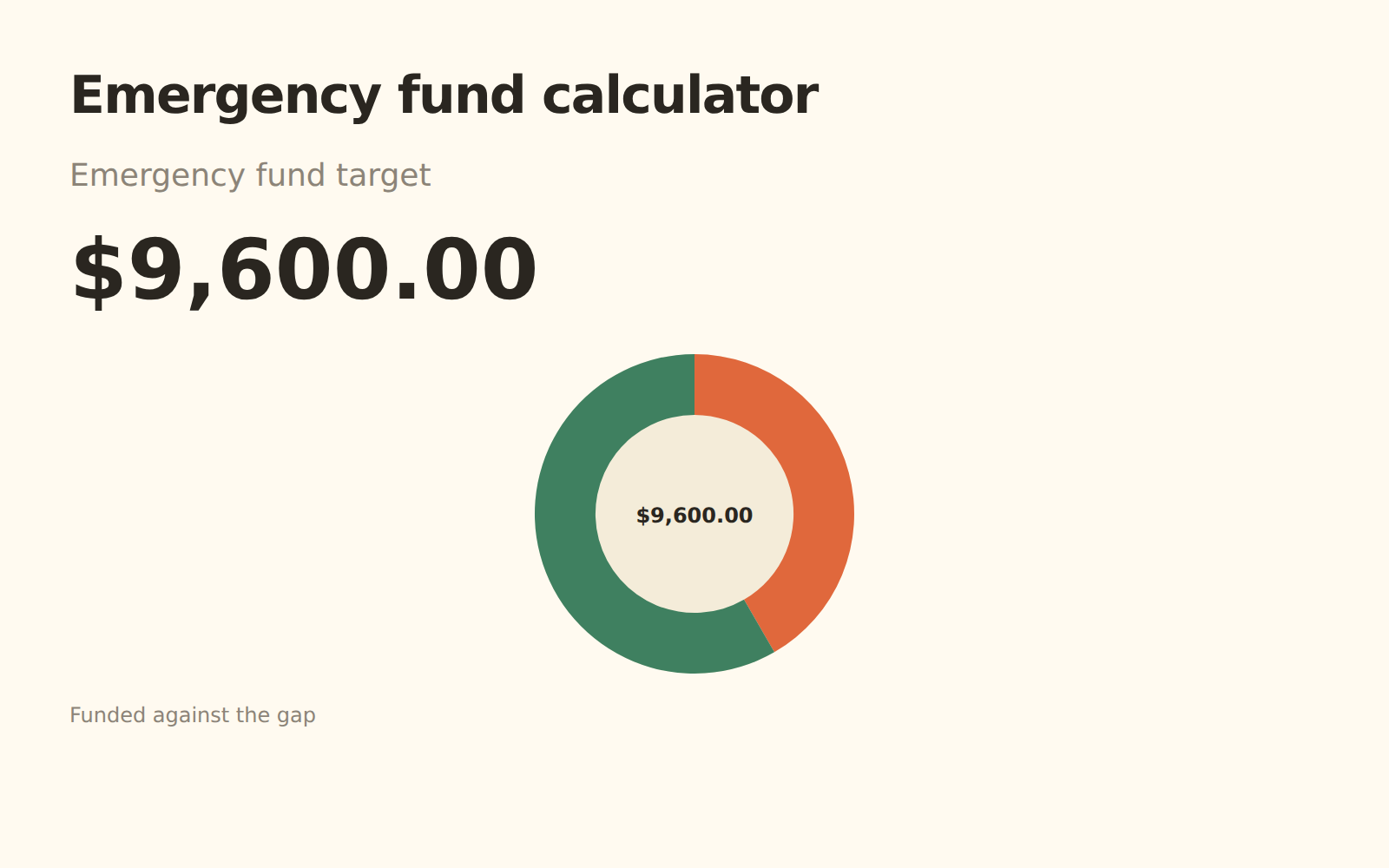
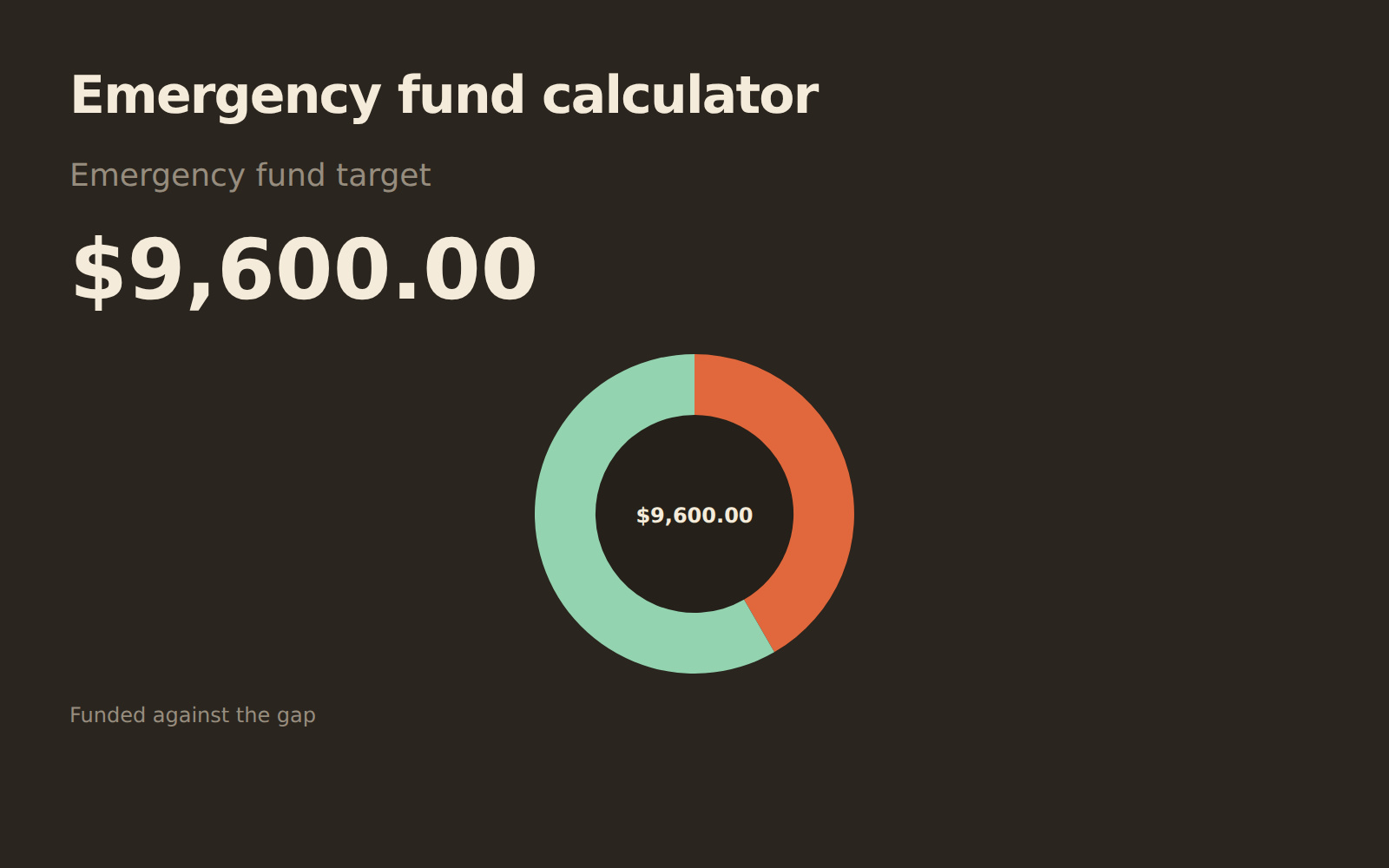
Emergency fund
Size a cash buffer against what you actually have to spend, not what you earn, and see how long it takes to fill.
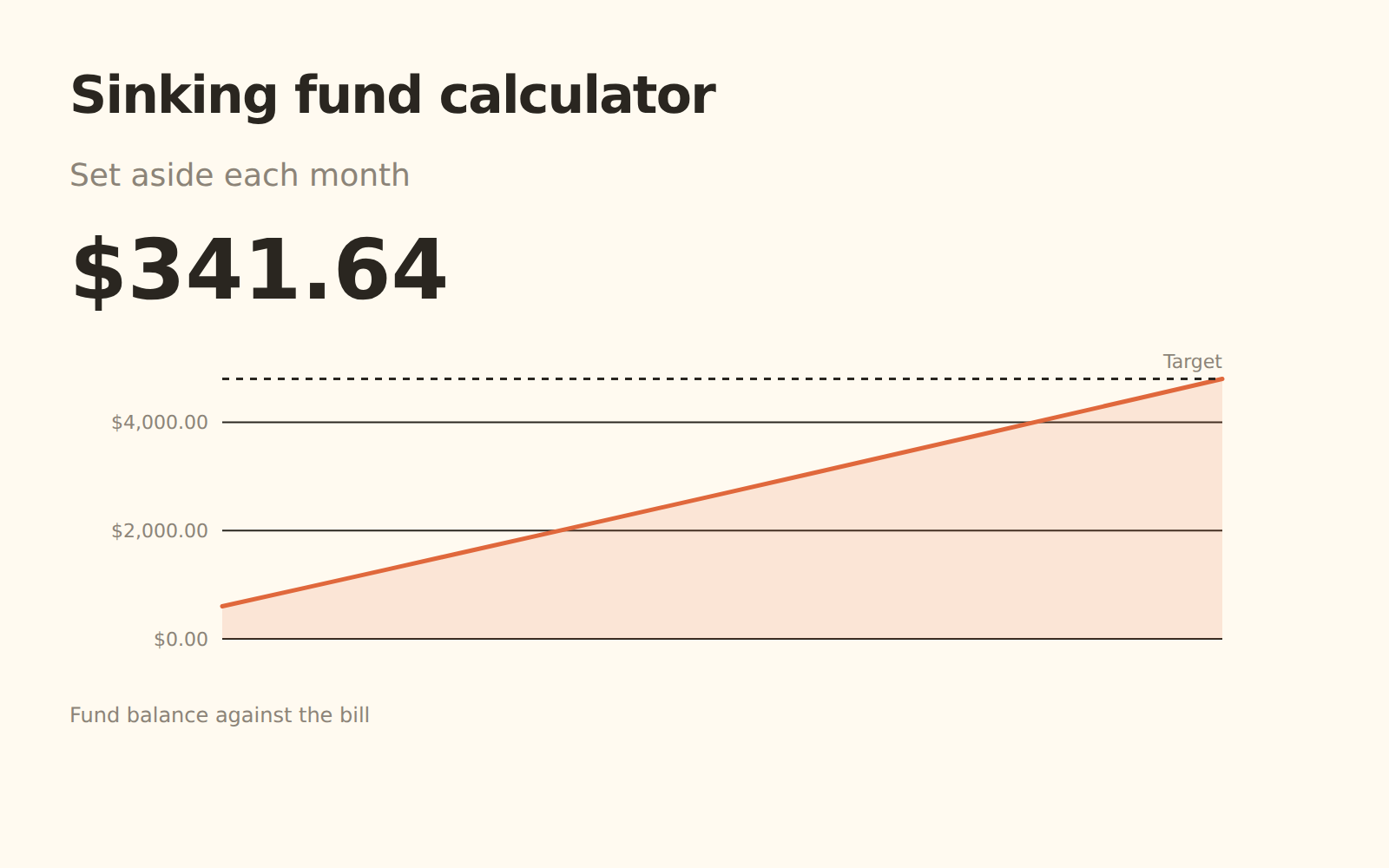
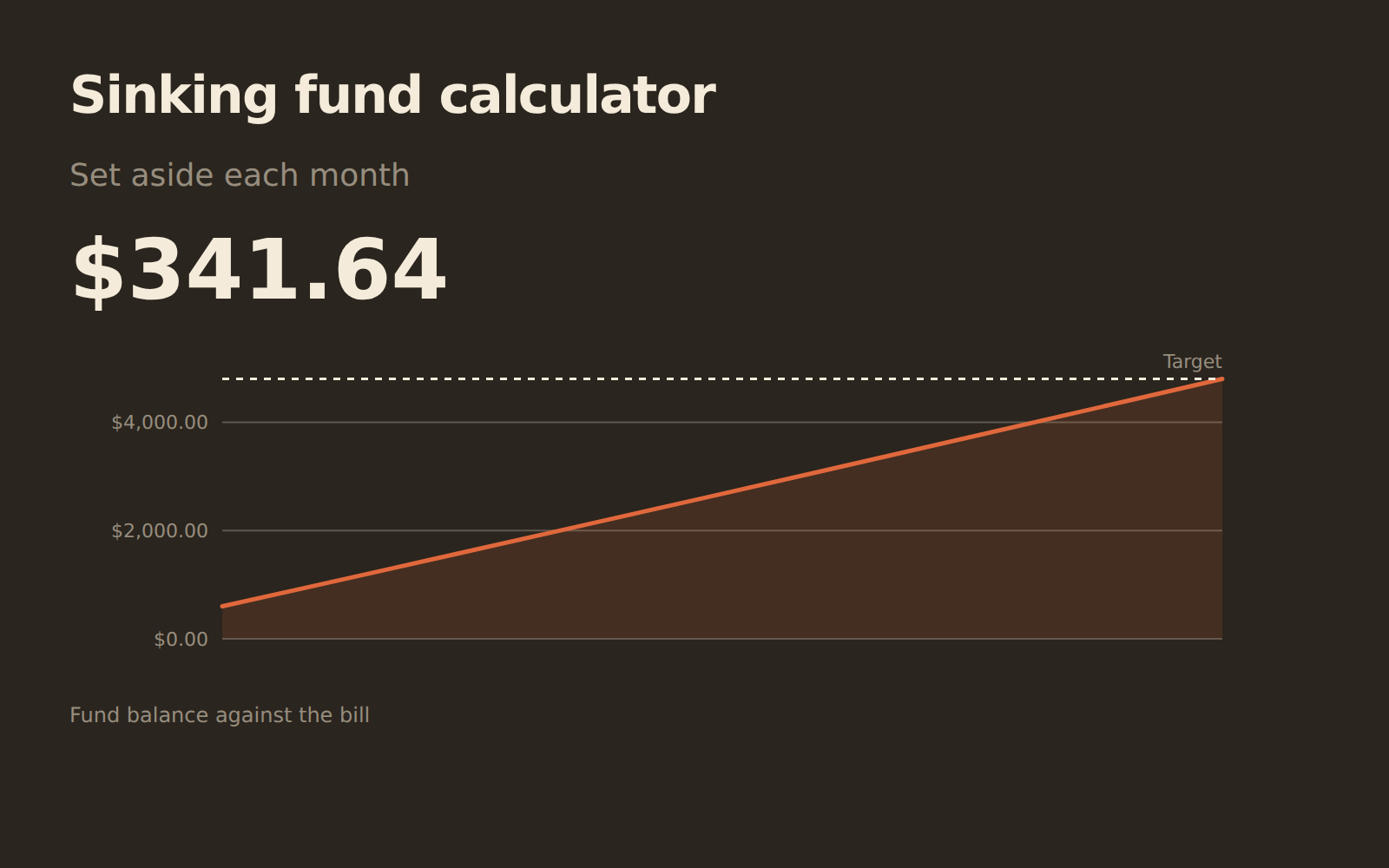
Sinking fund
Turn a lumpy future bill — insurance, a car service, Christmas, a replacement laptop — into a flat monthly amount.
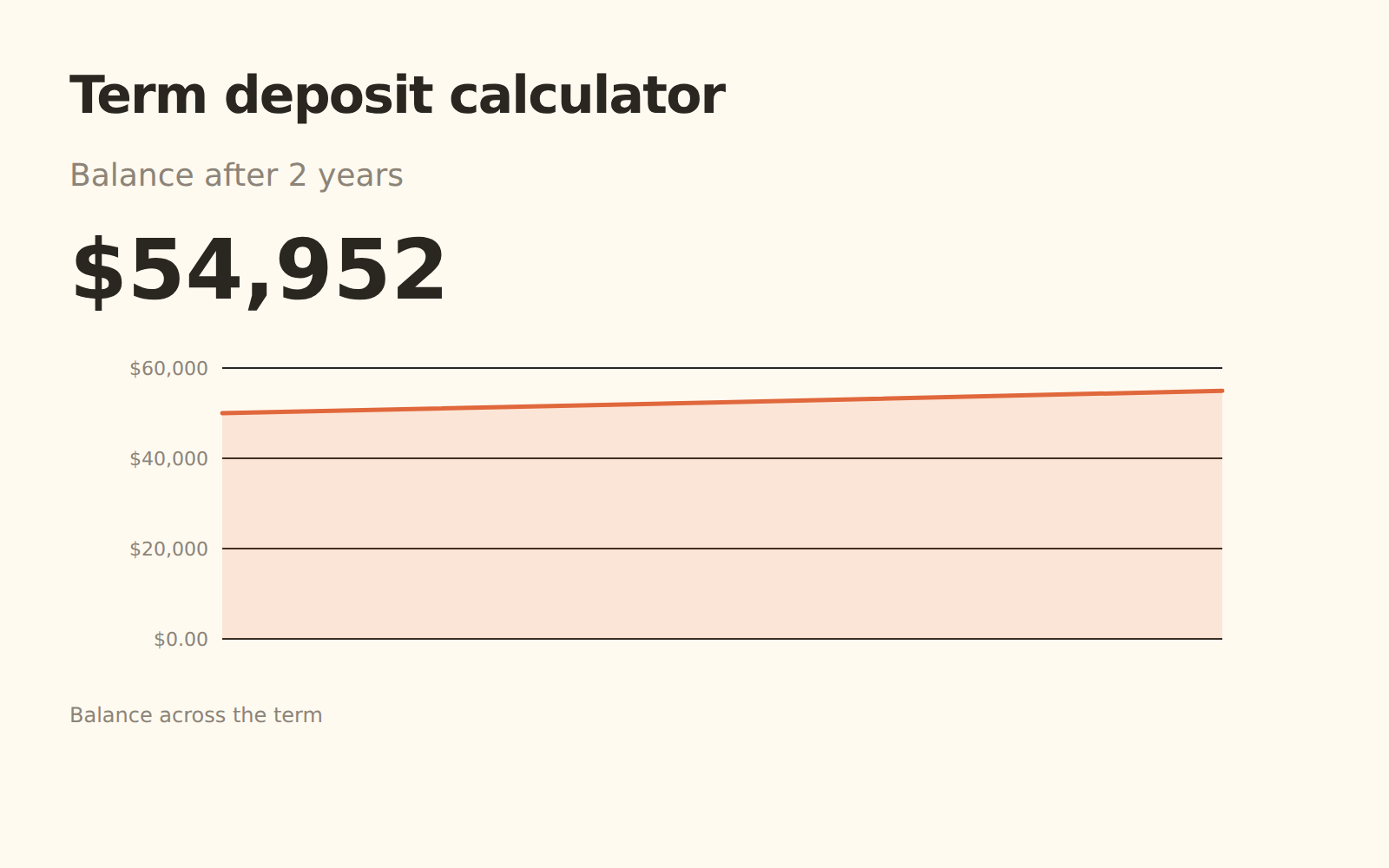
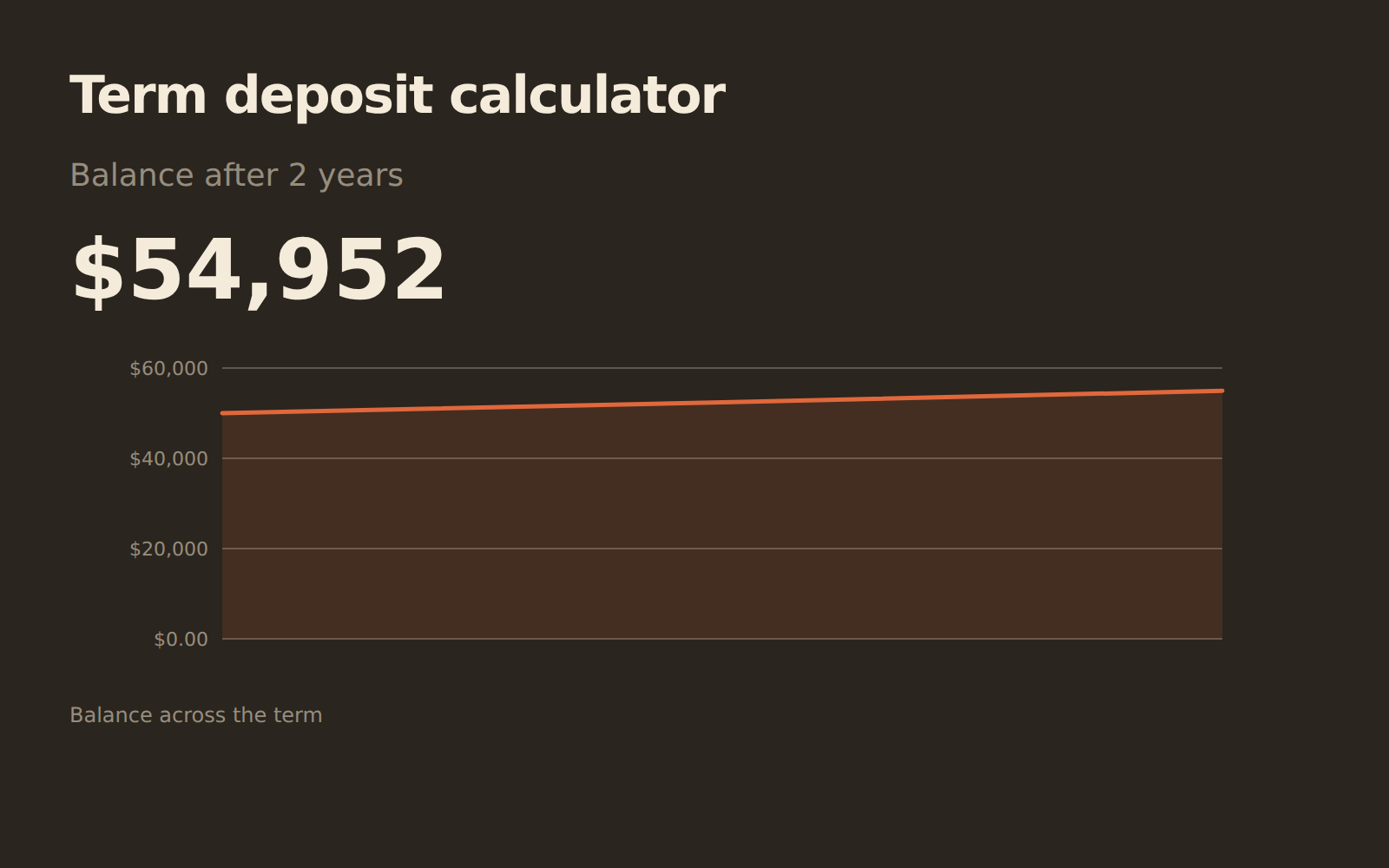
Term deposit
What a fixed-rate deposit pays at maturity, and how much difference the interest-payment frequency makes.
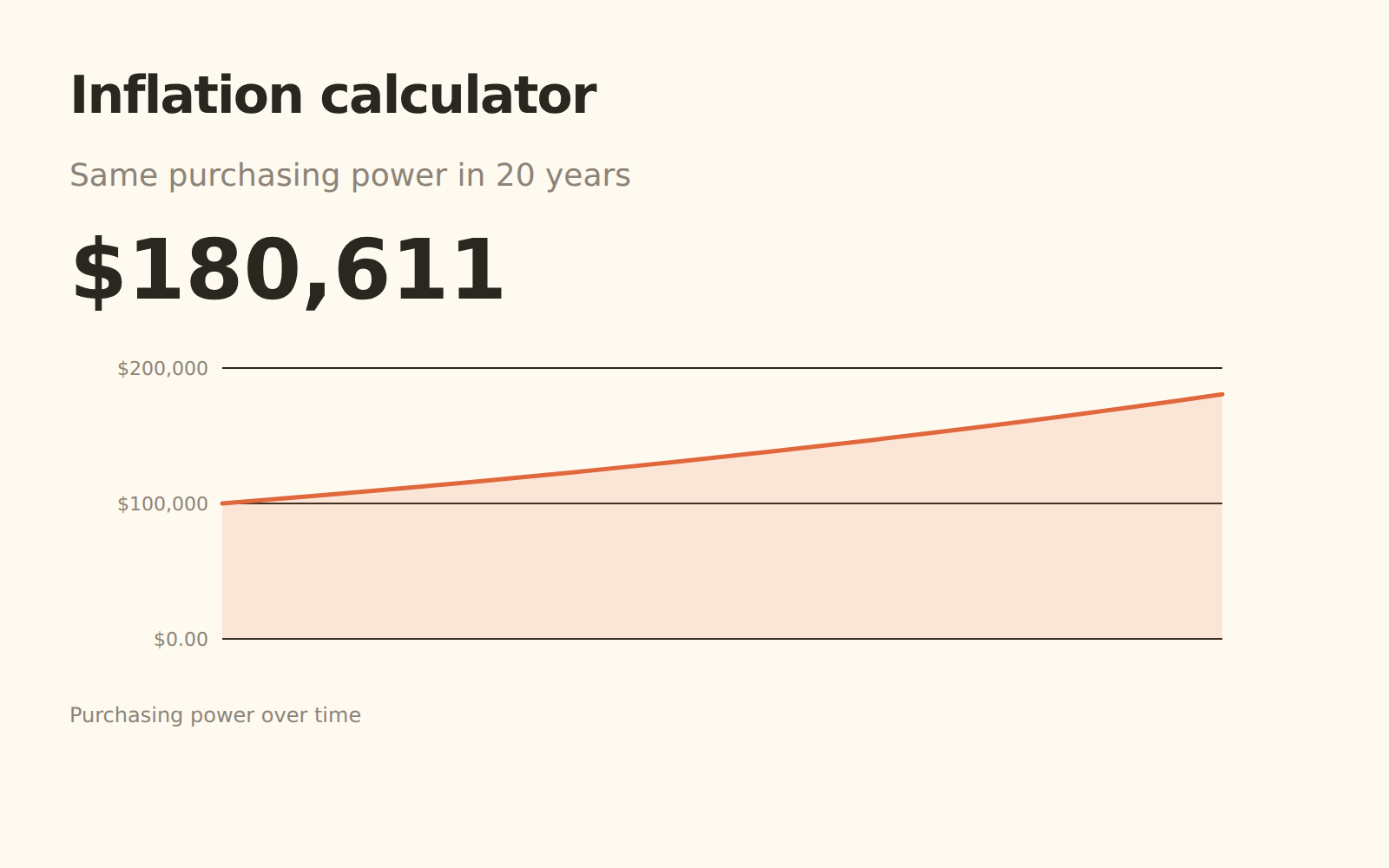
Inflation
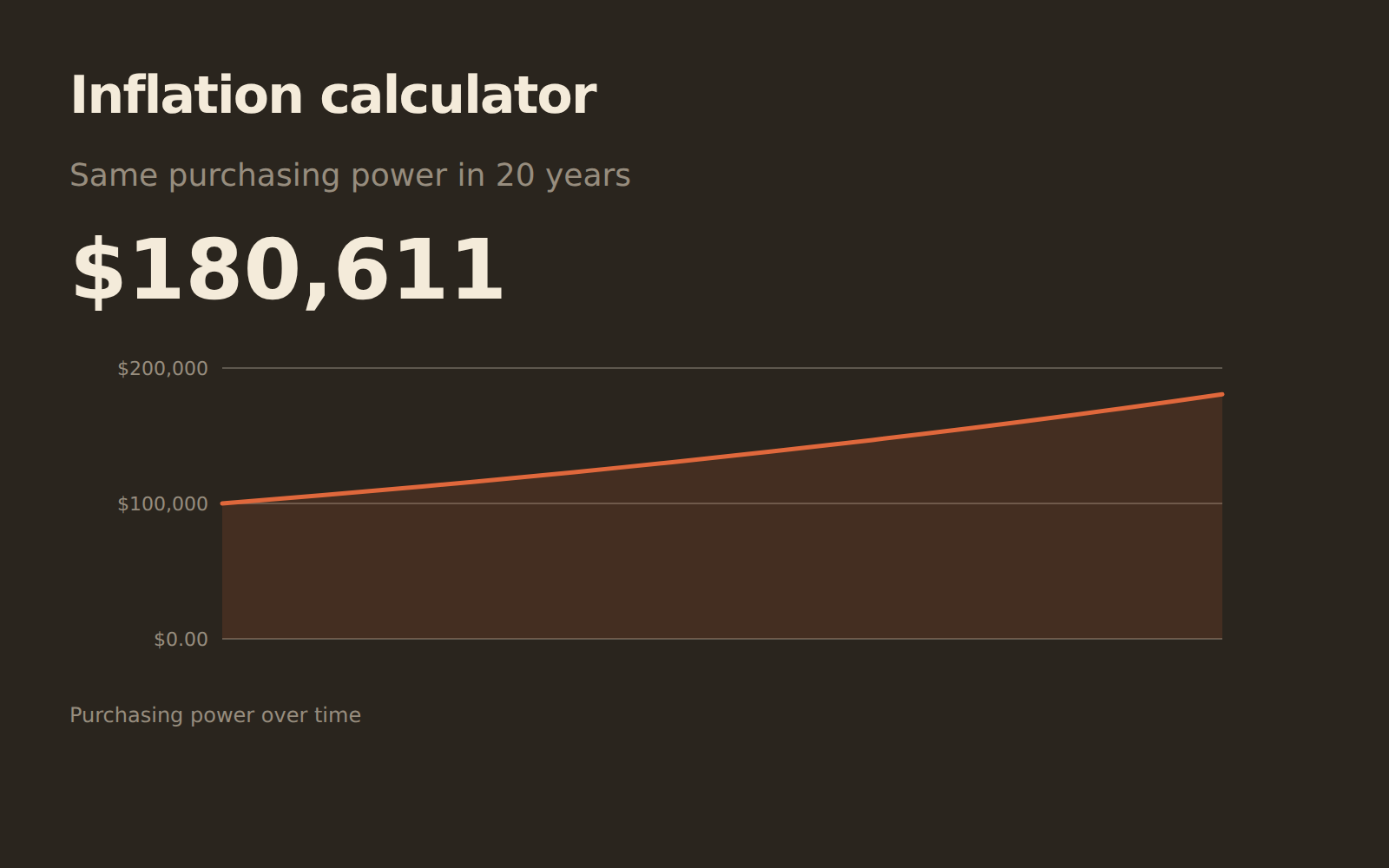
What an amount of money is worth after inflation, forwards or backwards, and how much purchasing power the years take out of it.
APY
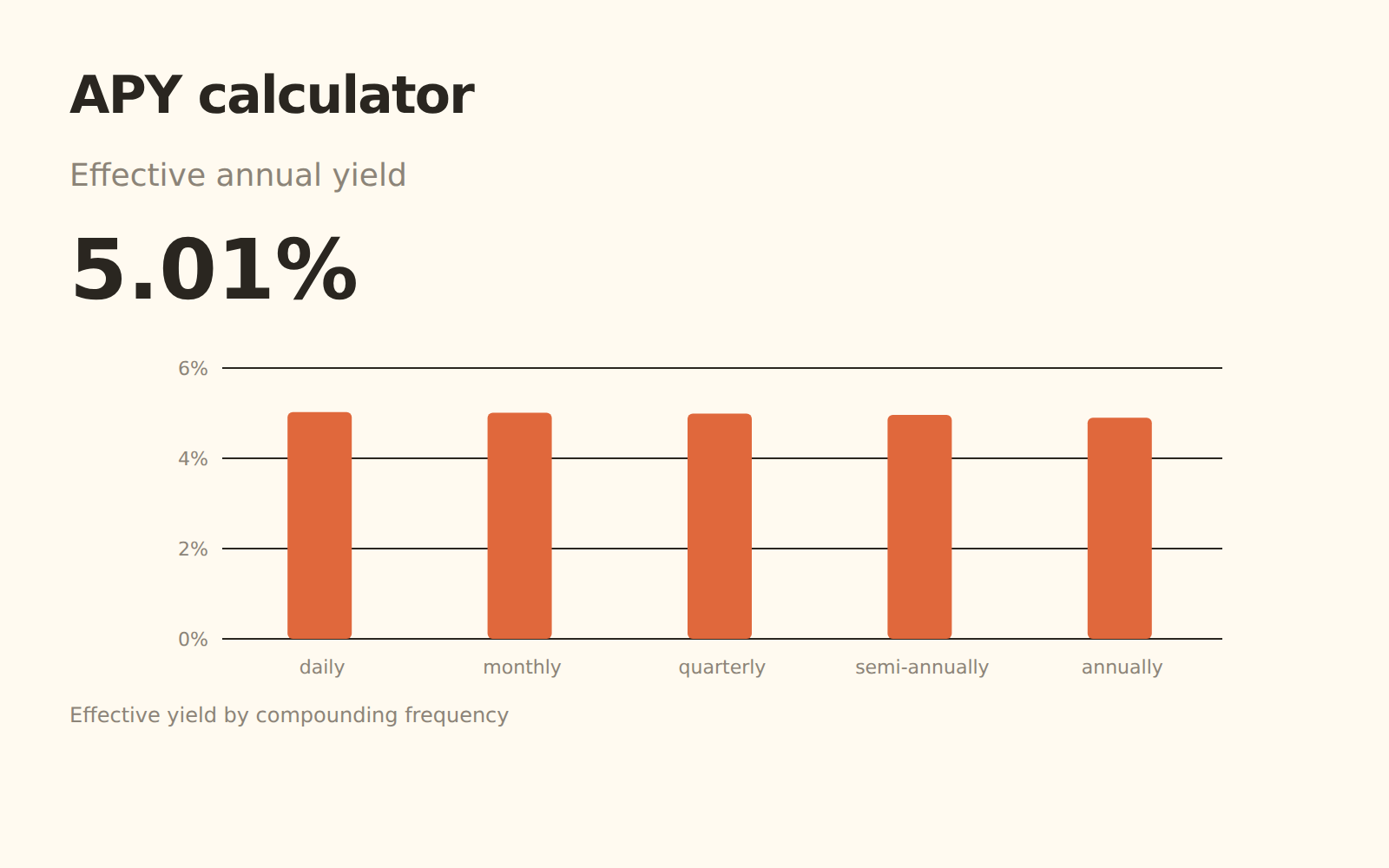
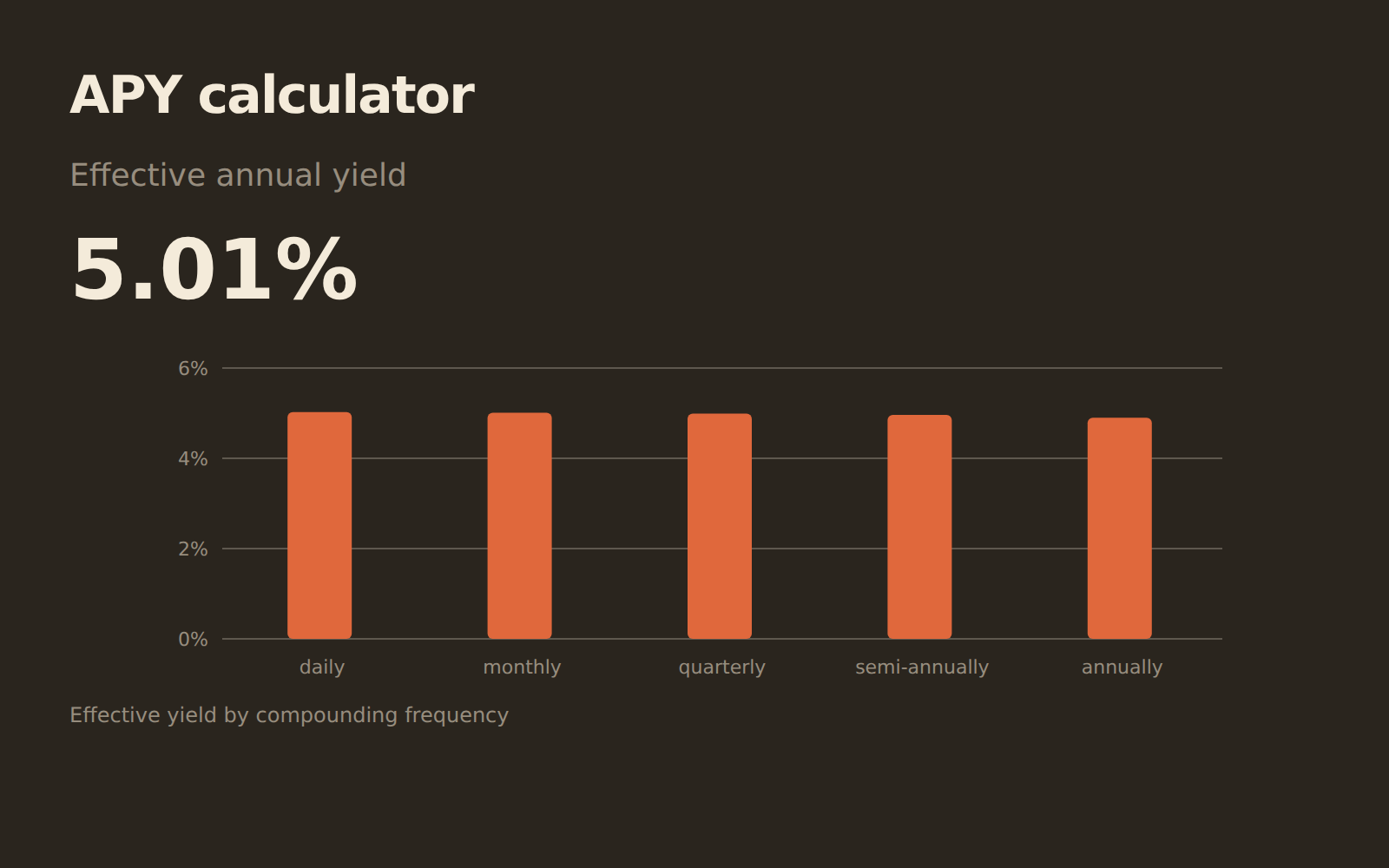
Convert an advertised nominal rate into the yield you actually earn, and see what the compounding frequency is worth on your balance.
Repayments, borrowing power, stamp duty, and yield.
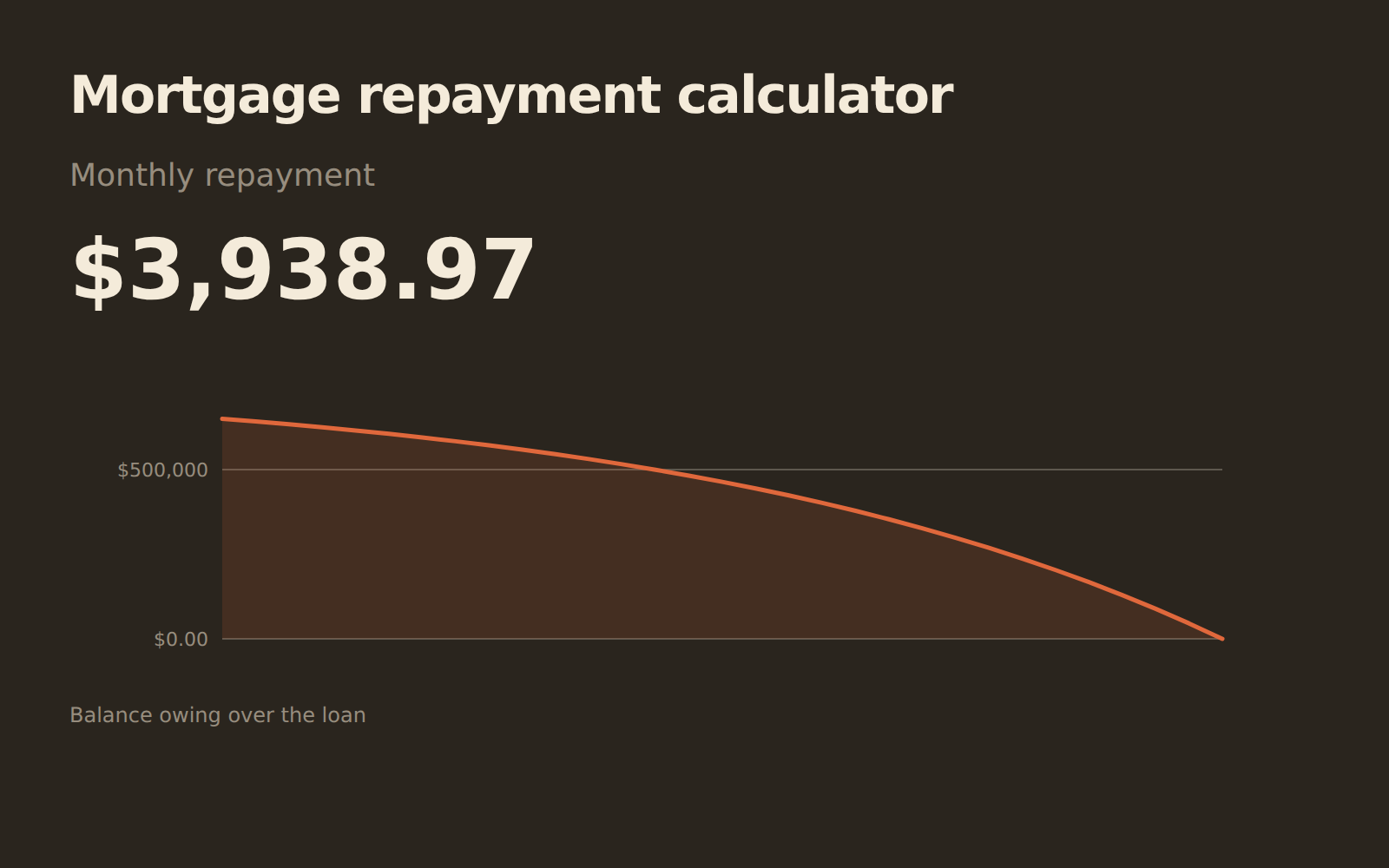
Mortgage repayment
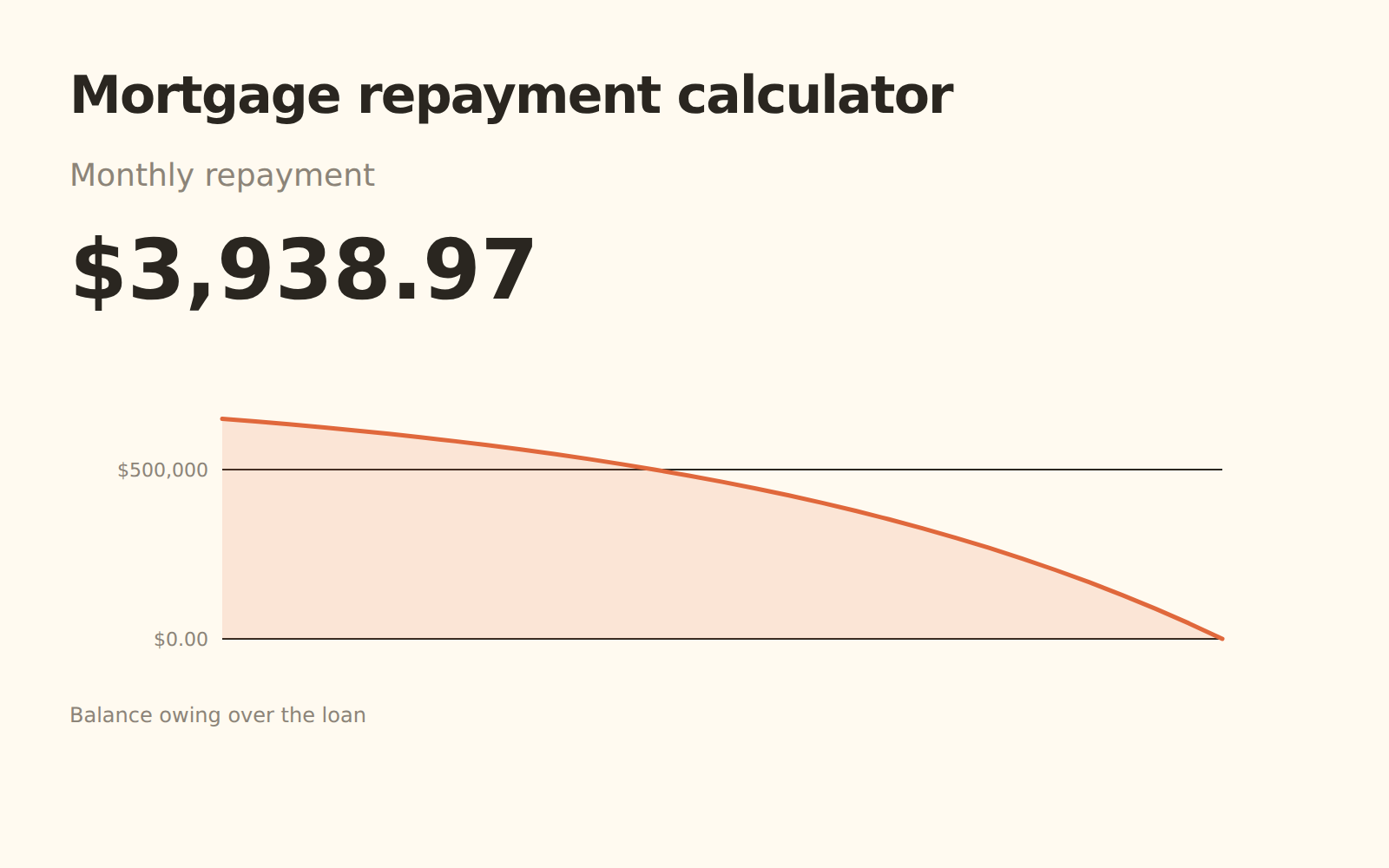
Work out the repayment on a home loan, how much of it is interest, and what paying a little extra each period actually saves you.
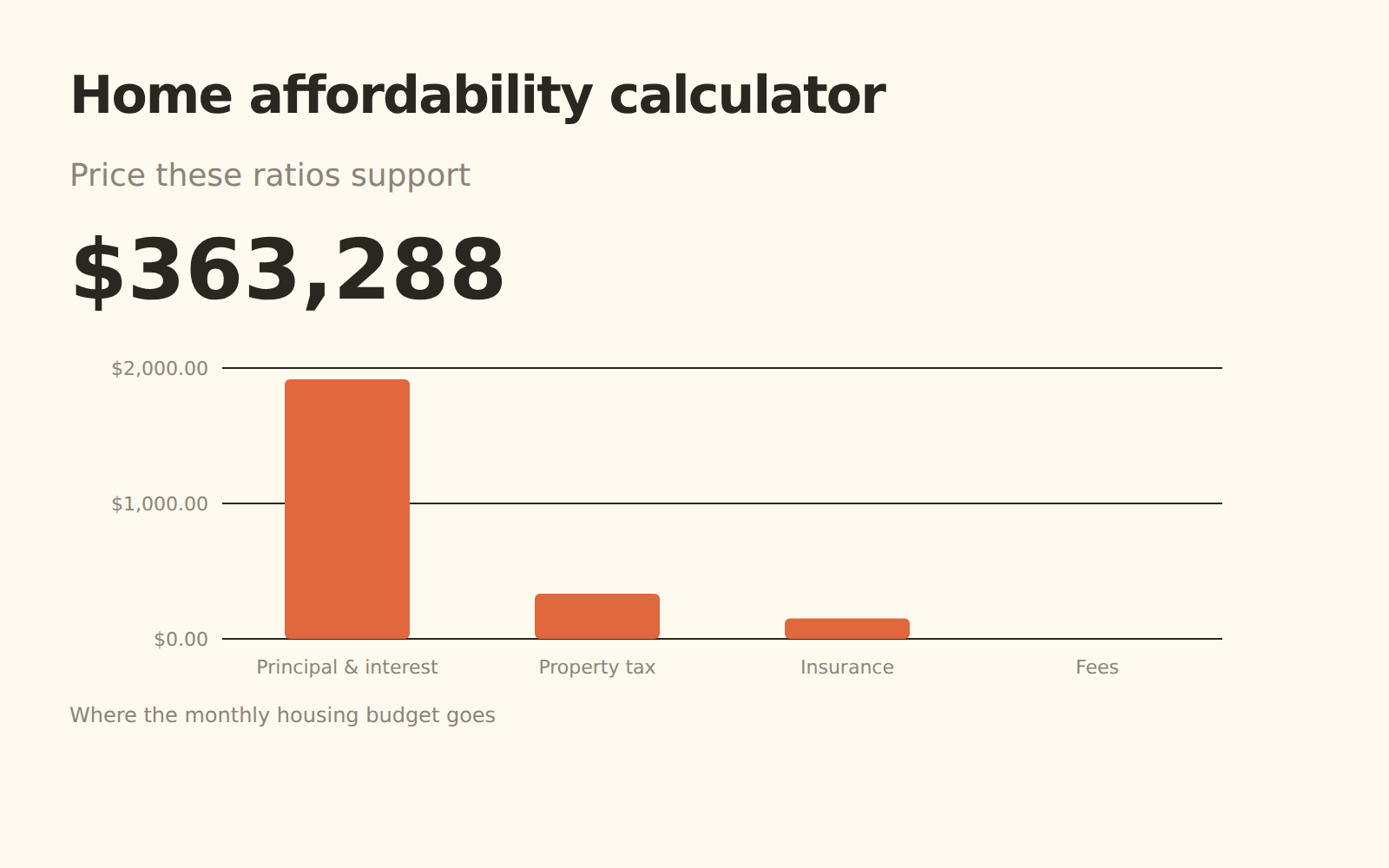
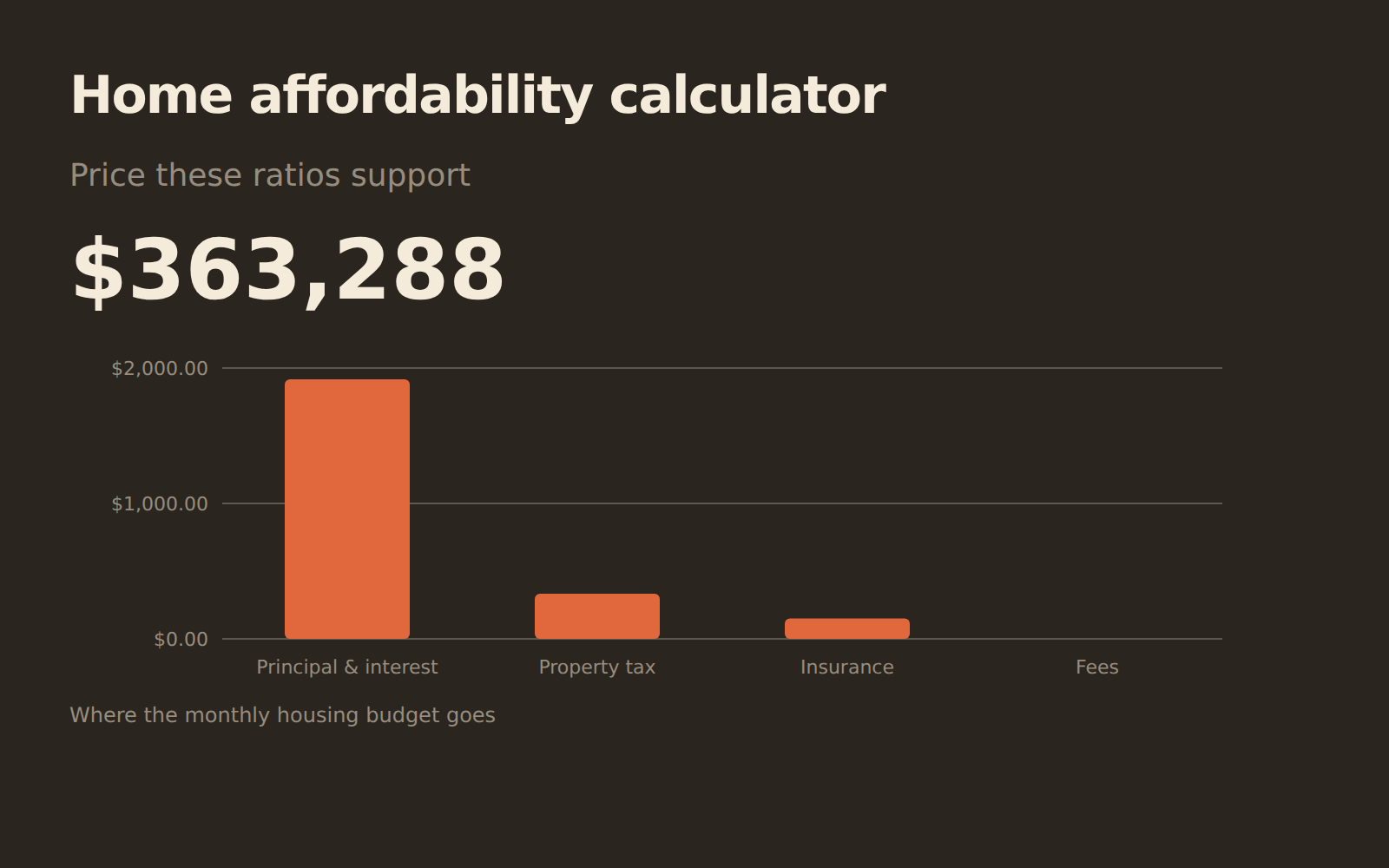
Home affordability
What the standard 28/36 lending ratios allow you to buy, which of the two is actually limiting you, and what your other debts are costing in purchase price.
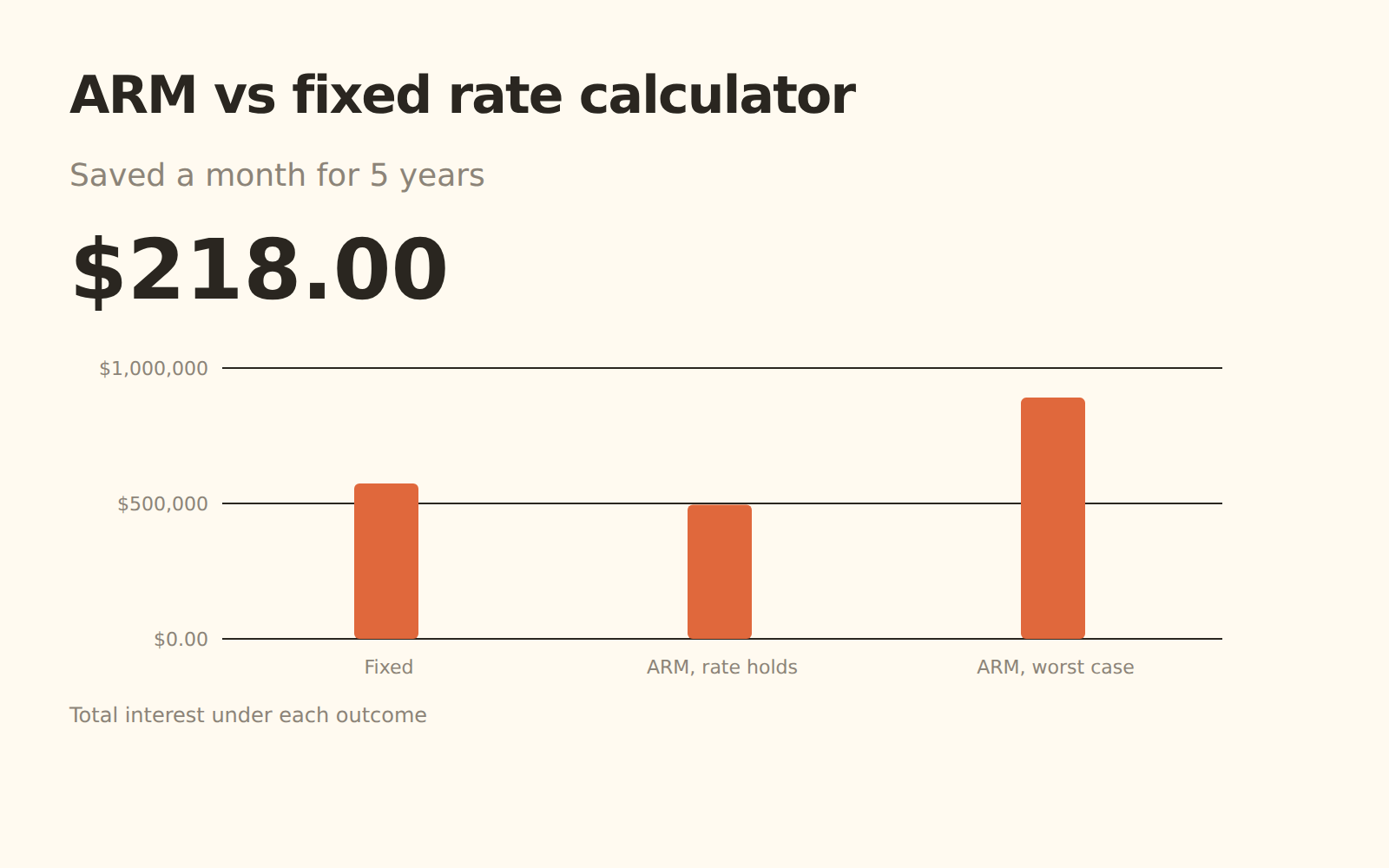
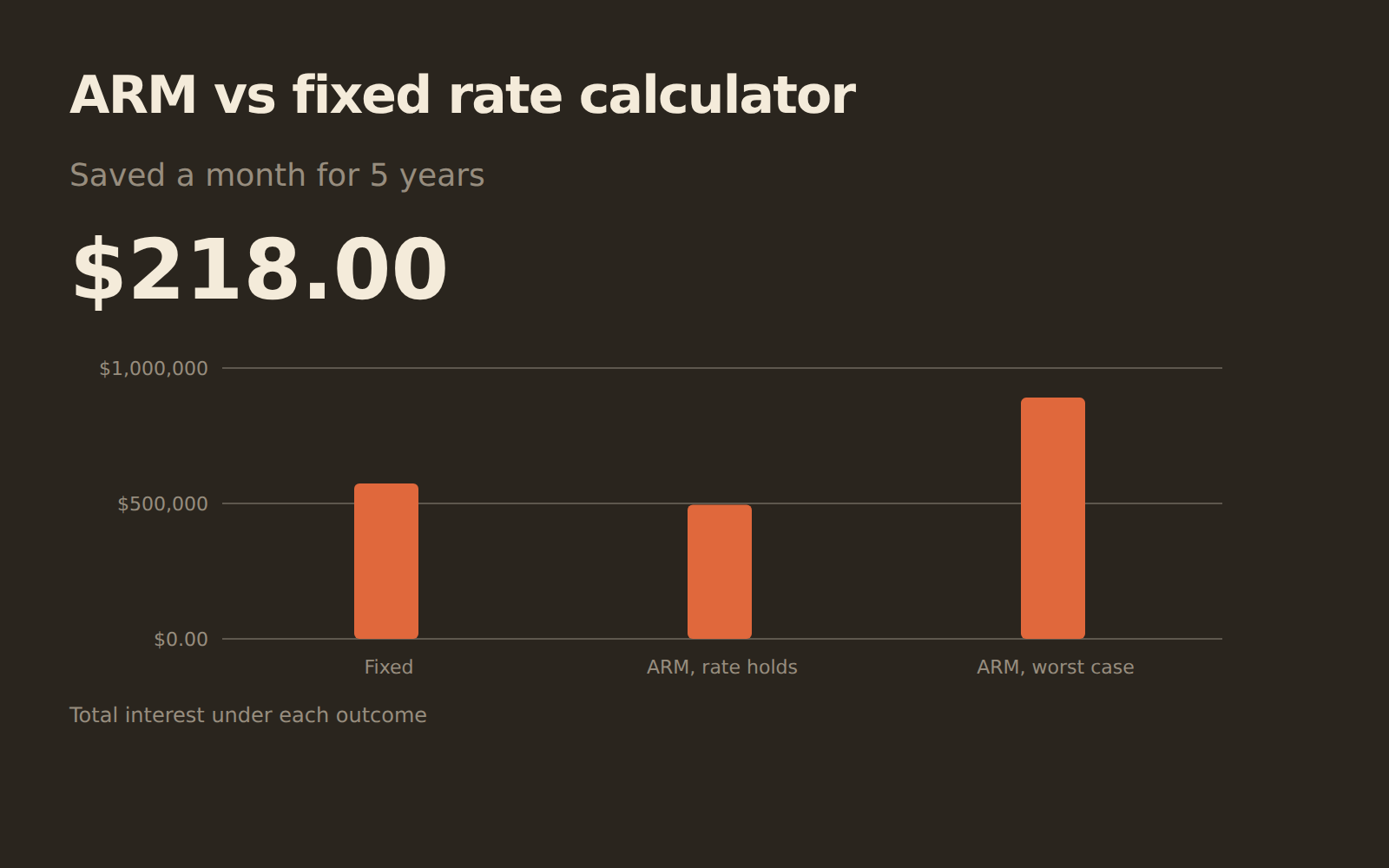
ARM vs fixed rate
What an adjustable rate saves you while the starting rate holds, and what it costs if the rate climbs as far as your caps allow.
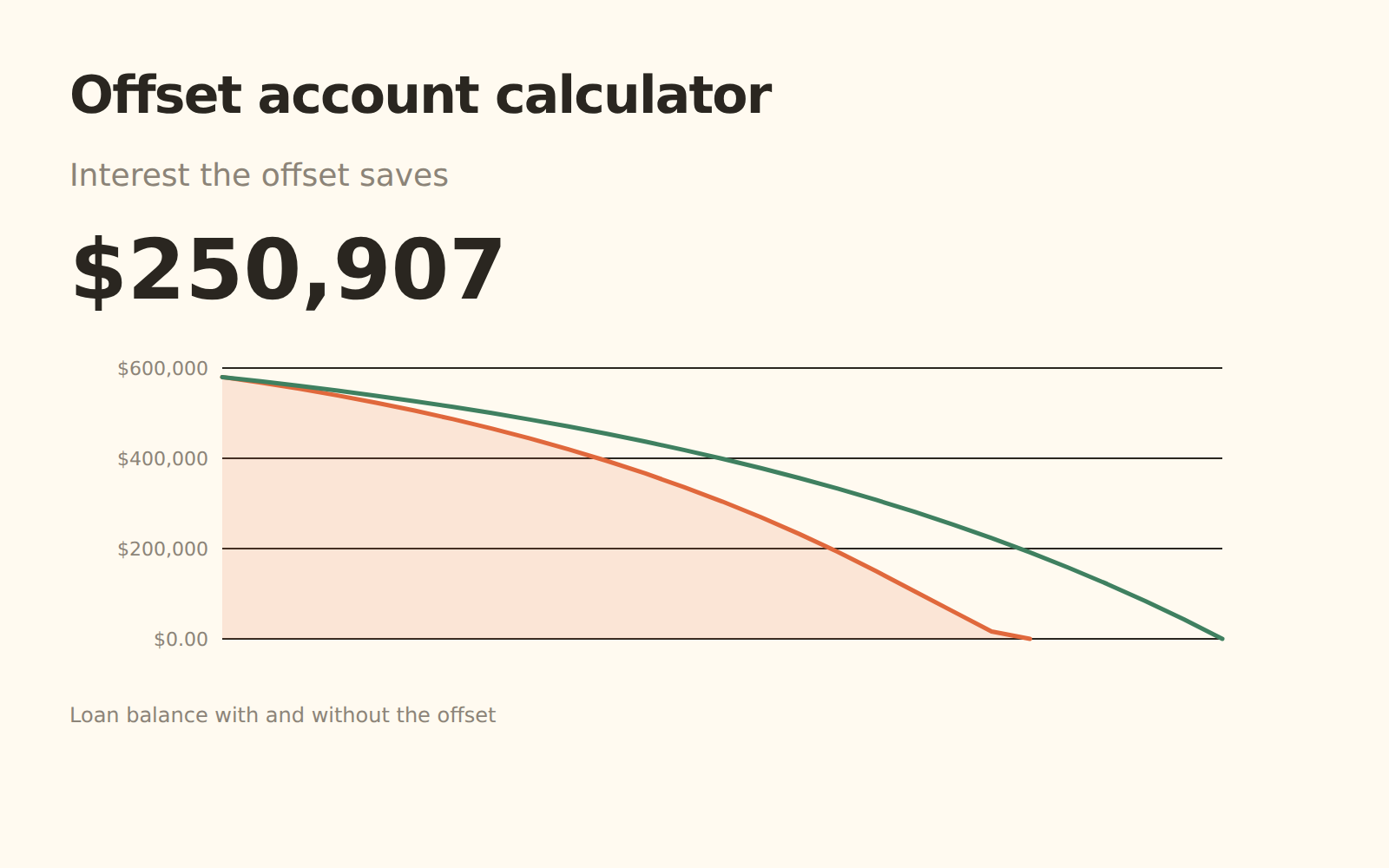
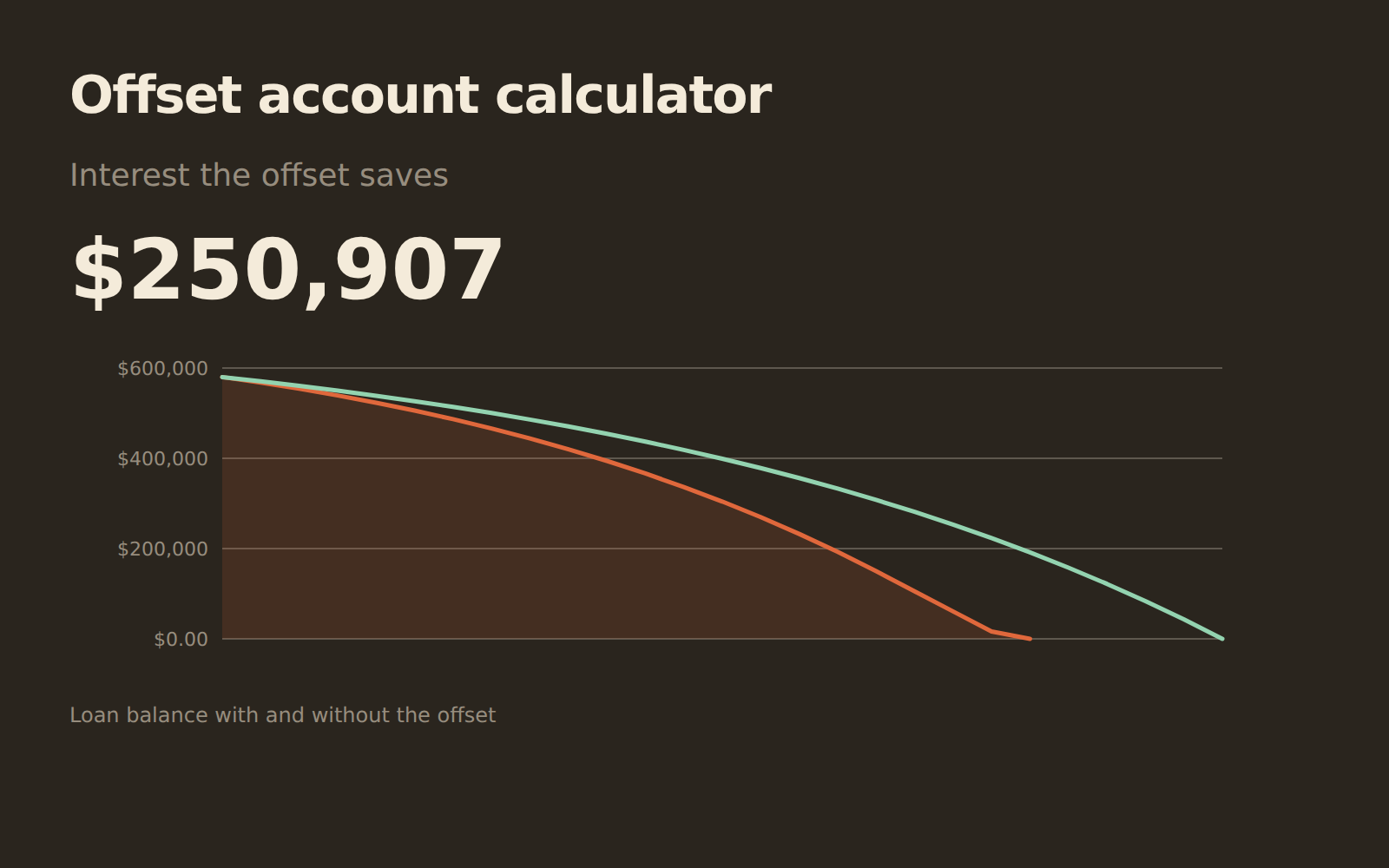
Offset account
What money parked in an offset account is worth: interest saved, and how much sooner the loan finishes.
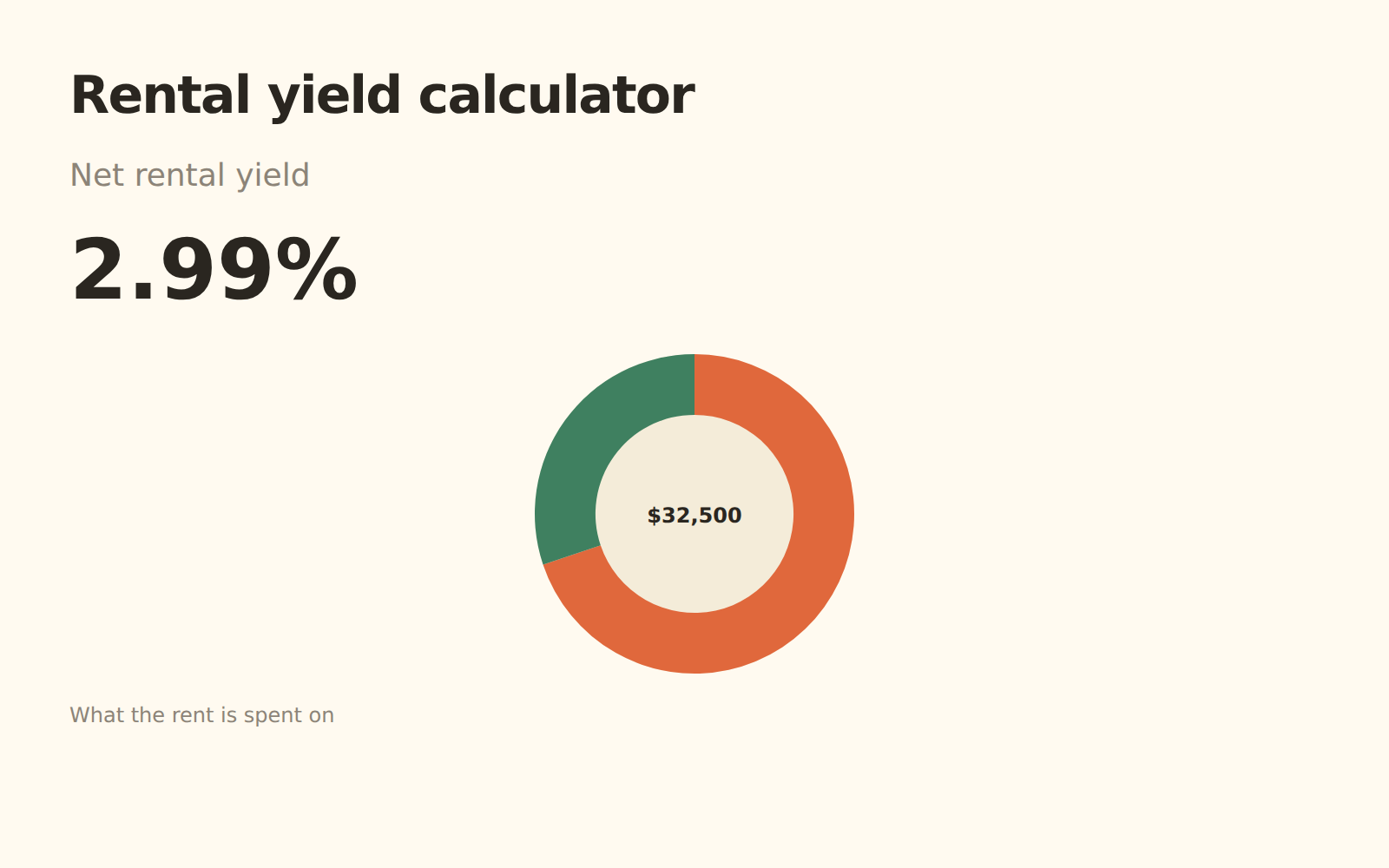
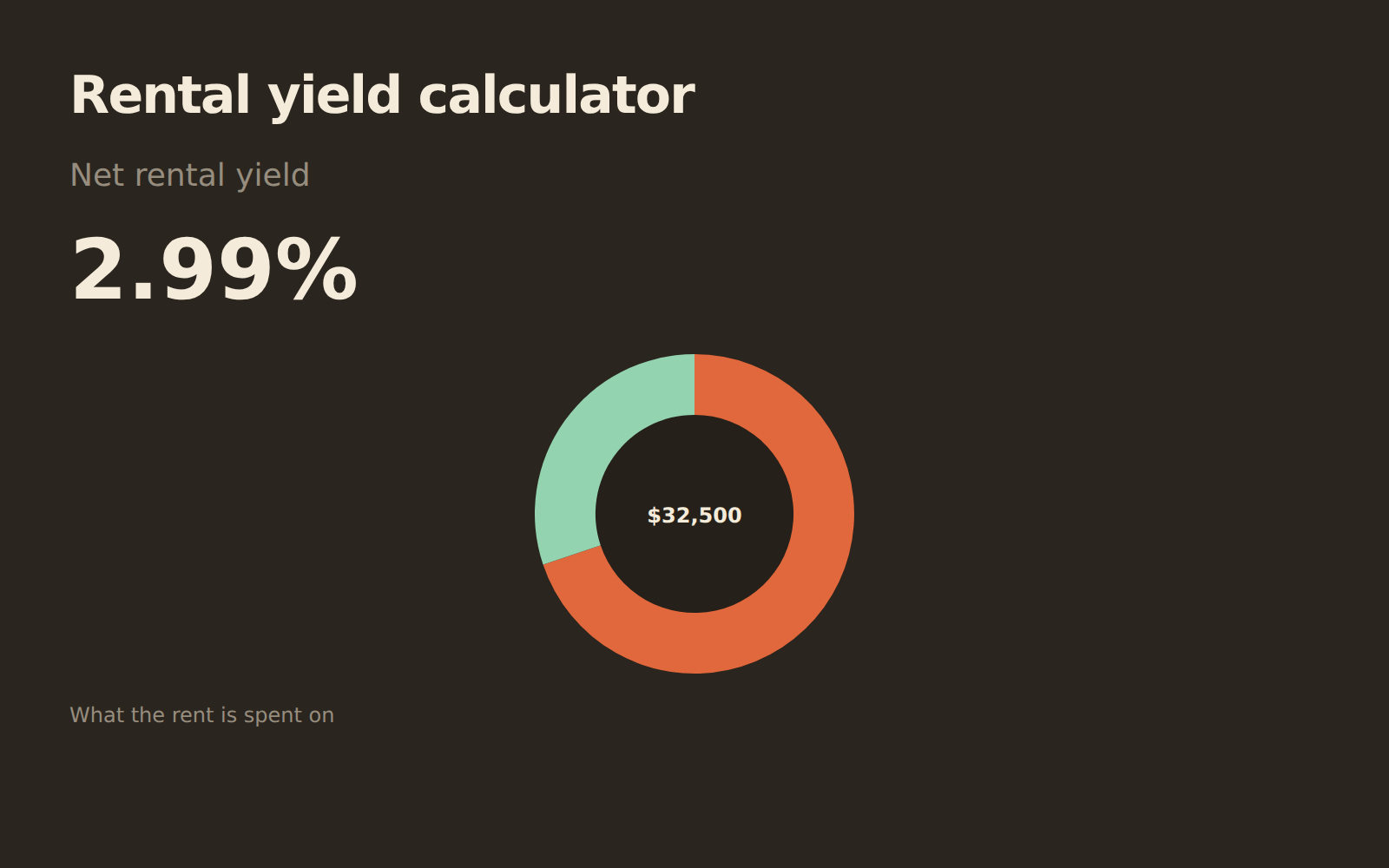
Rental yield
Gross and net rental yield, with vacancy and running costs taken out — the figure an agent’s "yield" usually is not.
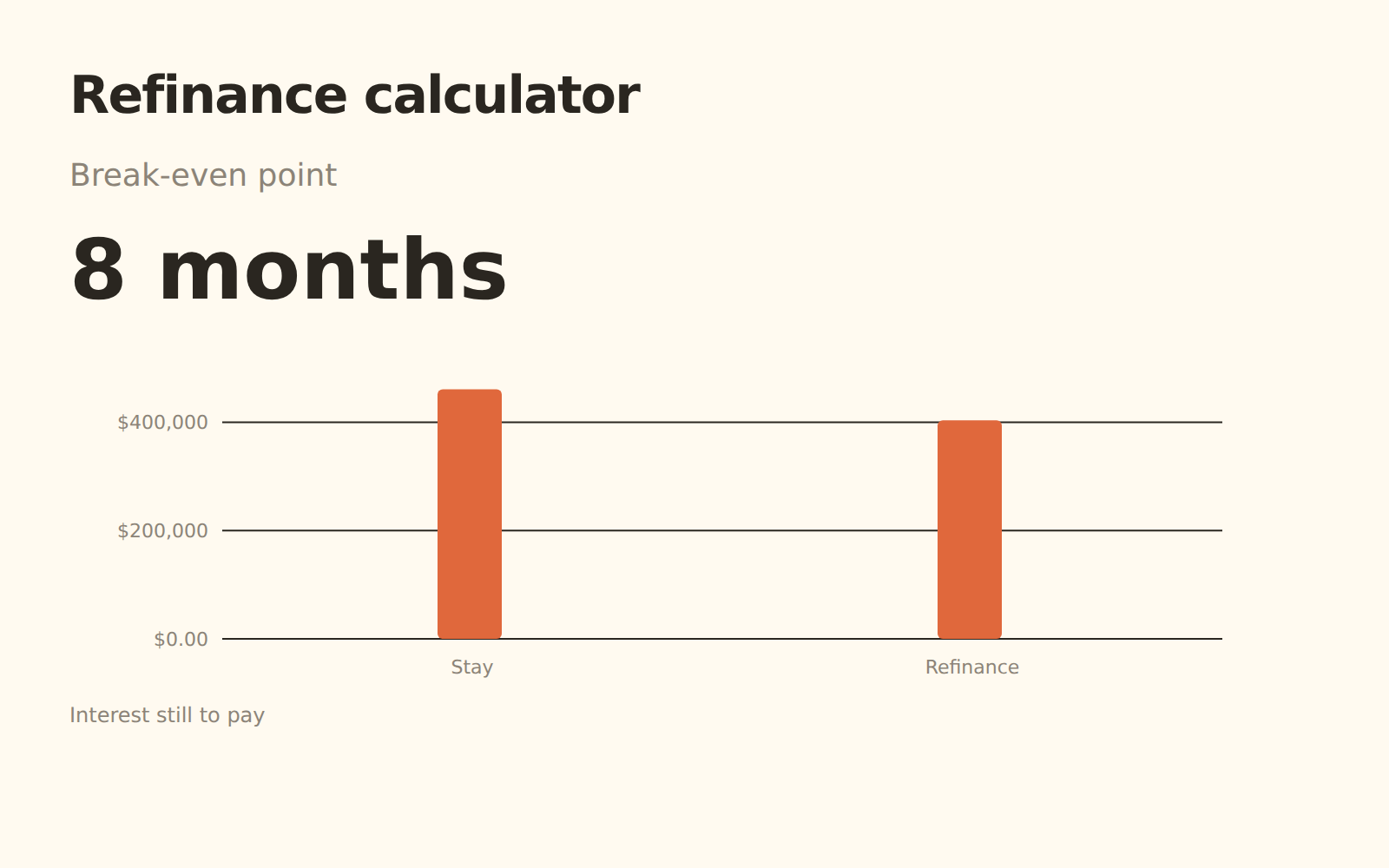
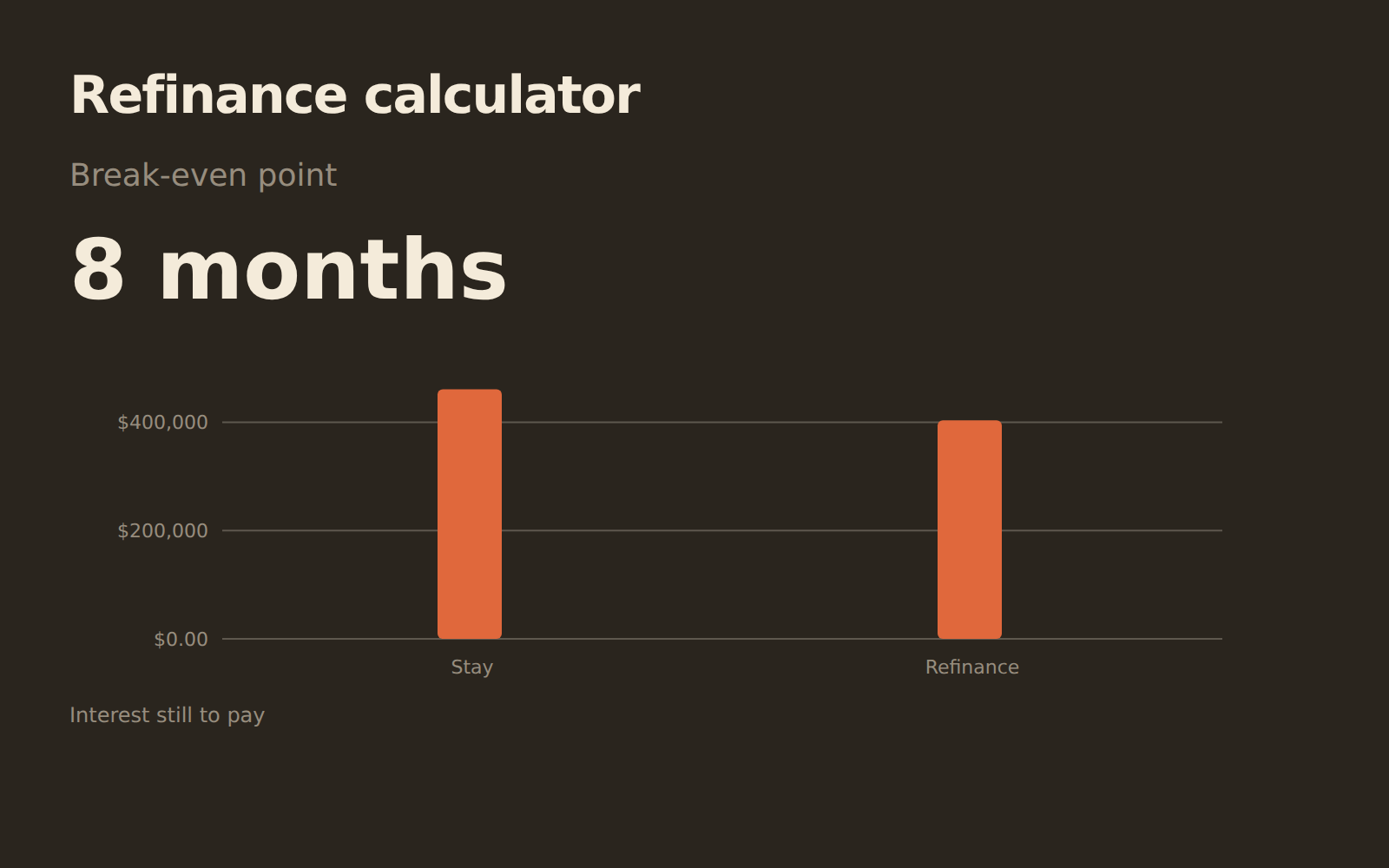
Refinance
Whether switching loans is worth it: the monthly saving, how long the costs take to come back, and what the change does to total interest.
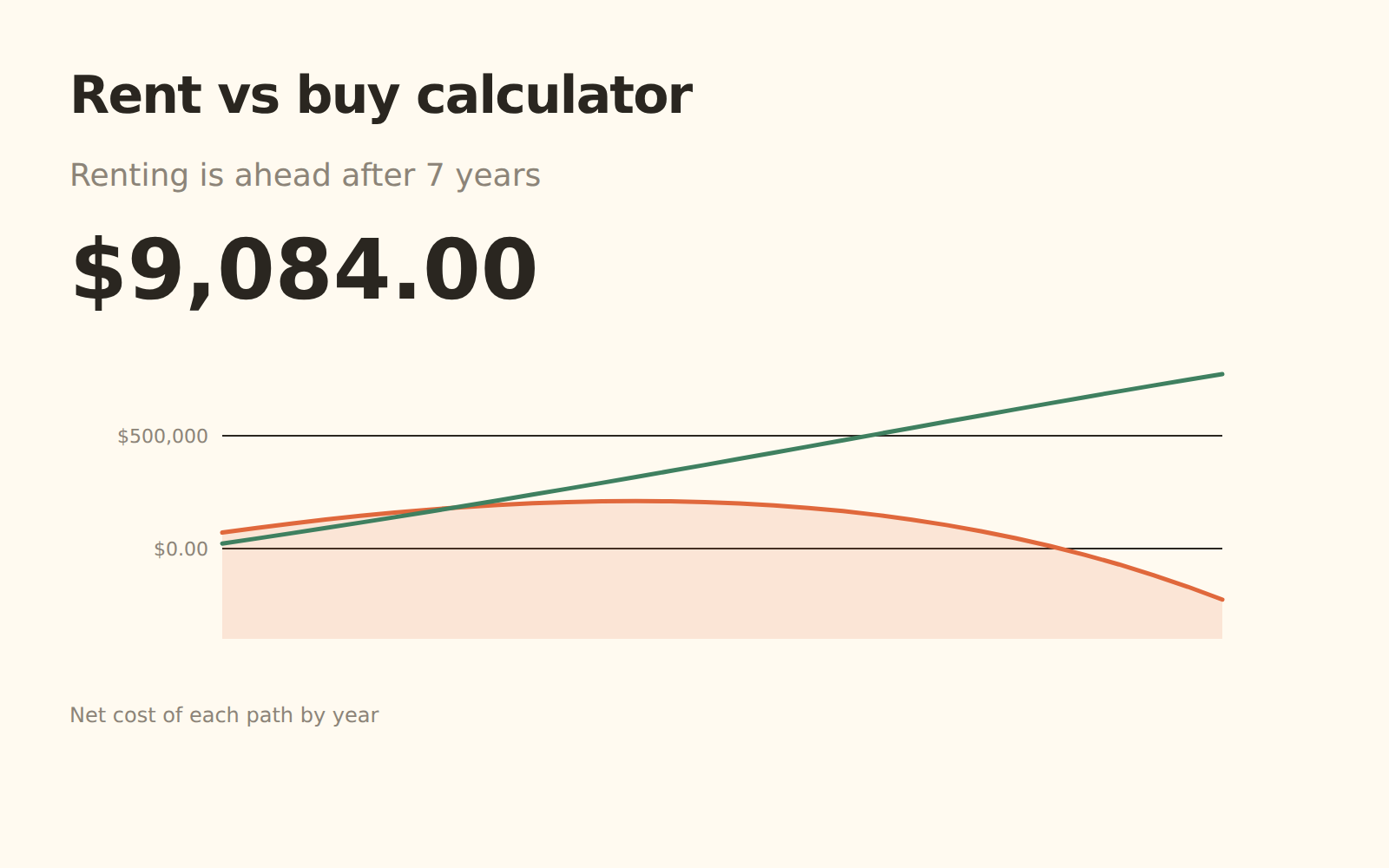
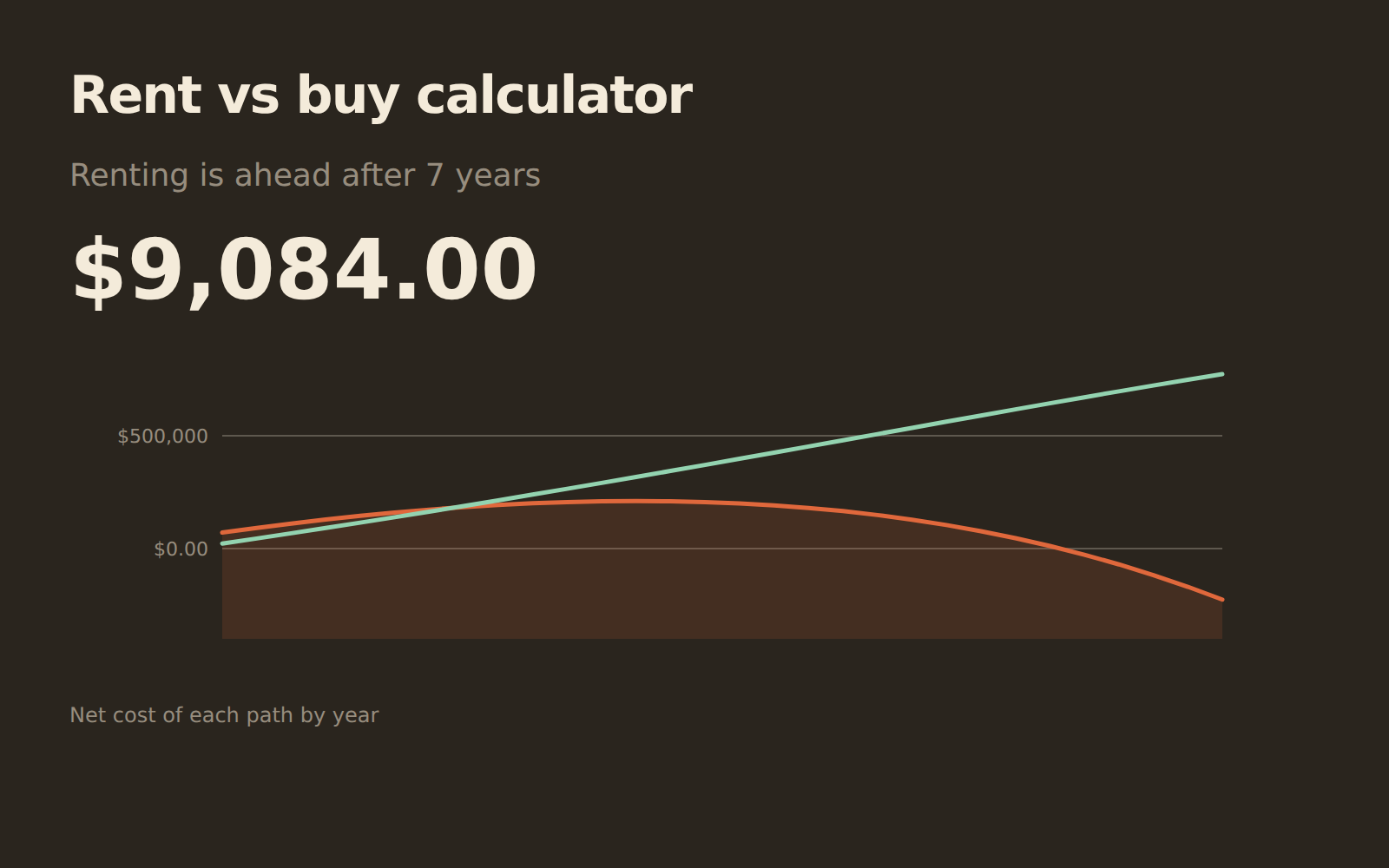
Rent vs buy
Compares the true net cost of renting and buying over the years you actually stay, counting transaction costs, running costs and the return on a deposit left invested.
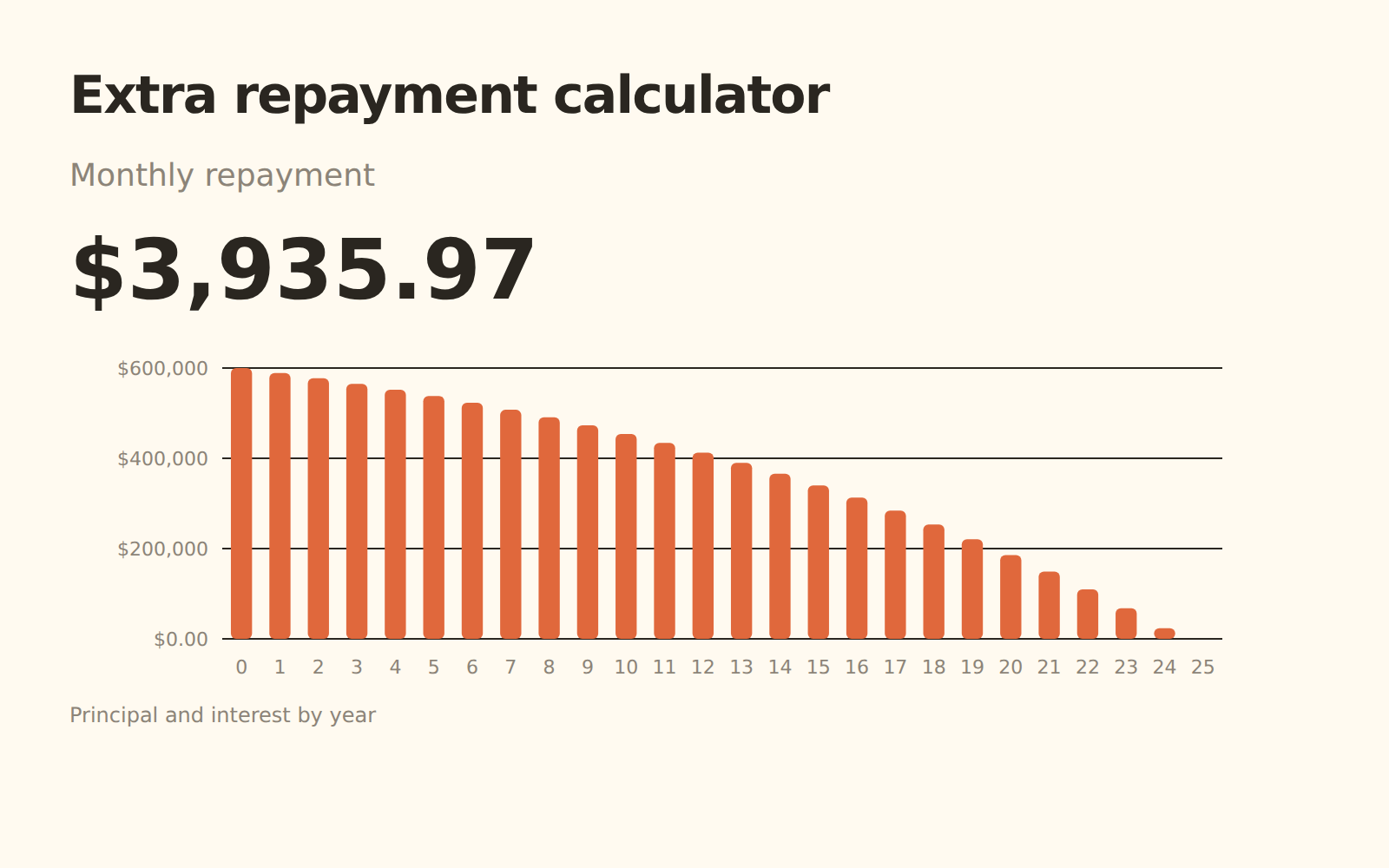
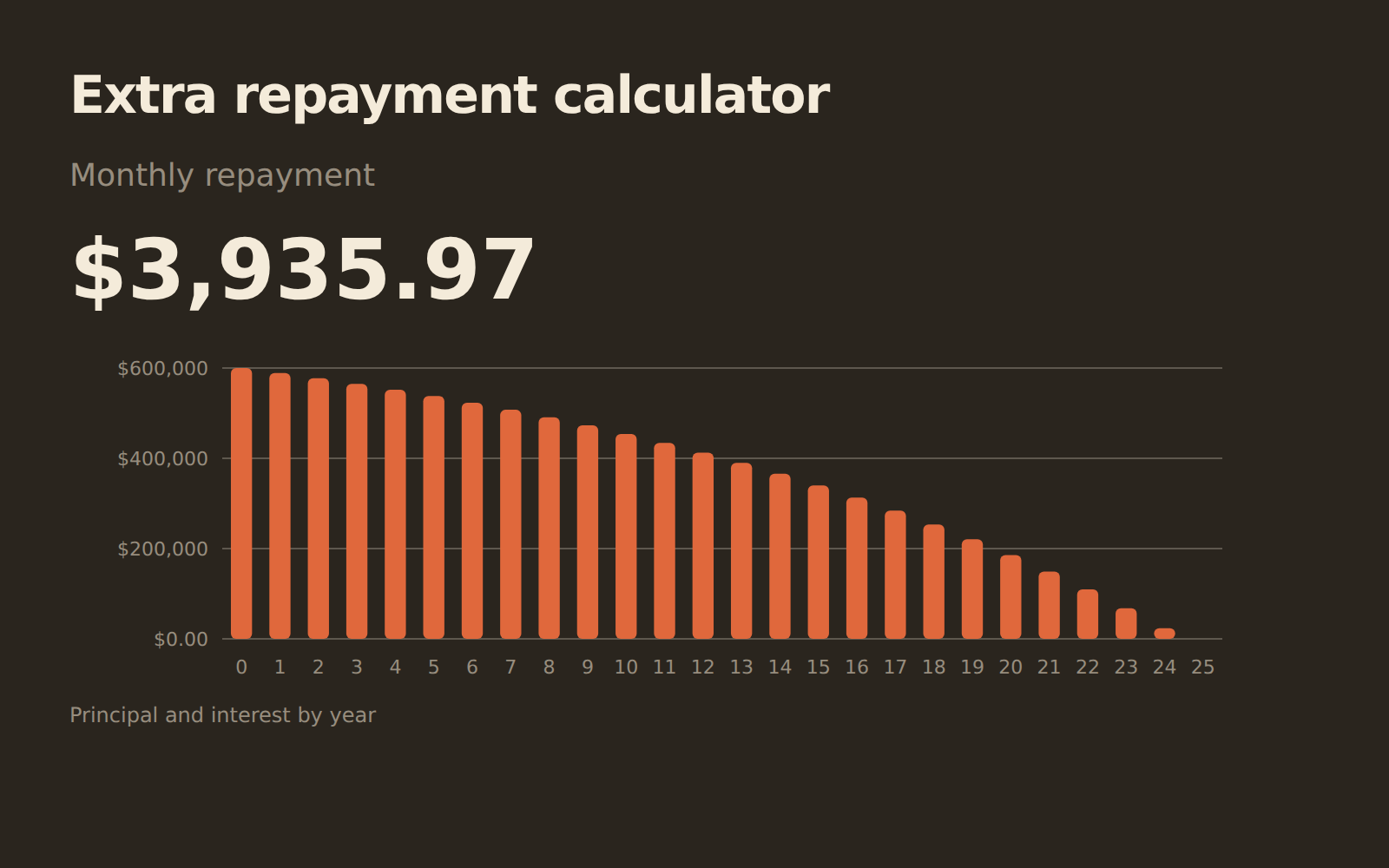
Extra repayment
What paying a little more each month does to your loan: the years it removes, the interest it saves, and how early the payoff date moves.
Amortisation, payoff order, and what extra repayments buy you.
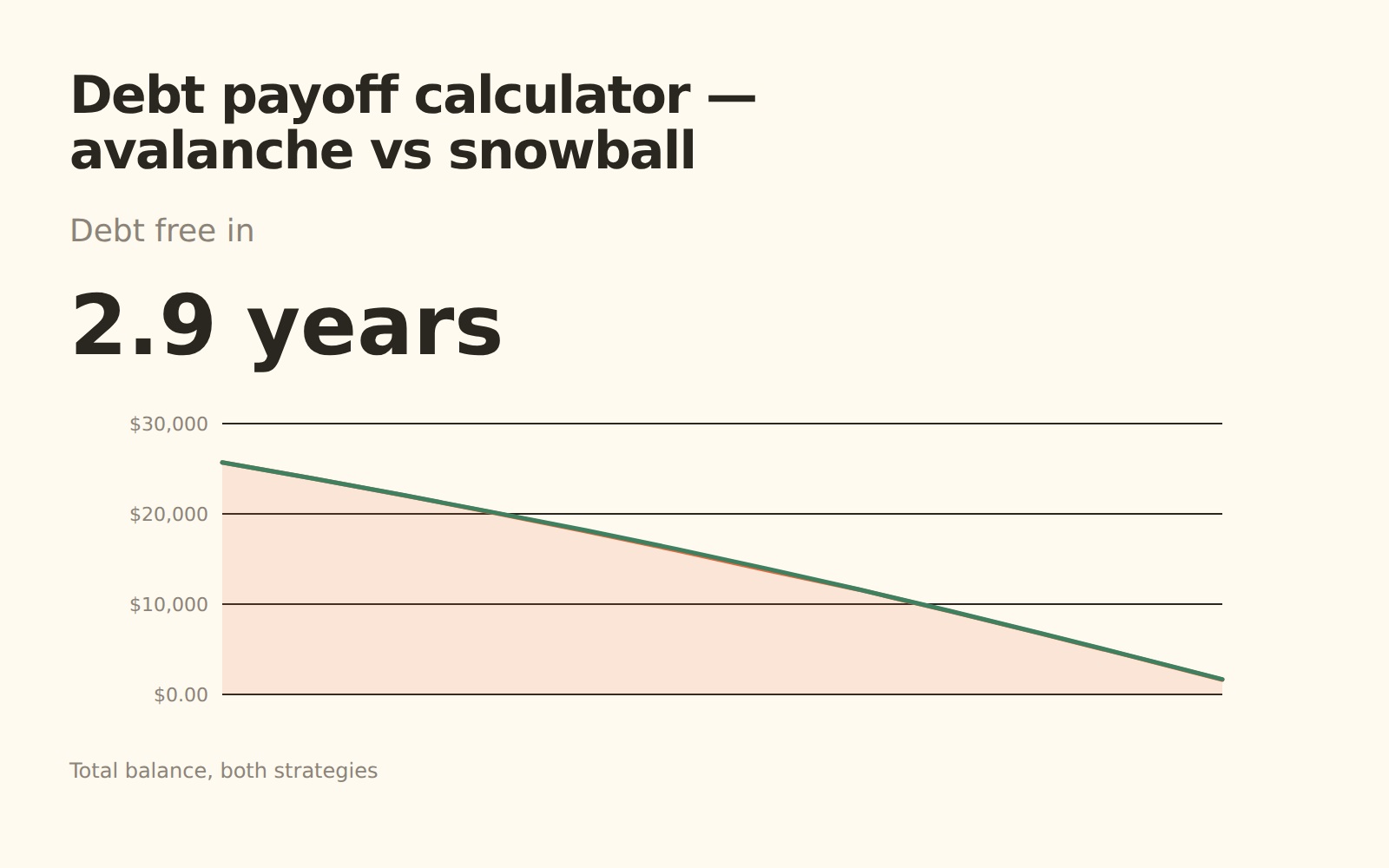
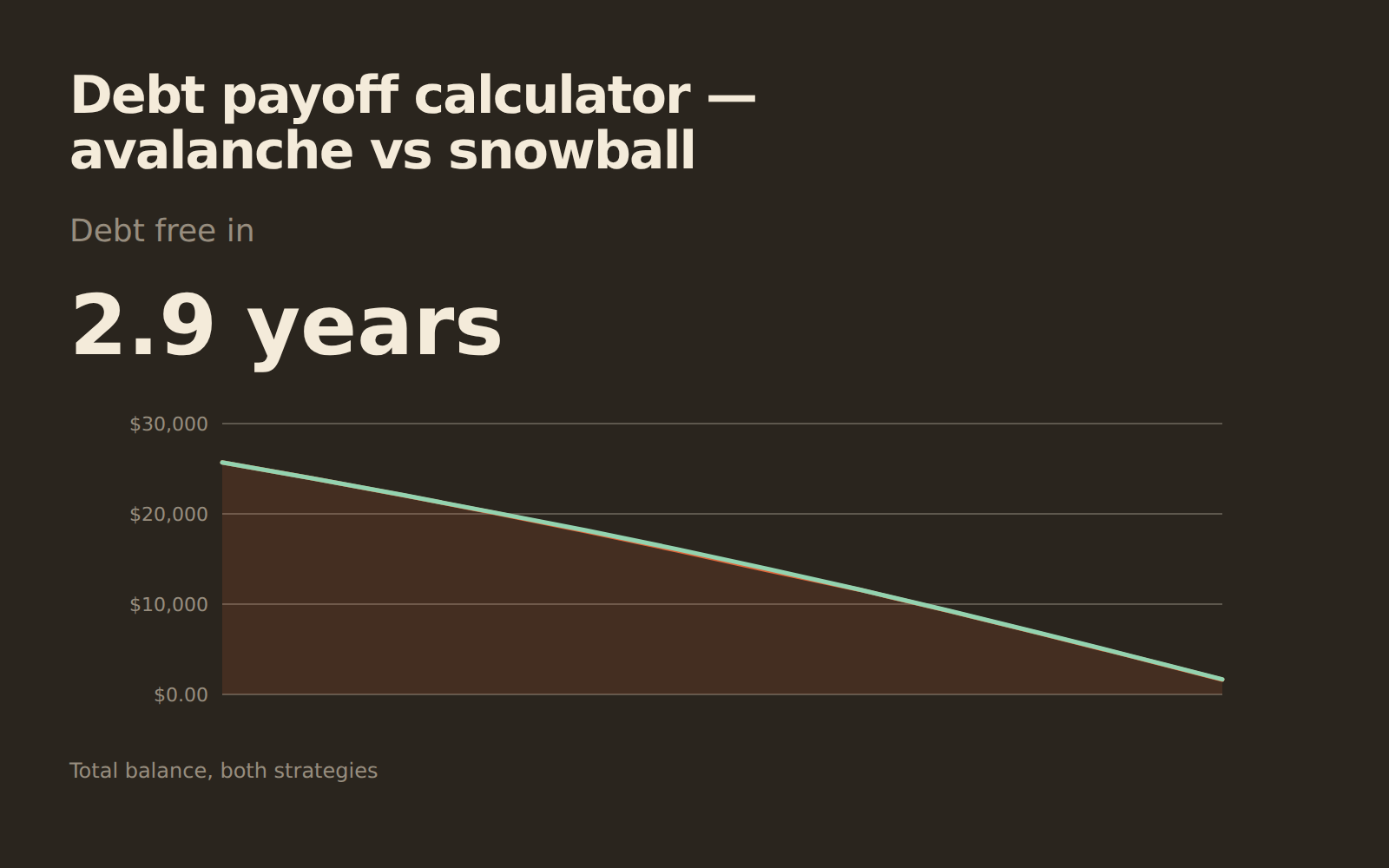
Debt payoff — avalanche vs snowball
Order several debts by interest rate or by balance, add whatever you can spare, and see which order clears them sooner.
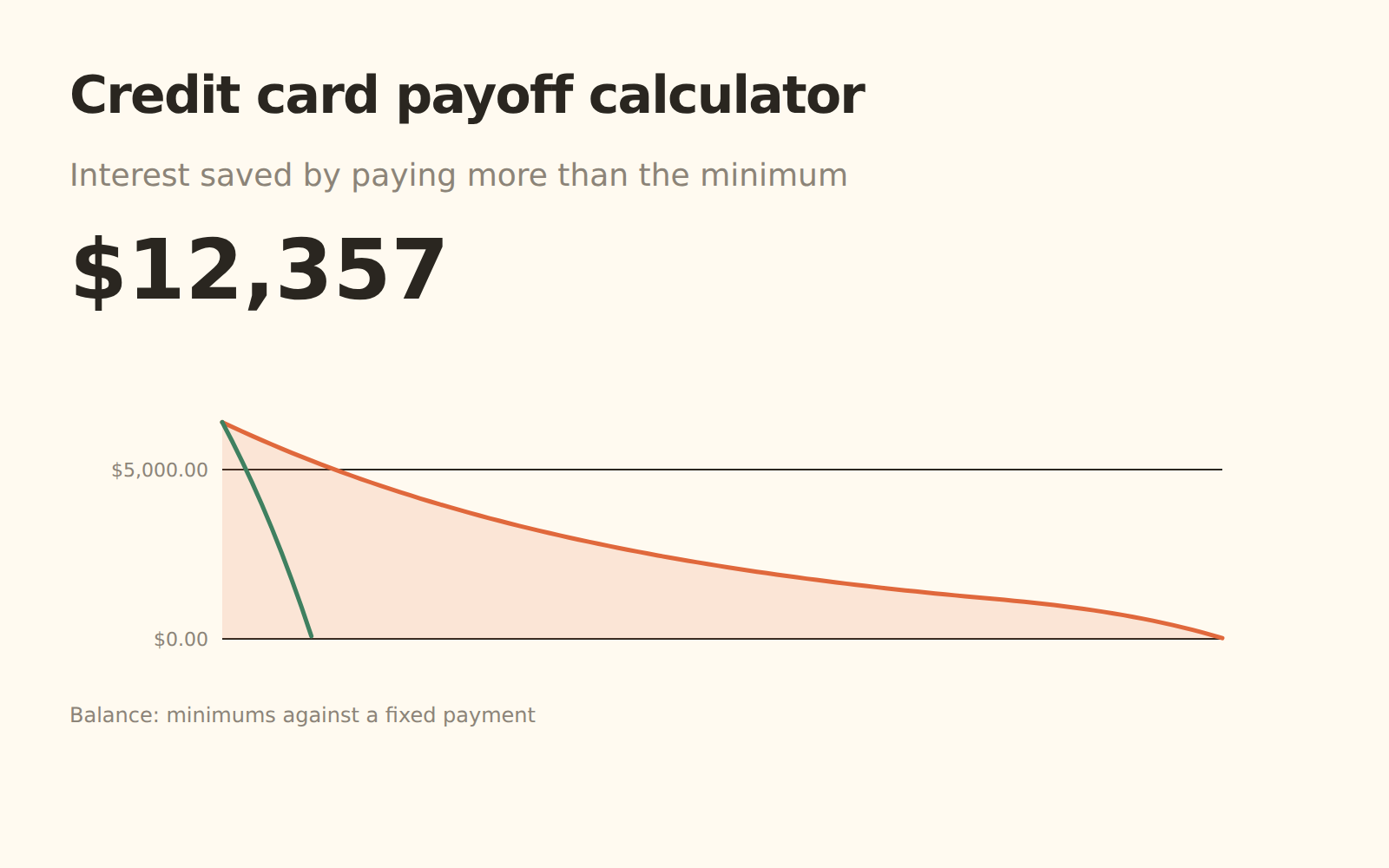
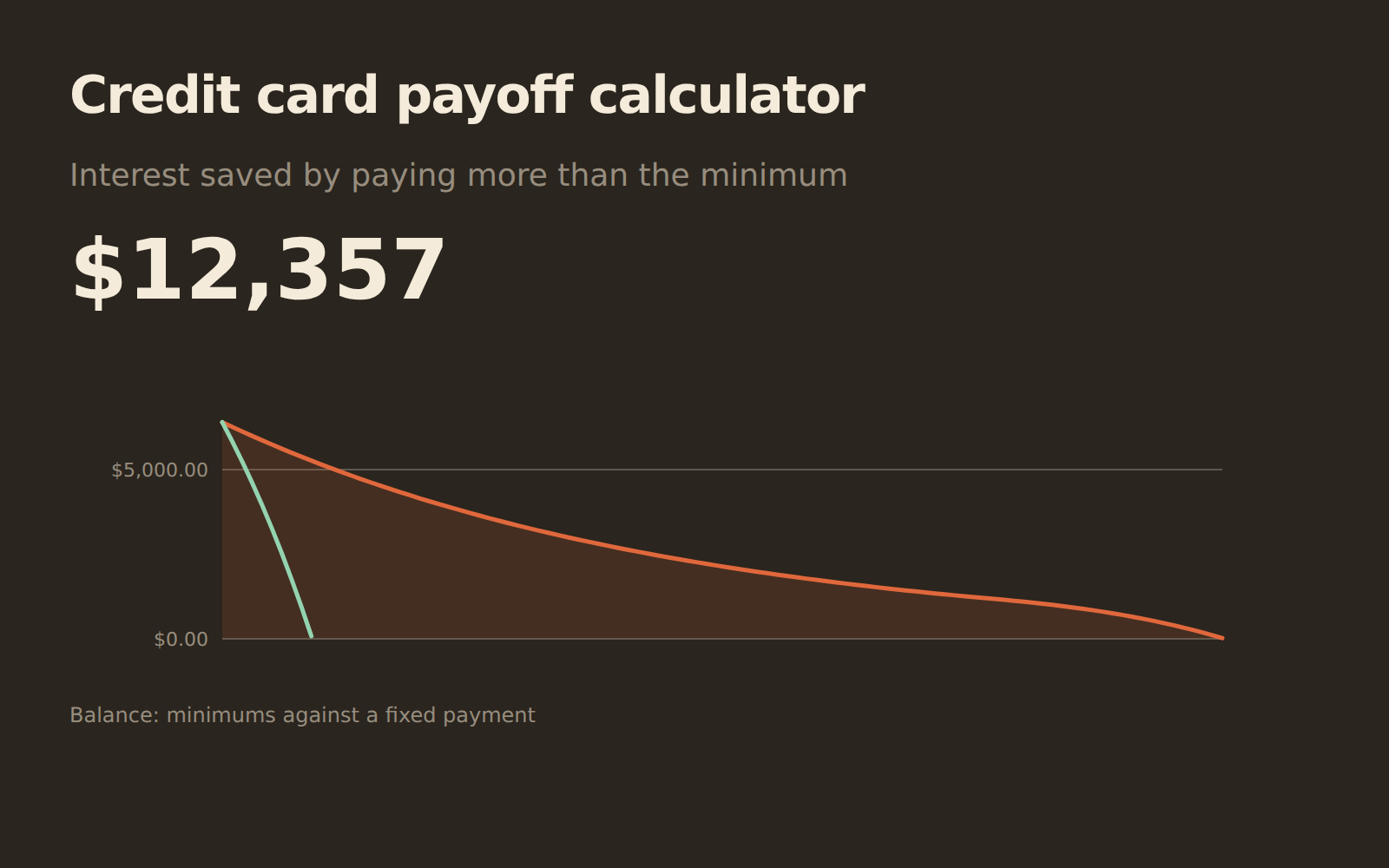
Credit card payoff
What paying only the minimum really costs, against paying a fixed amount every month until the card is clear.
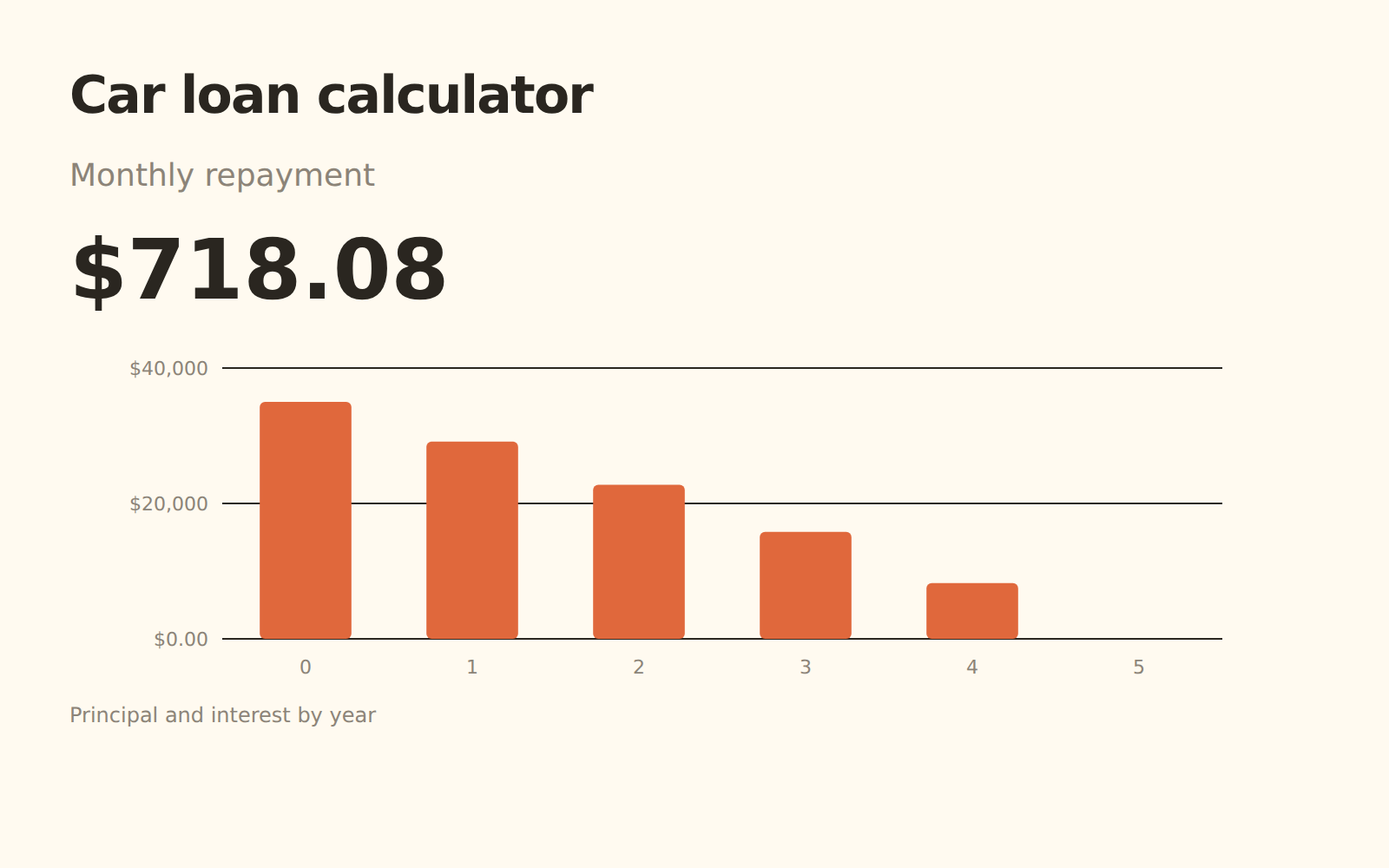
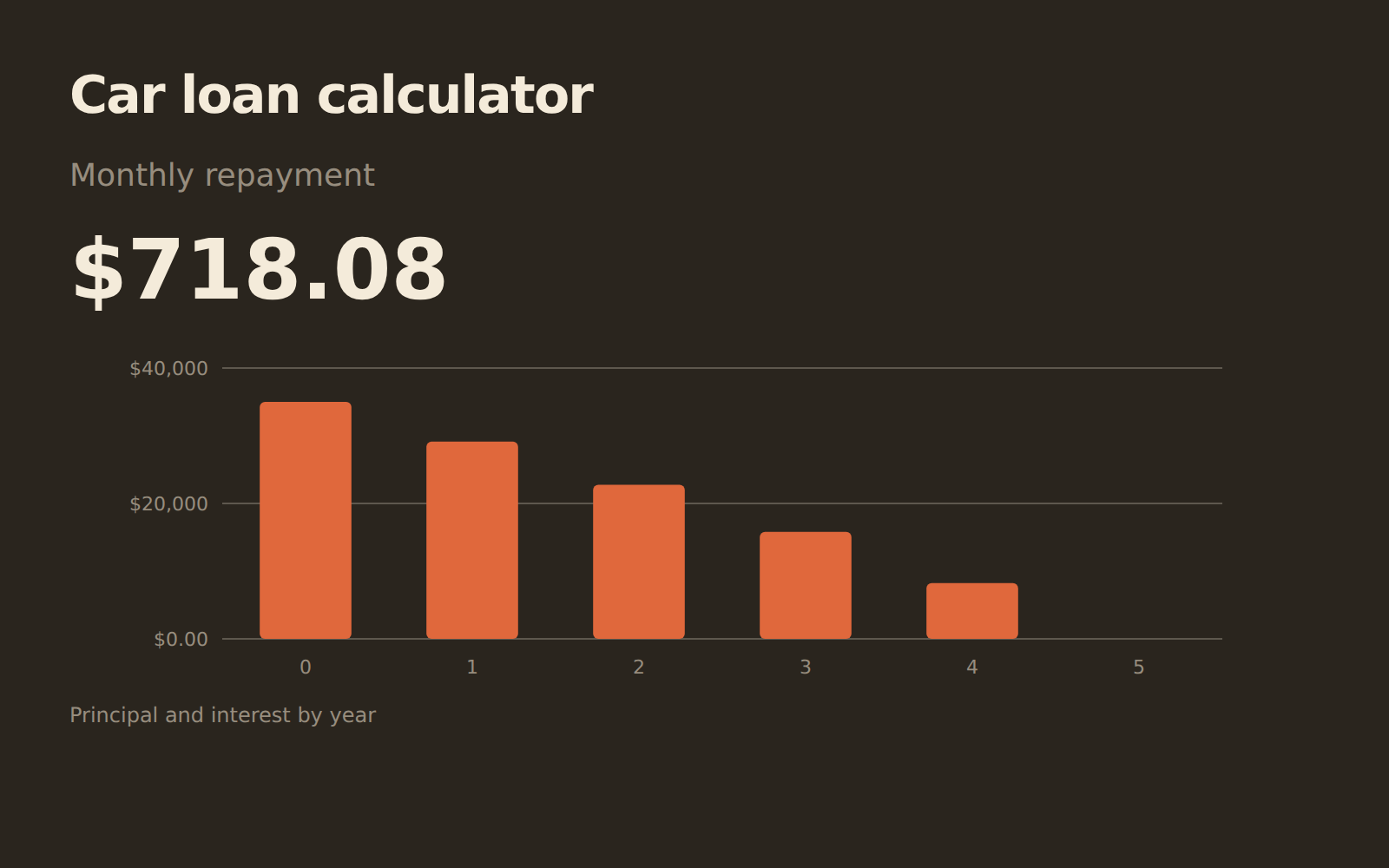
Car loan
Repayments and total interest on a car loan, with the effect of a longer term and of paying a little extra each time.
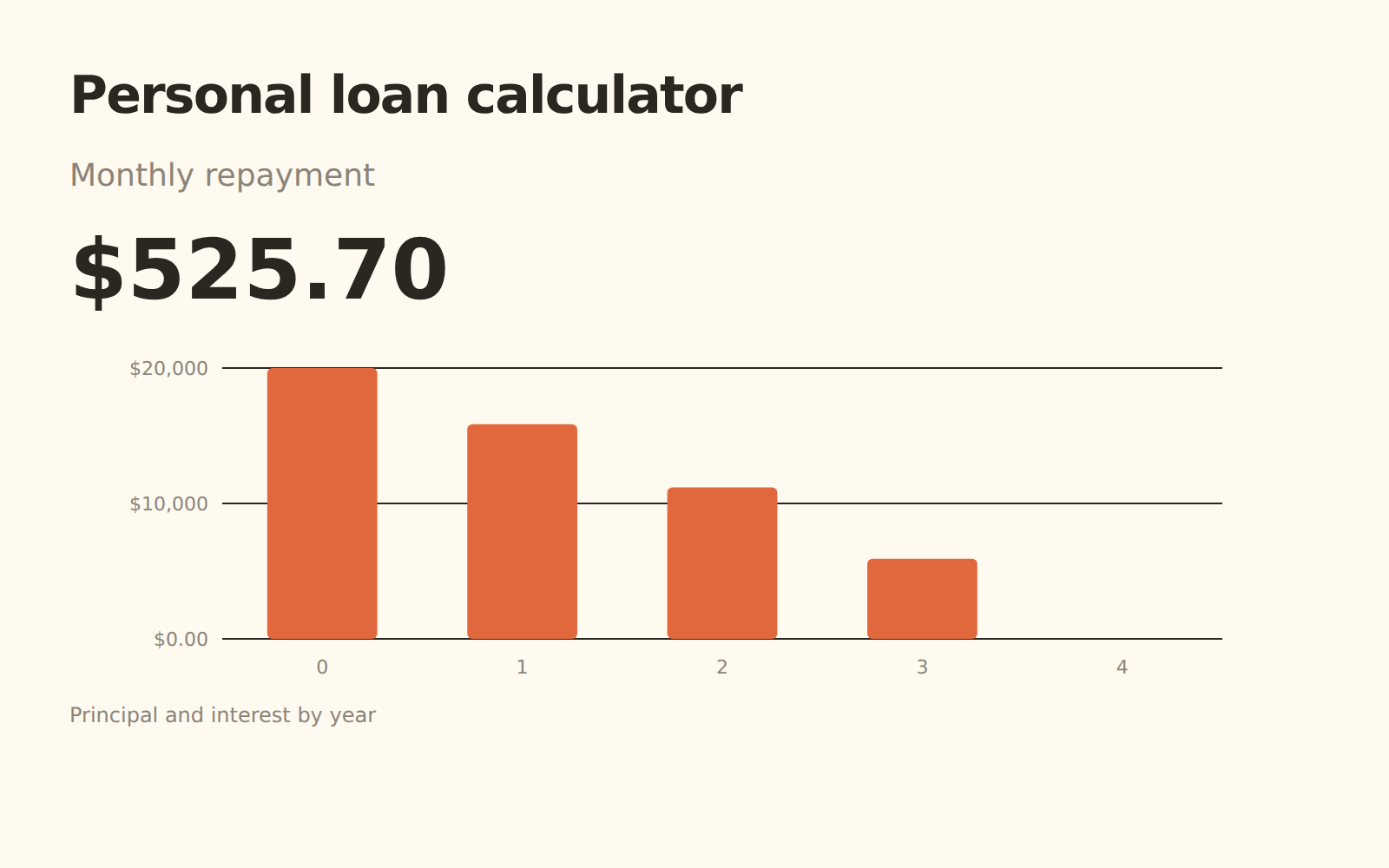
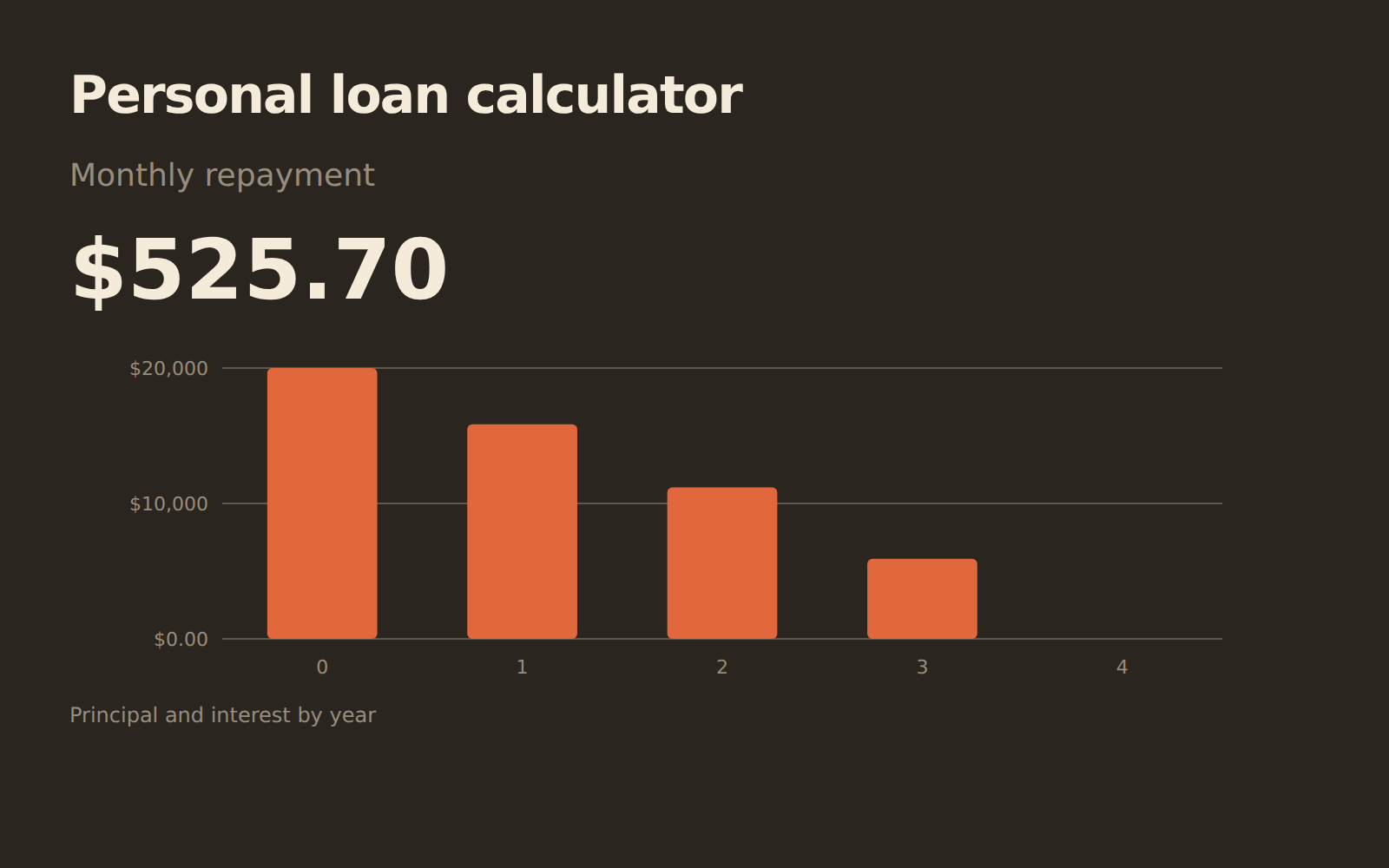
Personal loan
Repayments, total interest and the payoff schedule on an unsecured personal loan, including what extra repayments are worth.
Where the money goes, and how much of it you keep.
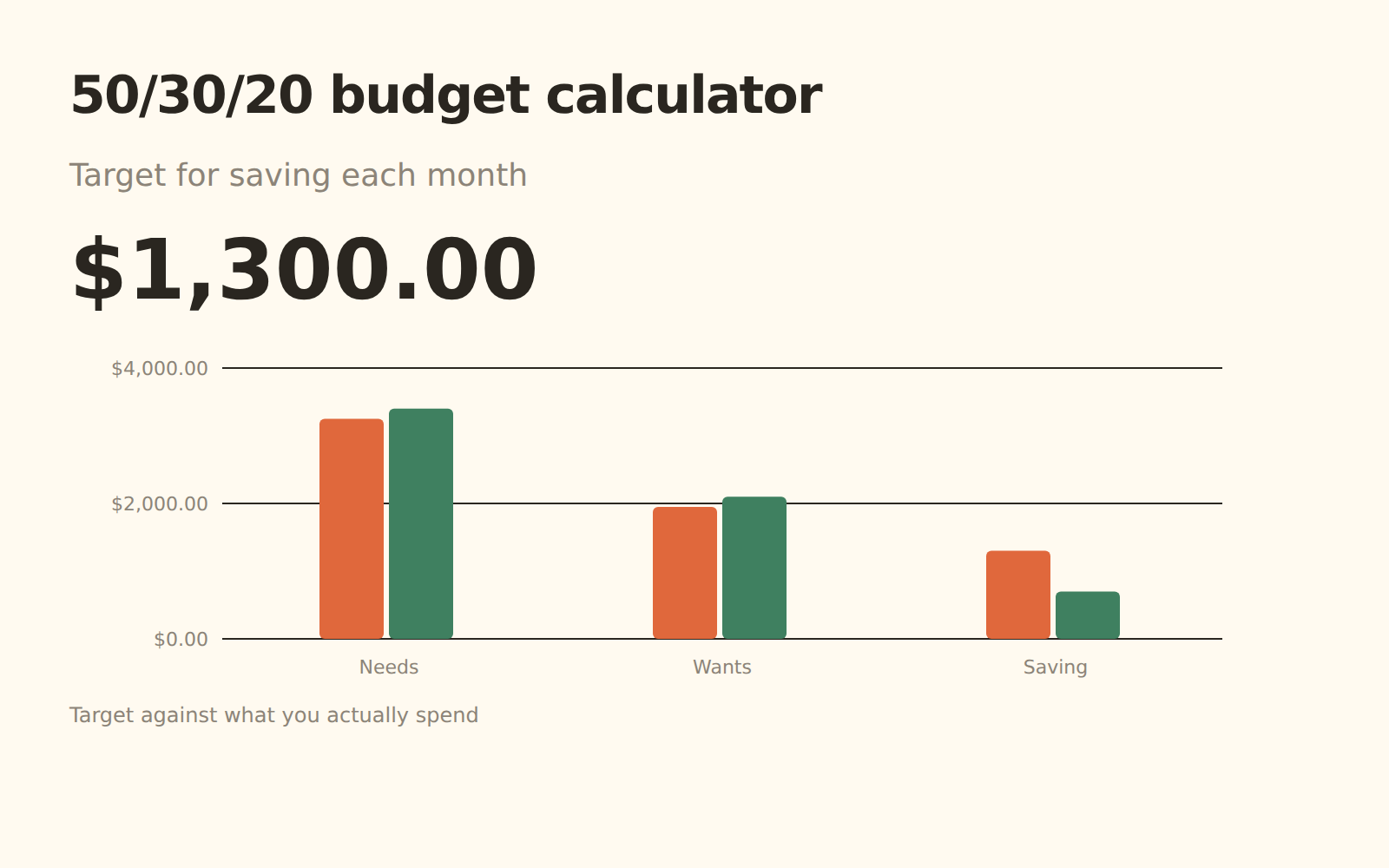
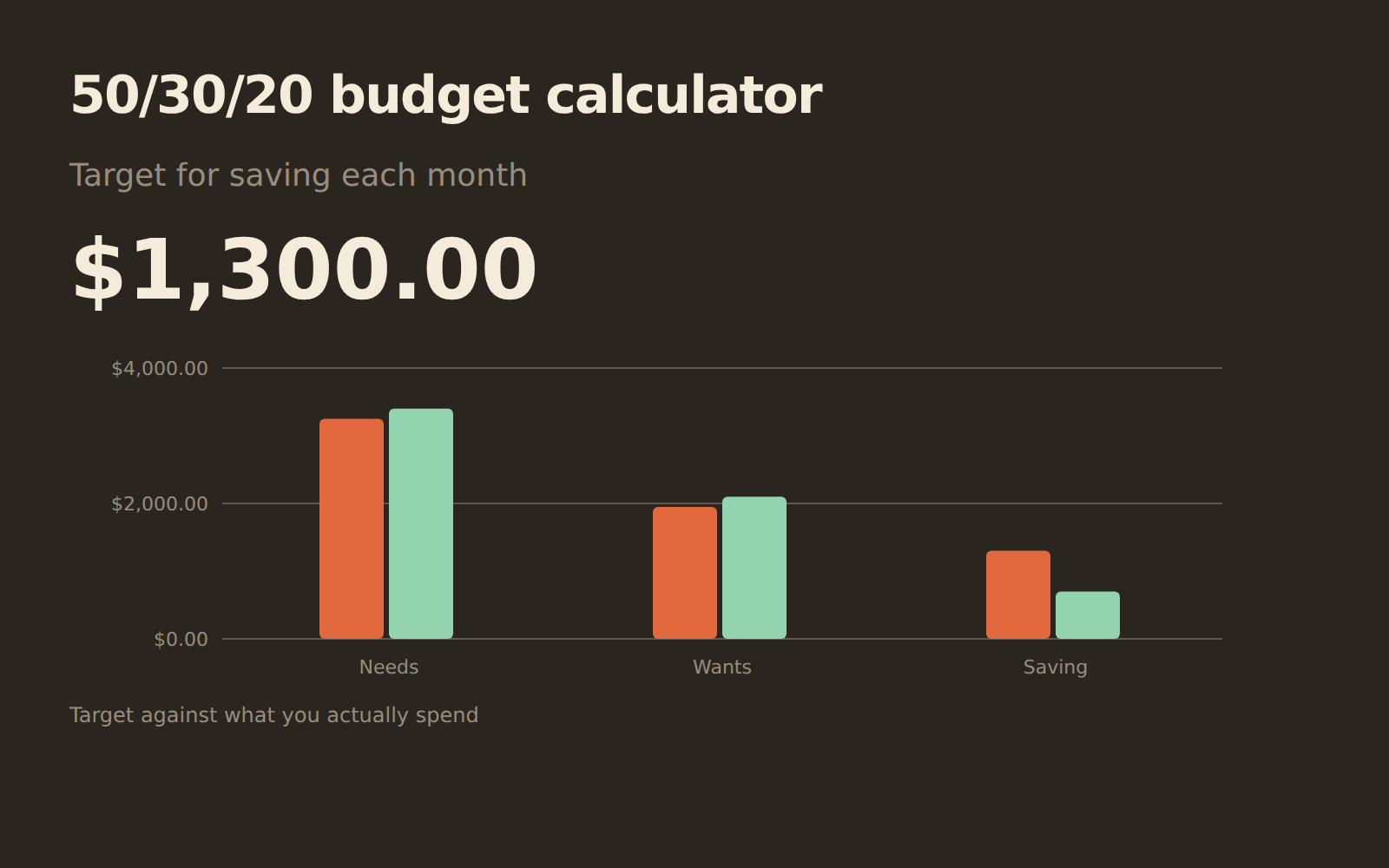
50/30/20 budget
Split take-home pay into needs, wants and saving, then compare the split against what you actually spend now.
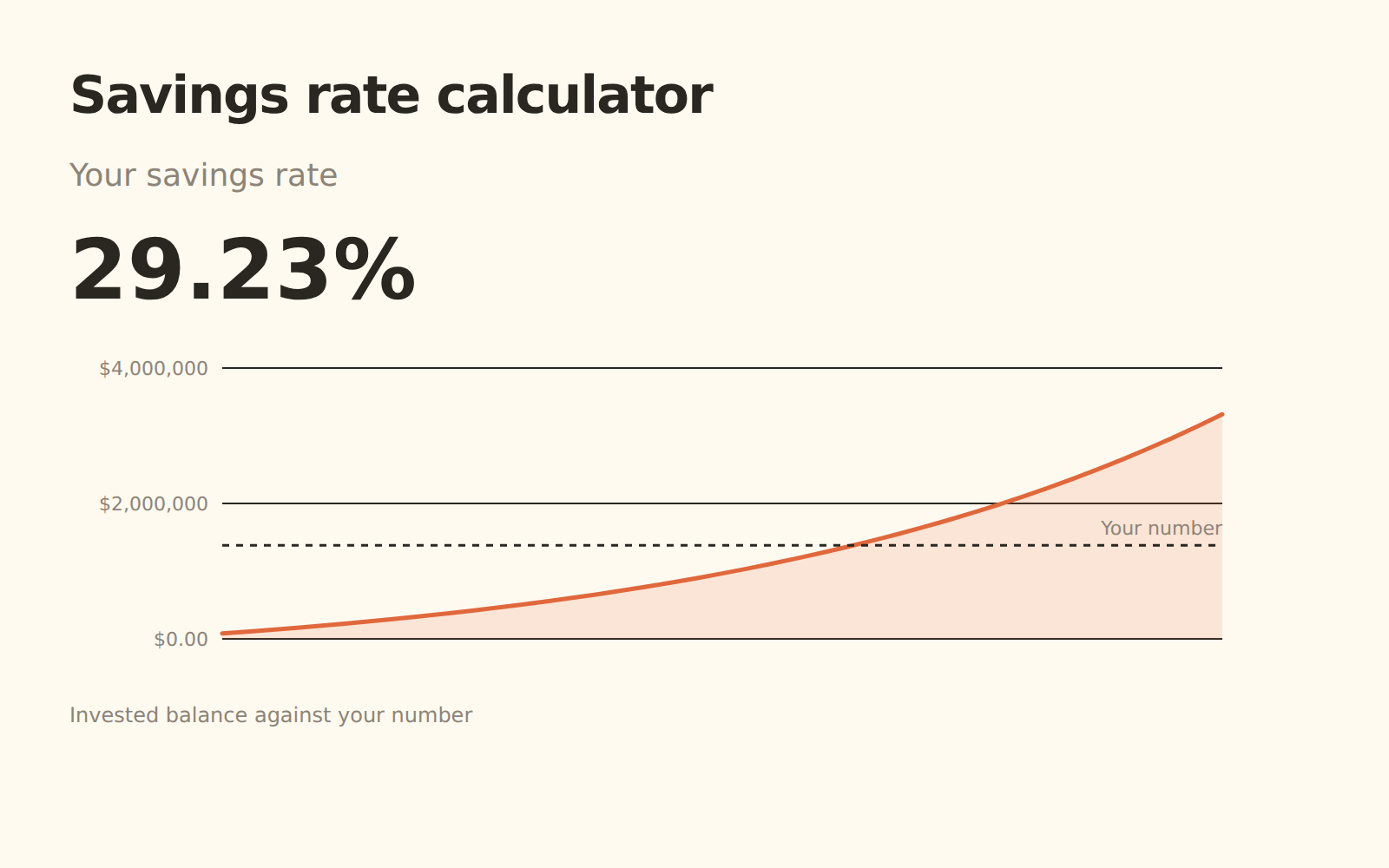
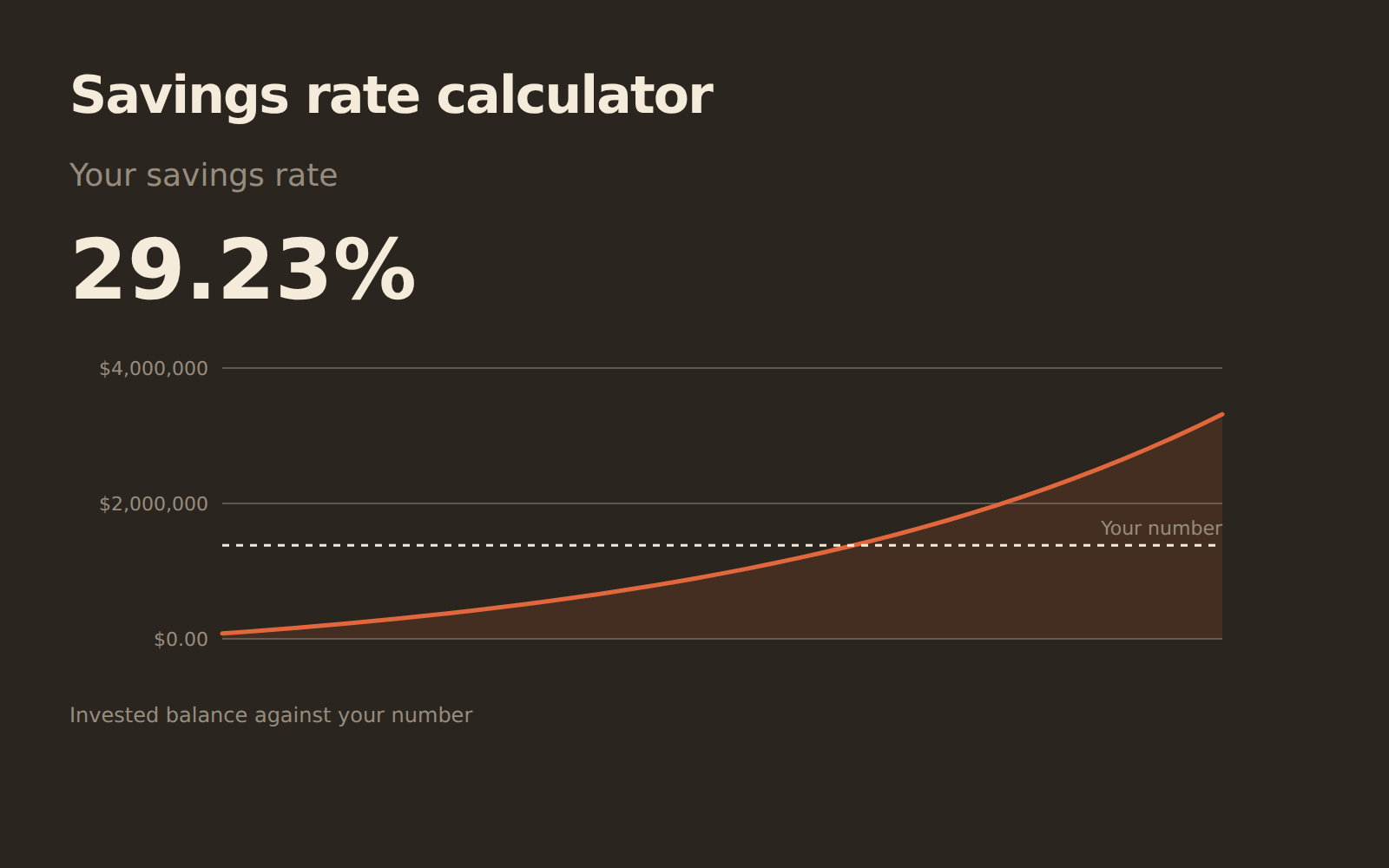
Savings rate
Your savings rate, and what it means: the years between now and the point where investments cover your spending.
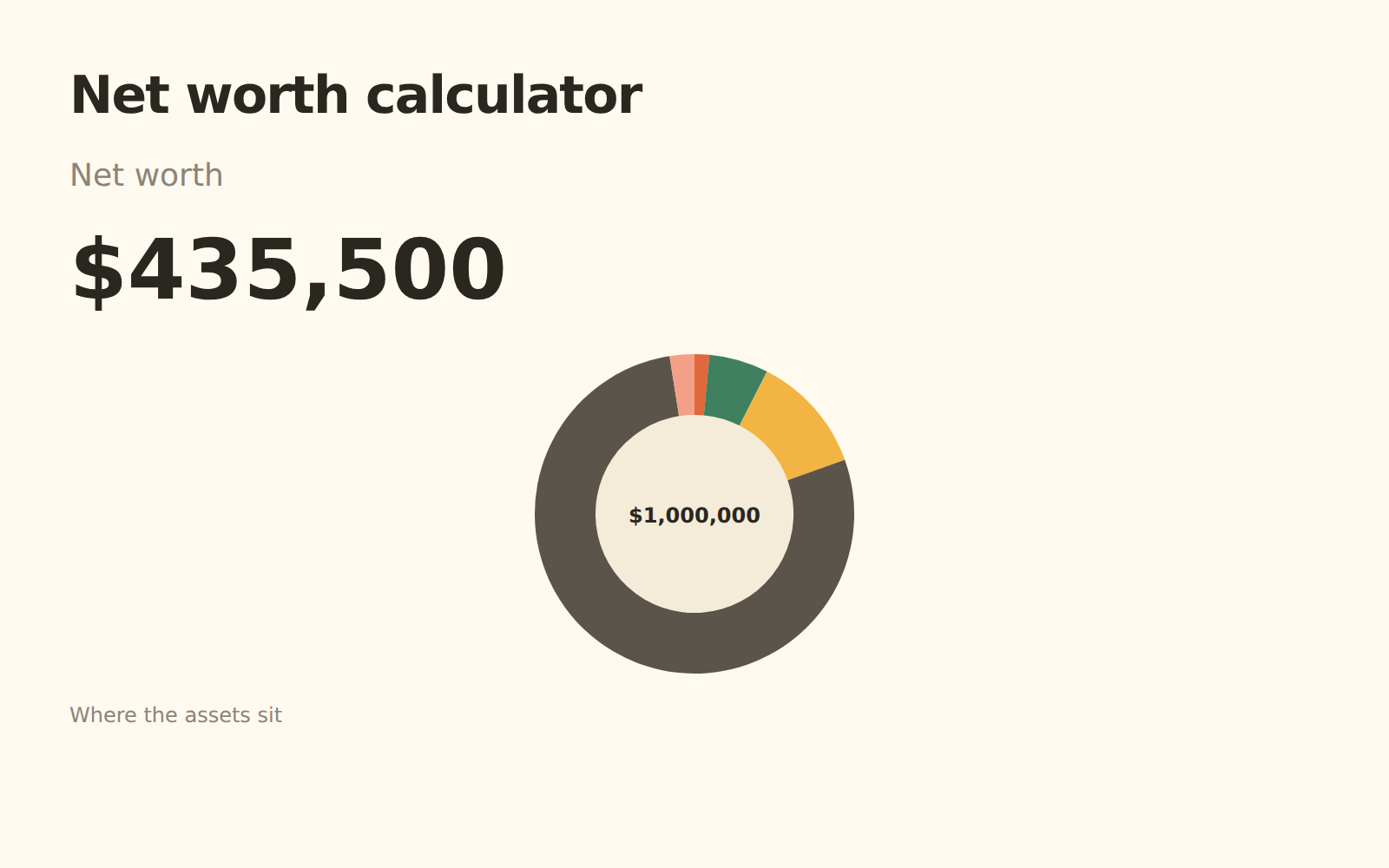
Net worth
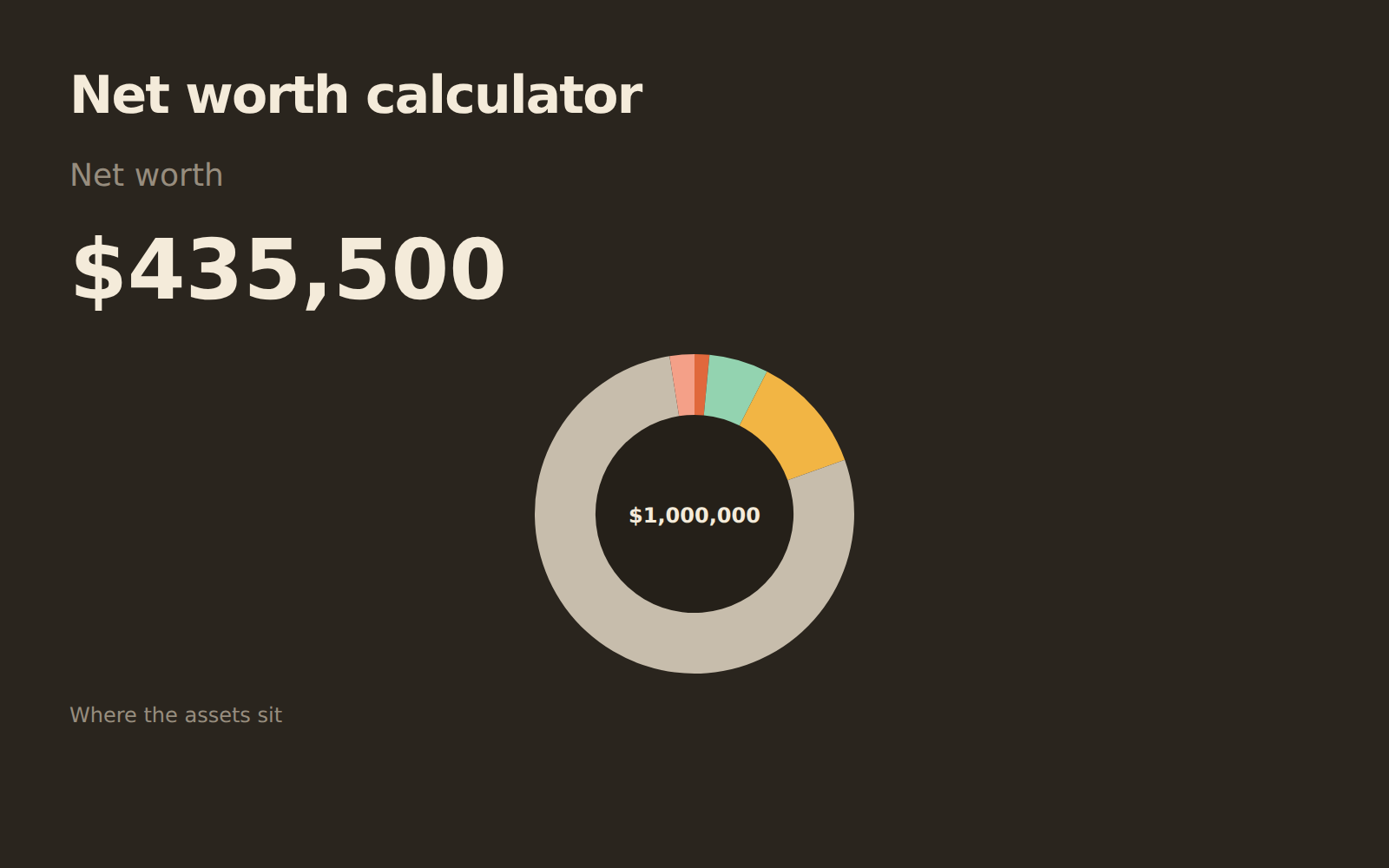
Everything you own minus everything you owe, split into what is liquid today and what is locked in property or retirement.
Subscription cost
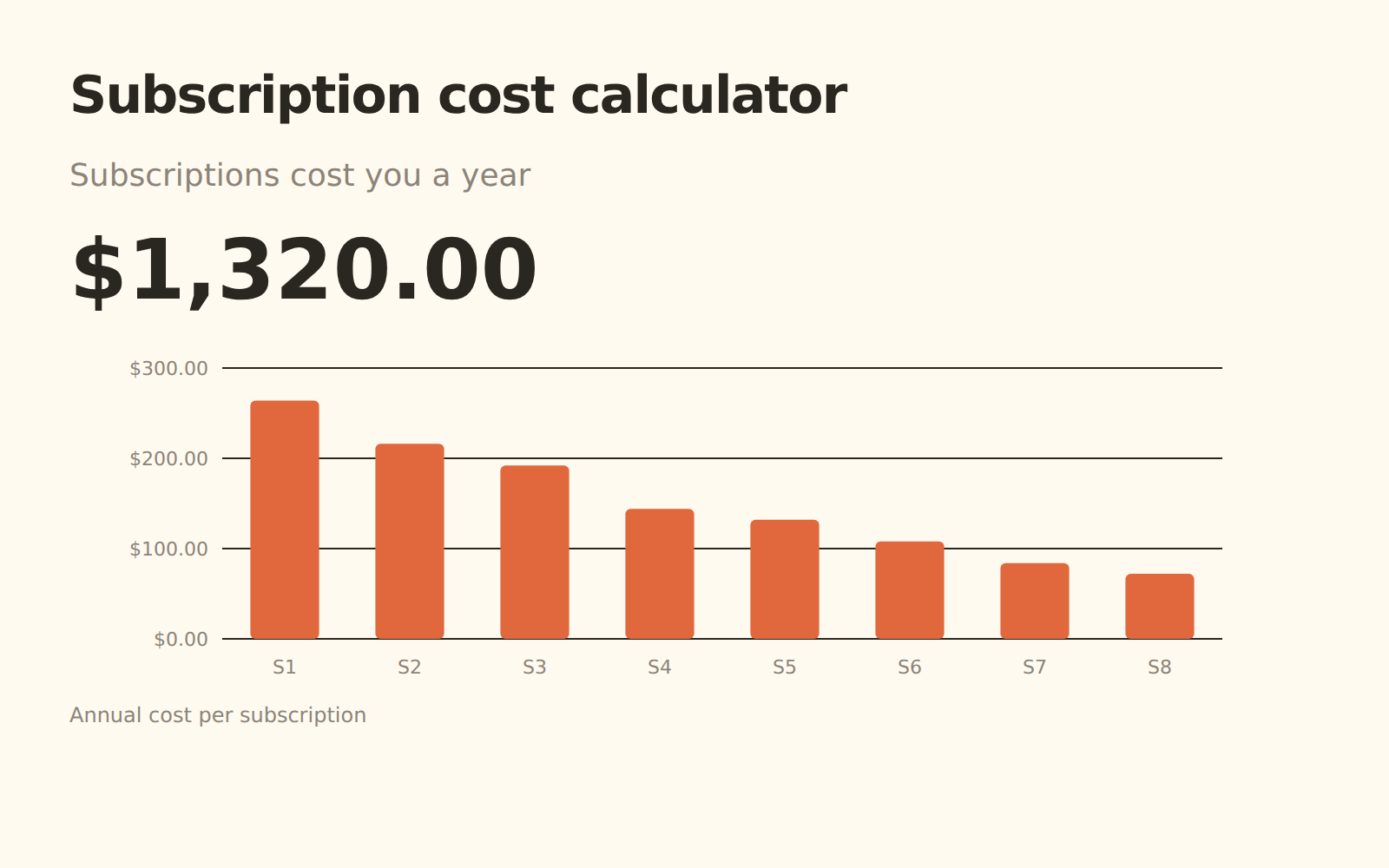
Add up what recurring charges cost across a year, and what the ones you would cancel are worth if invested instead.
Returns, fees, rebalancing, and the tax on your gains.
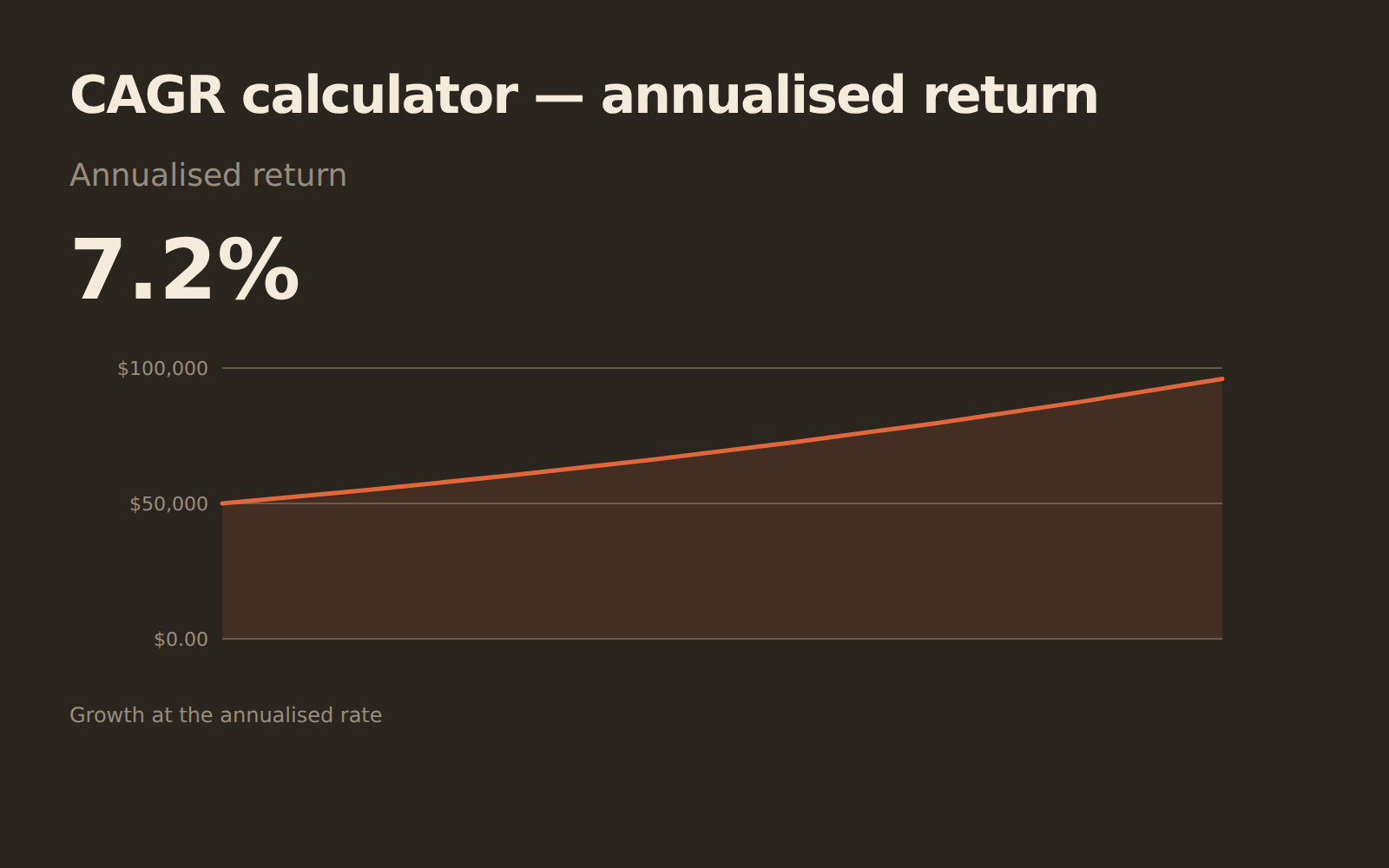
CAGR — annualised return
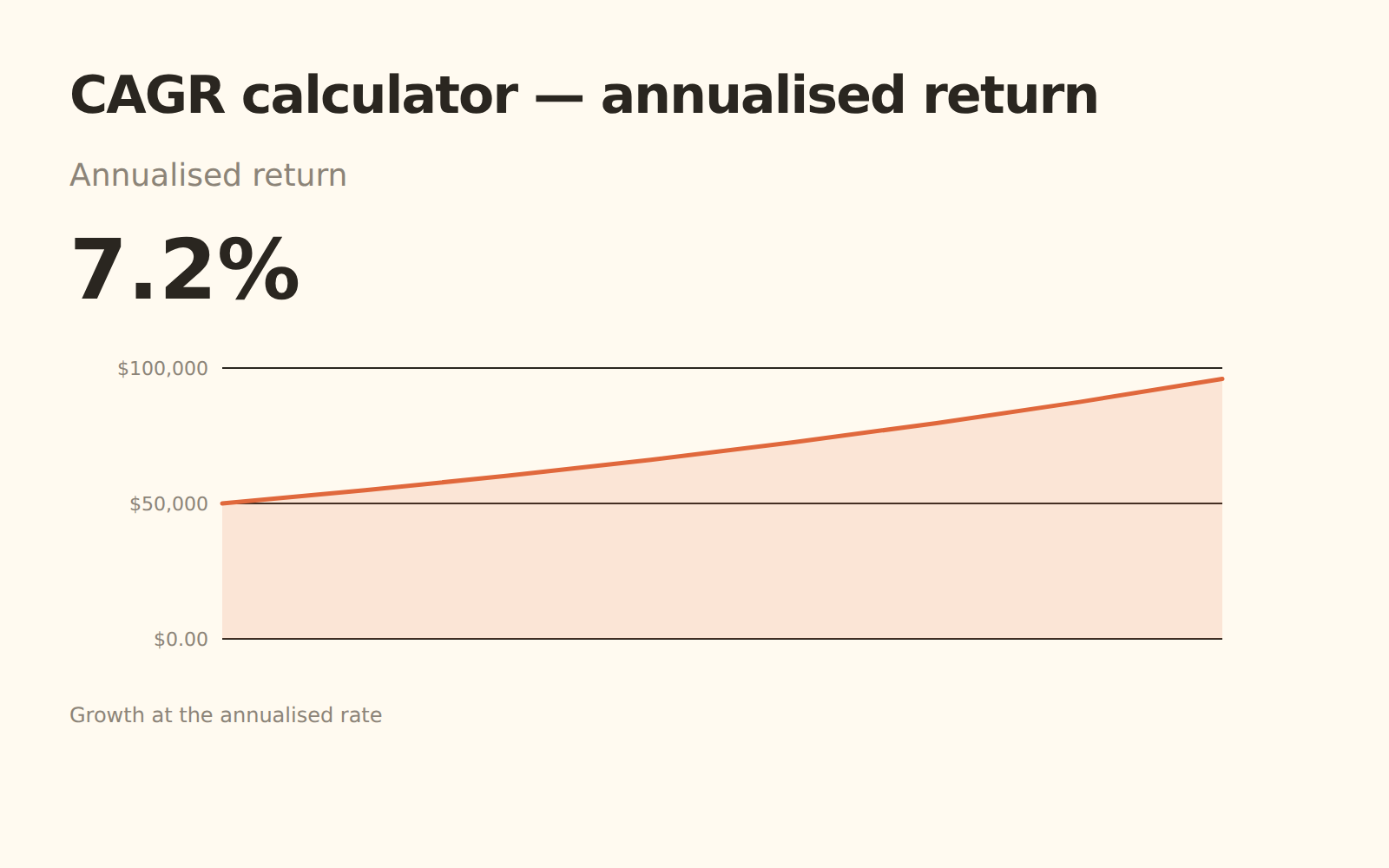
Turn a start value, an end value and a period into one annual growth rate — with your own deposits taken back out of it.
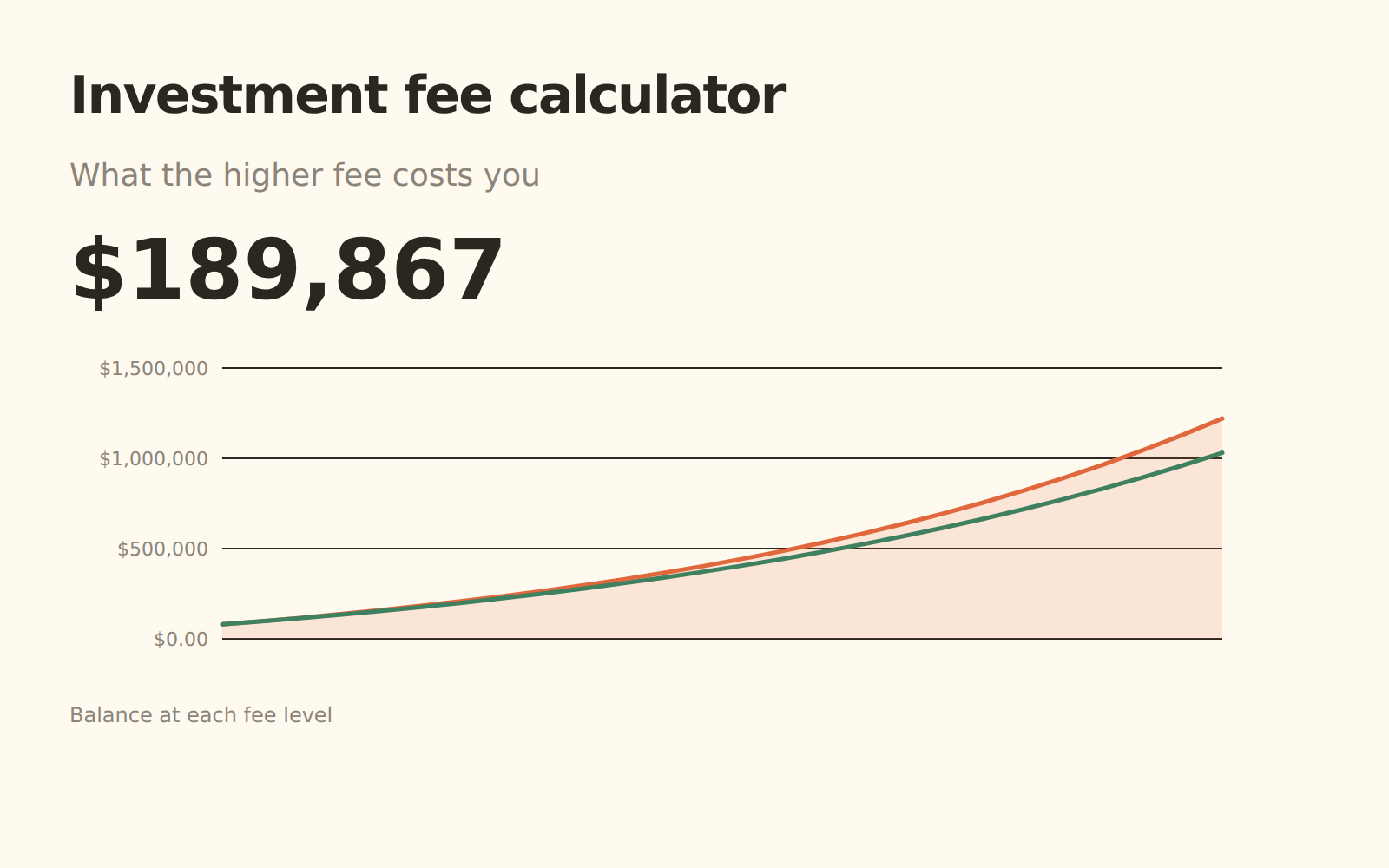
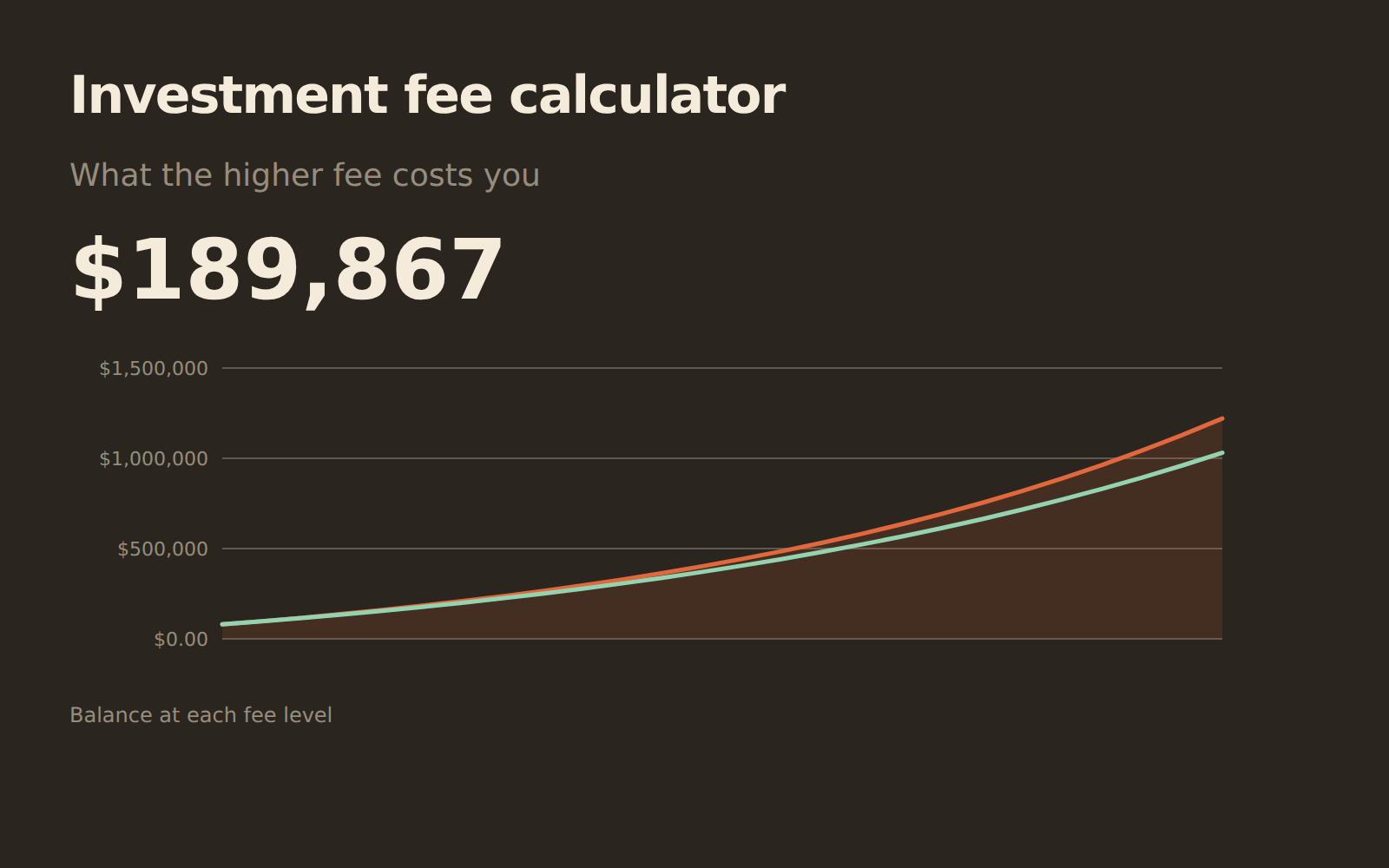
Investment fee
What a percentage point of fees actually costs over a working life, against a low-cost alternative.
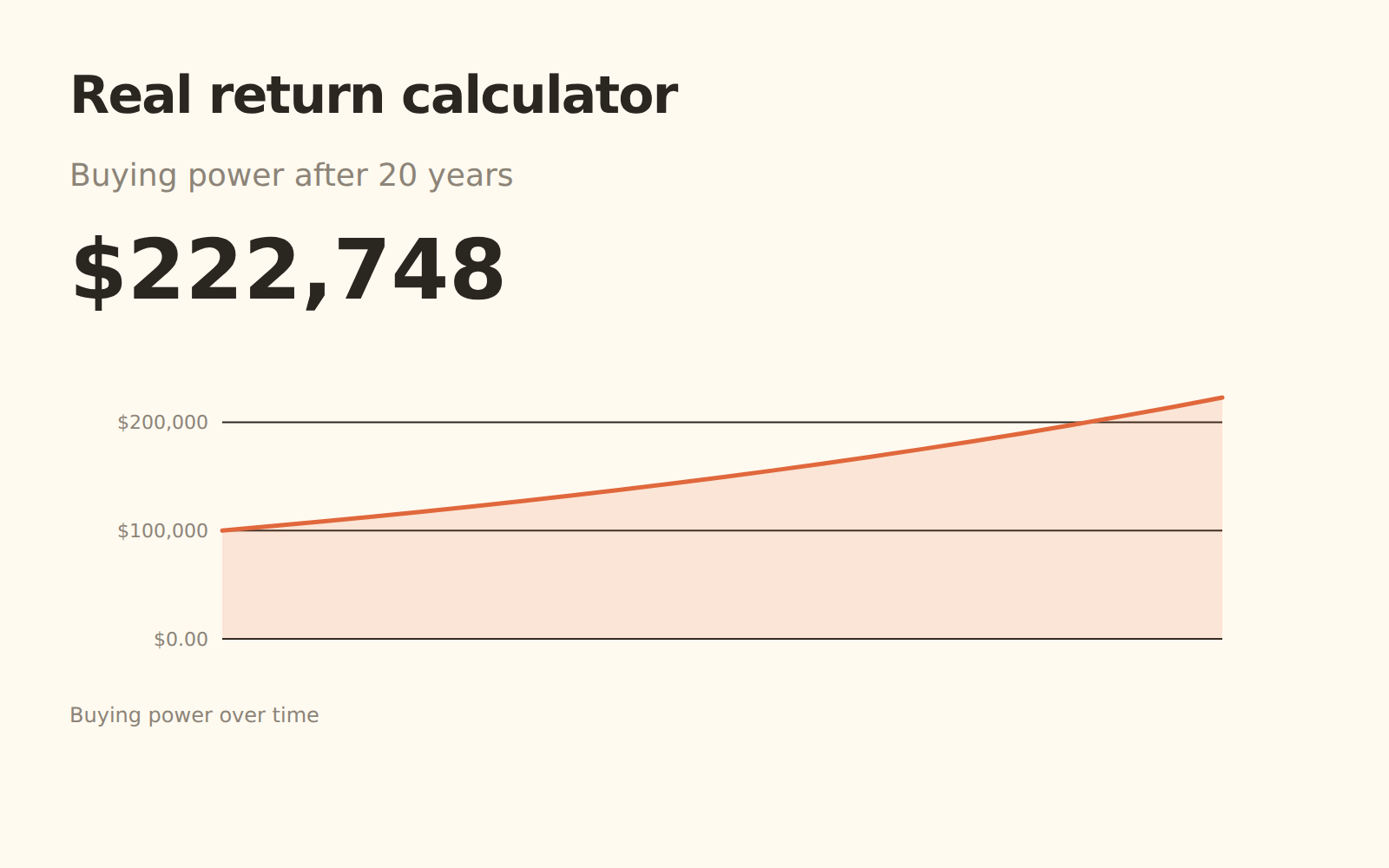
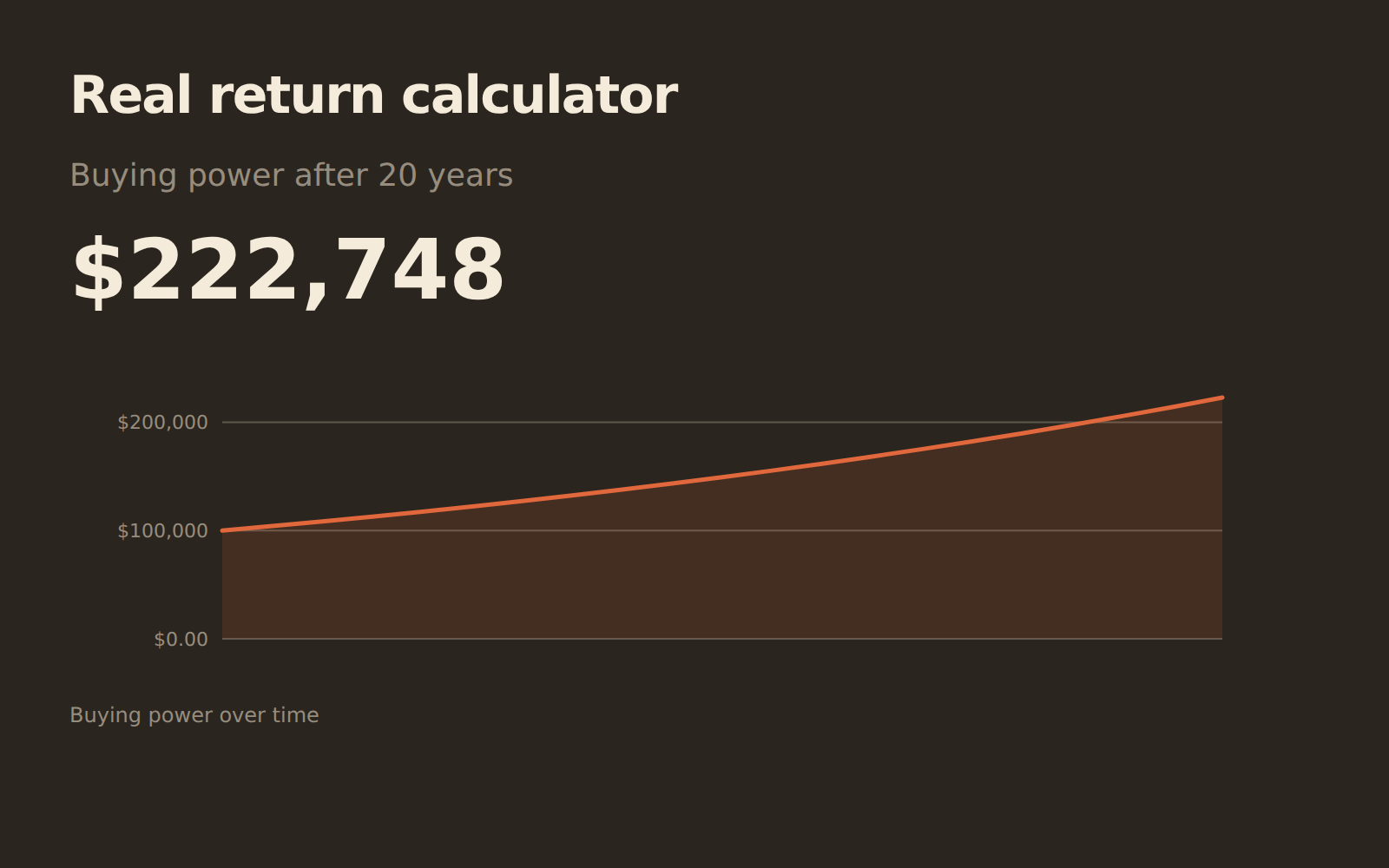
Real return
What a return is worth after inflation and tax — the growth in what the money can actually buy.
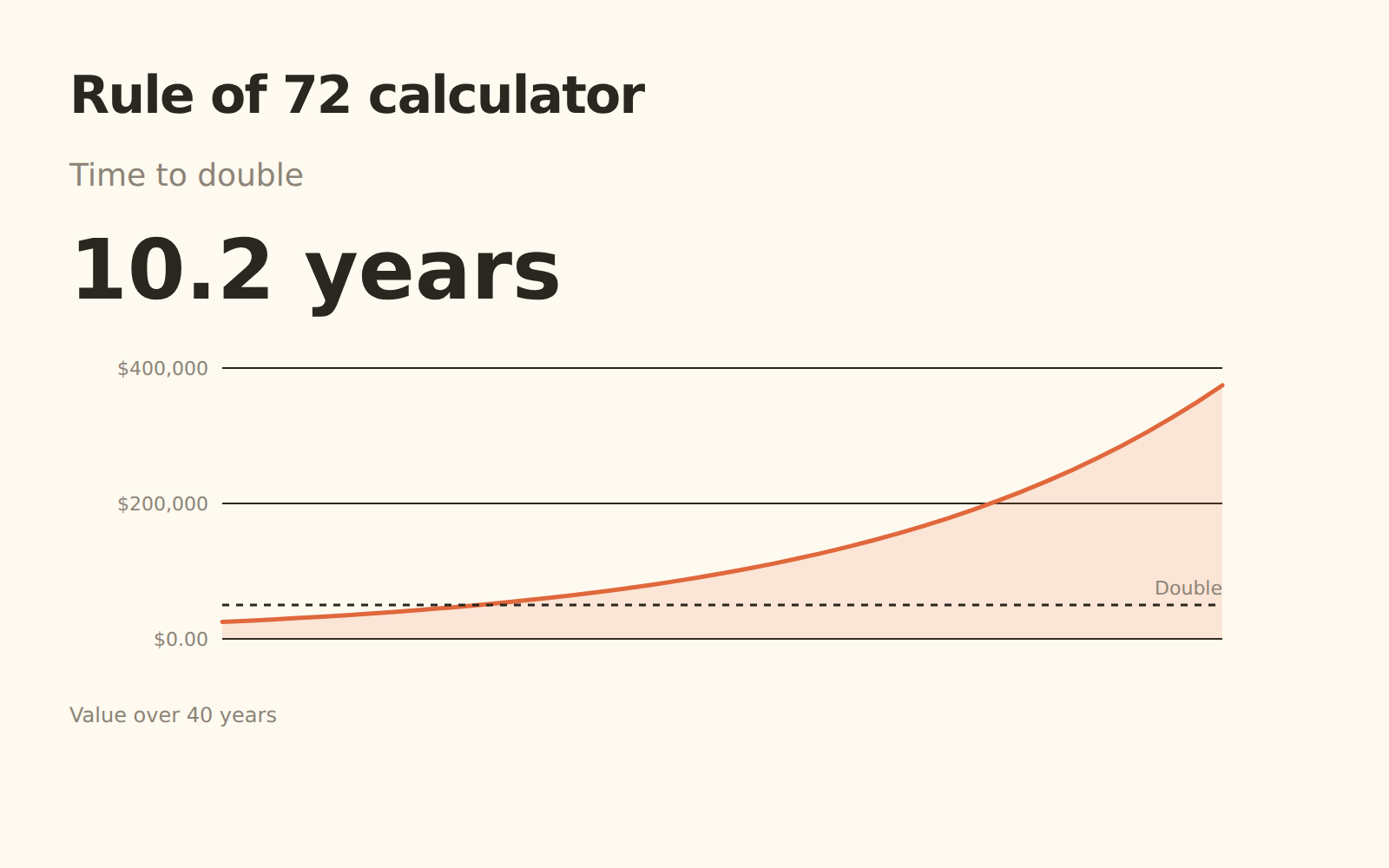
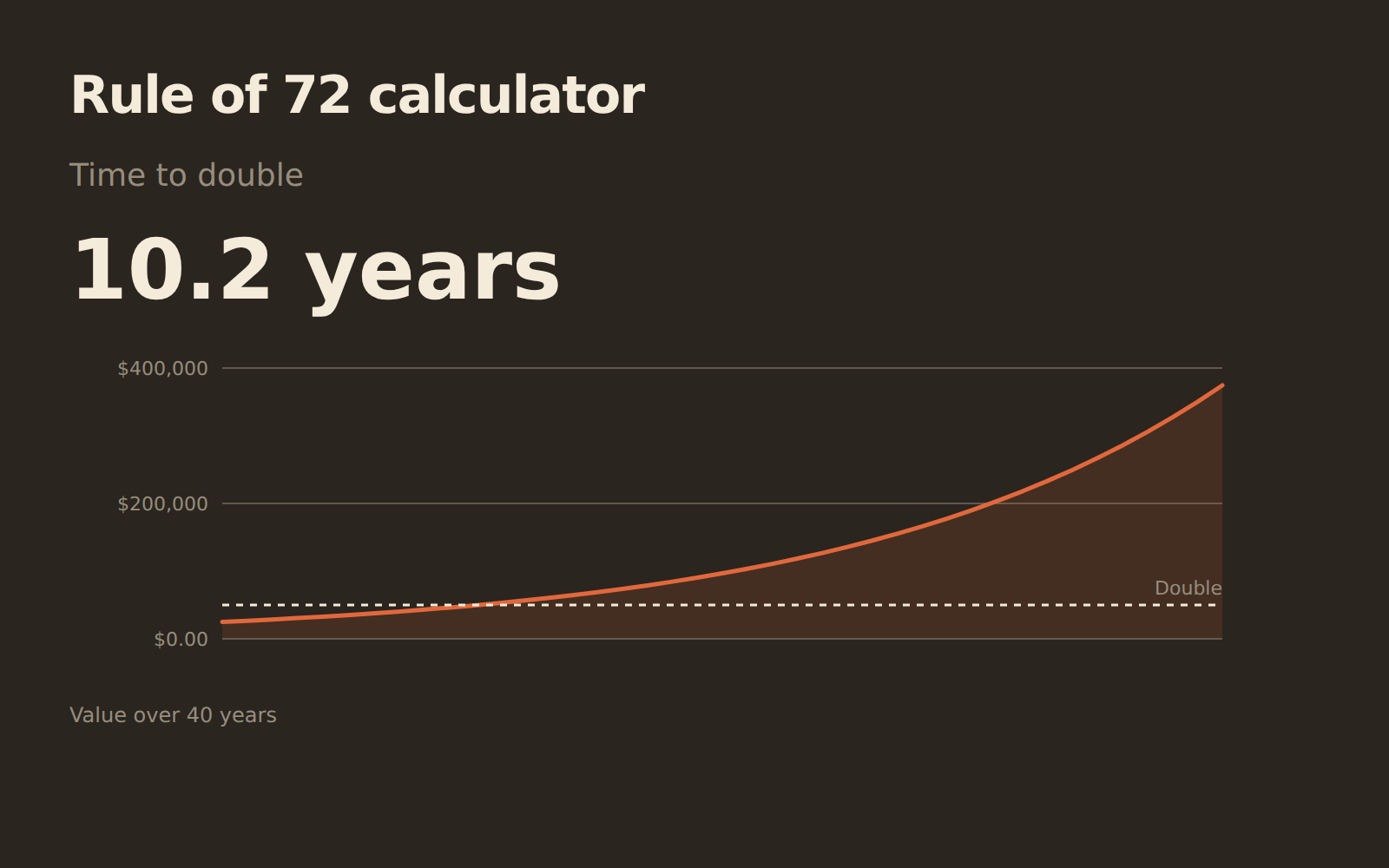
Rule of 72
How long money takes to double at a given return — the mental shortcut, and the exact answer beside it.
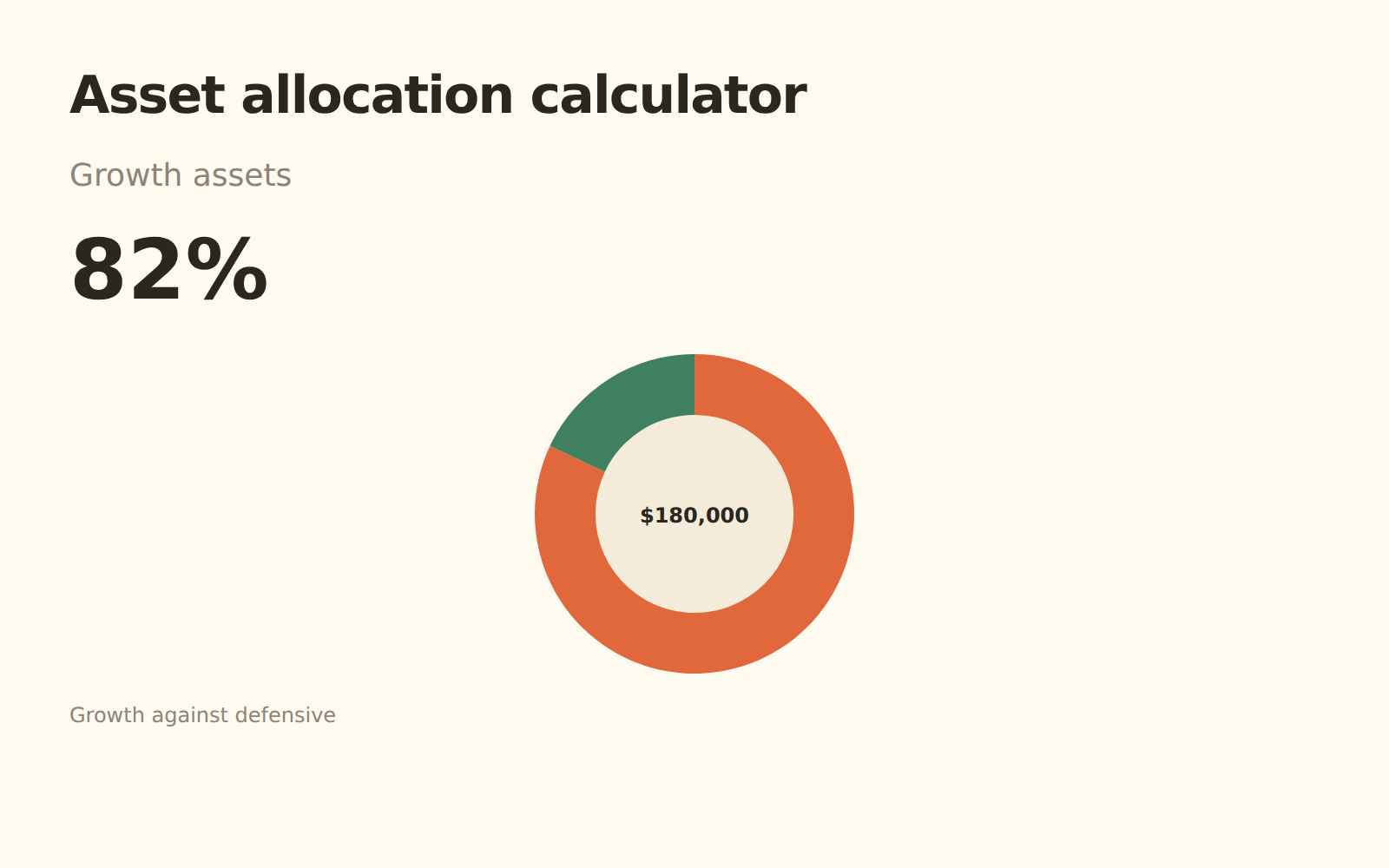
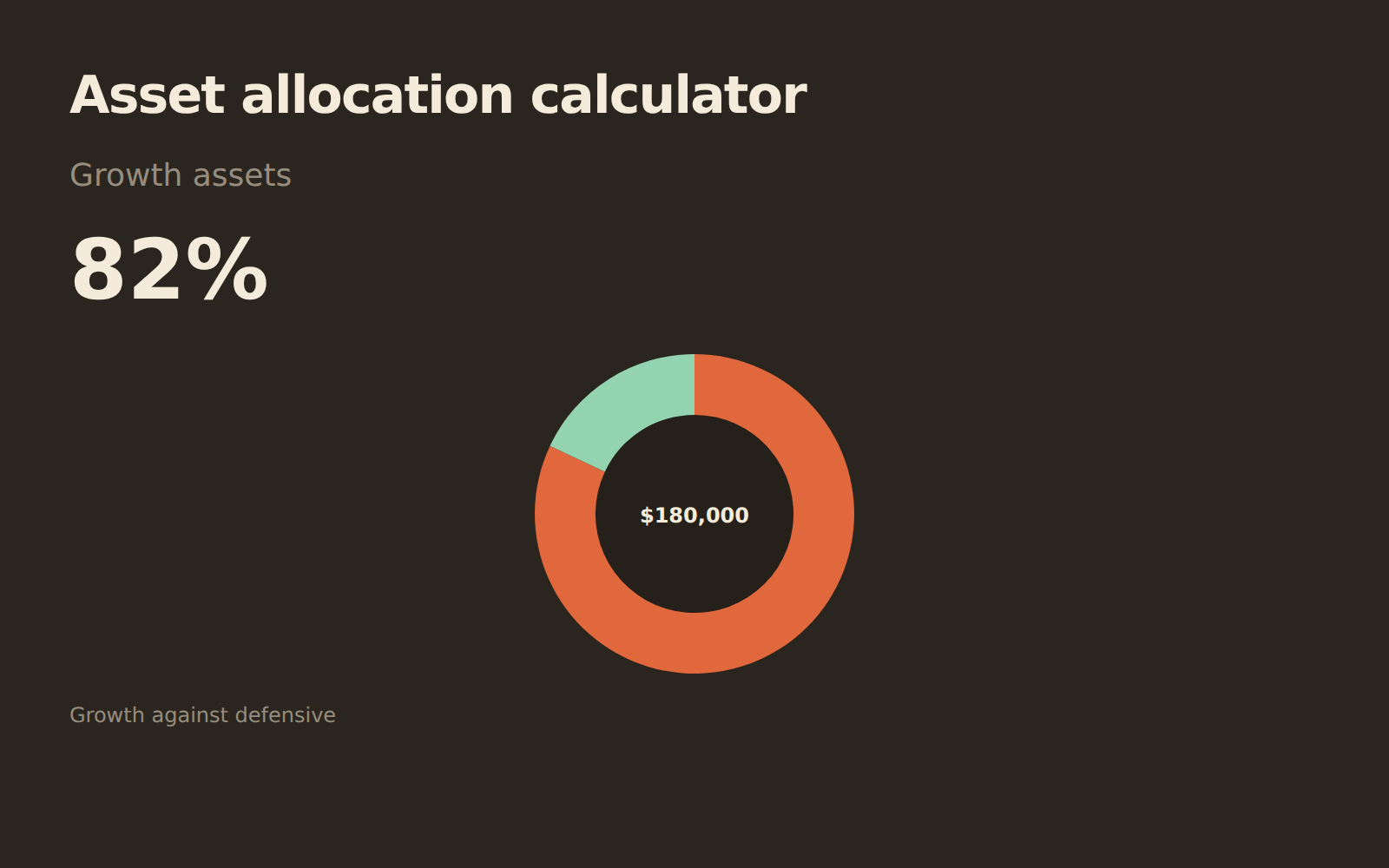
Asset allocation
A starting split between growth and defensive assets based on your age, your horizon and how you actually behave in a fall.
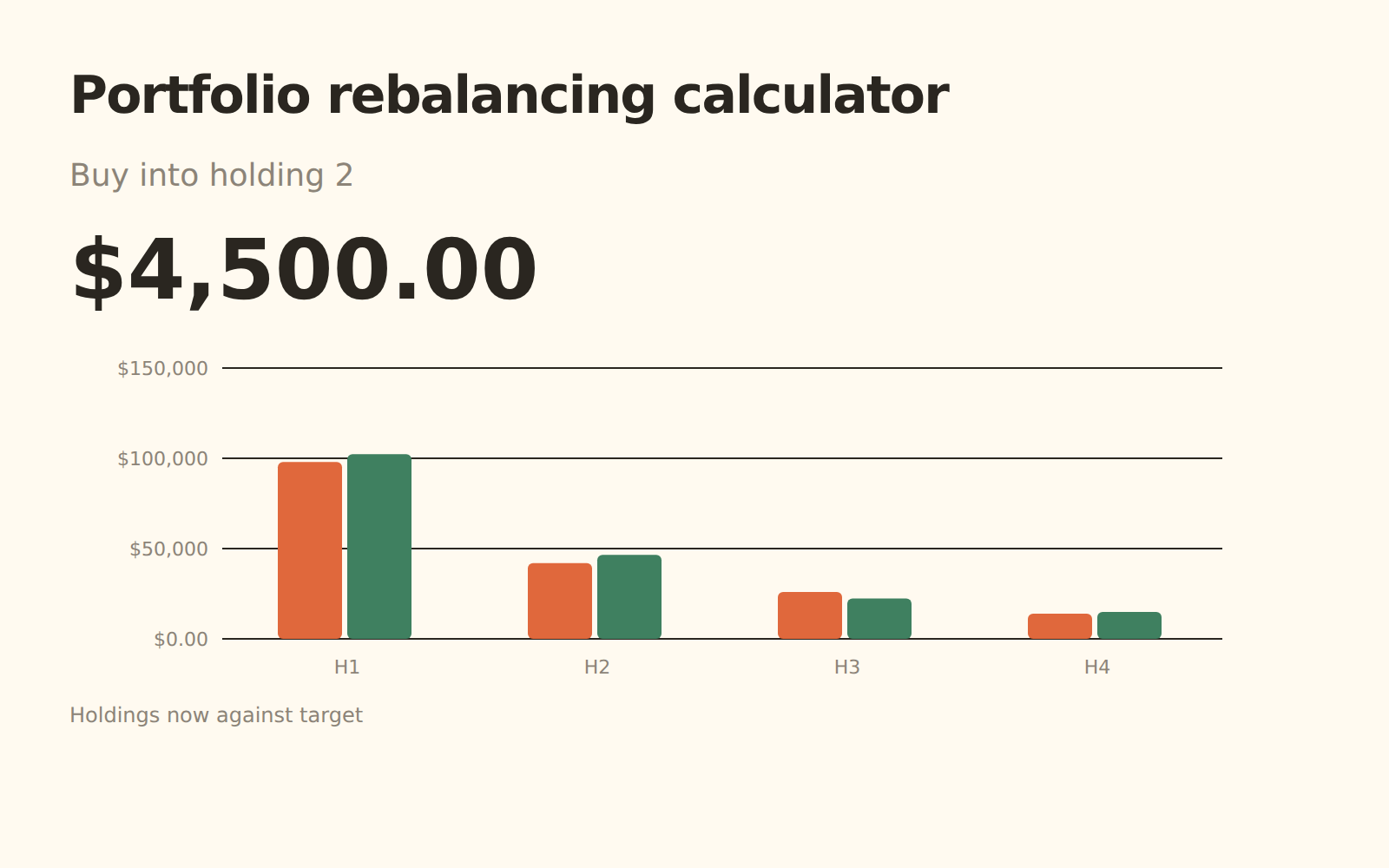
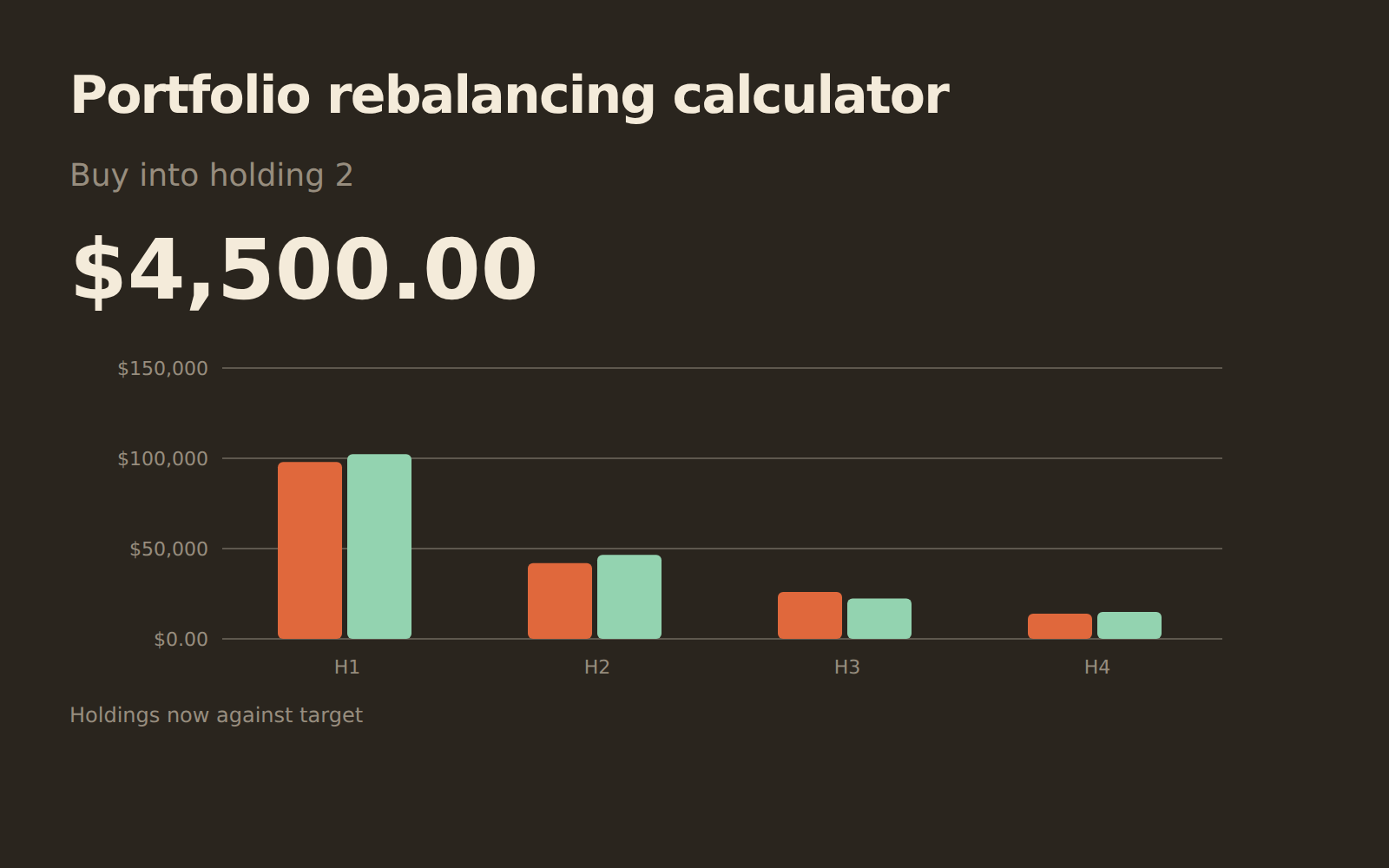
Portfolio rebalancing
The buy and sell amounts that bring each holding back to its target weight, using new money first where possible.
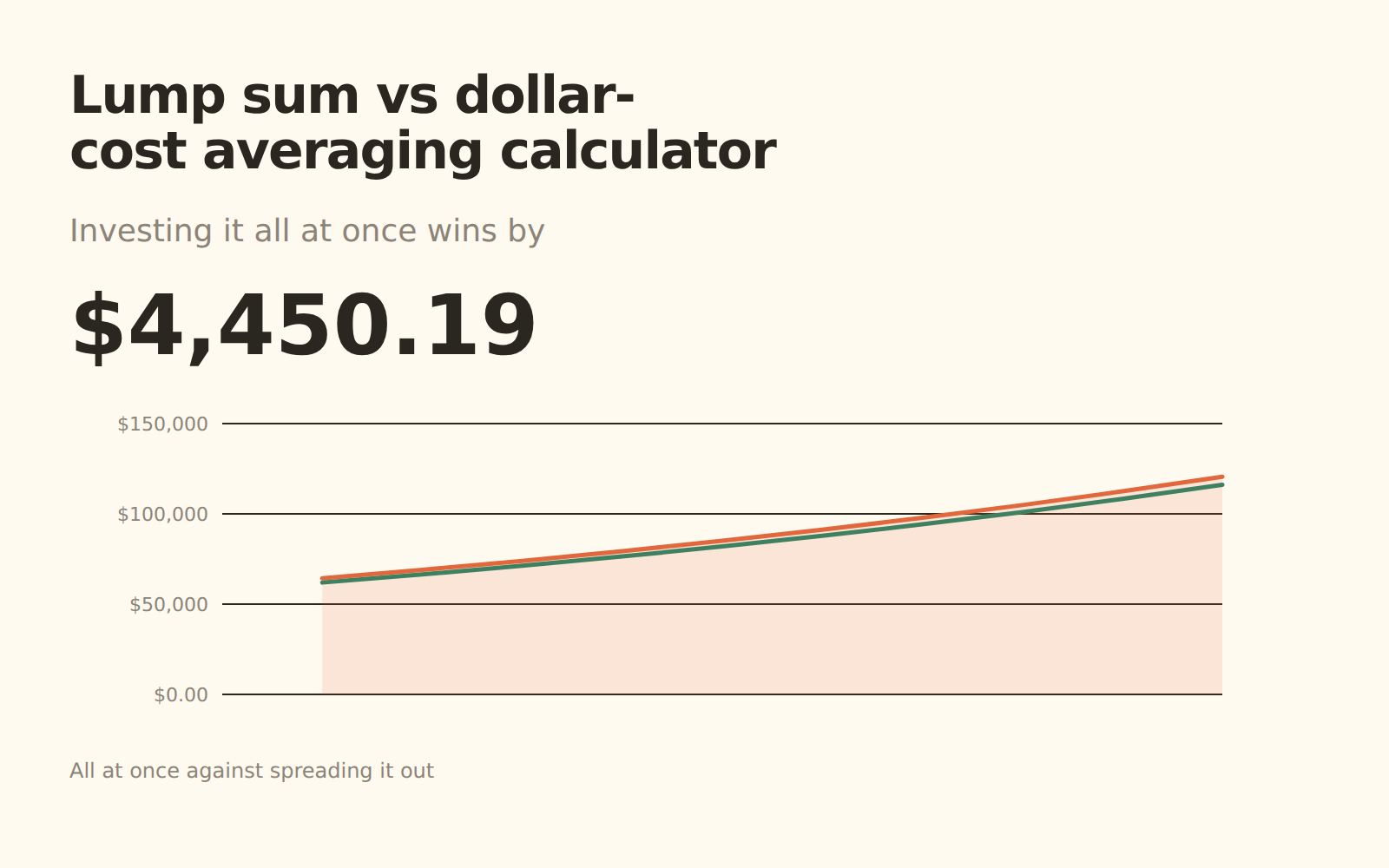
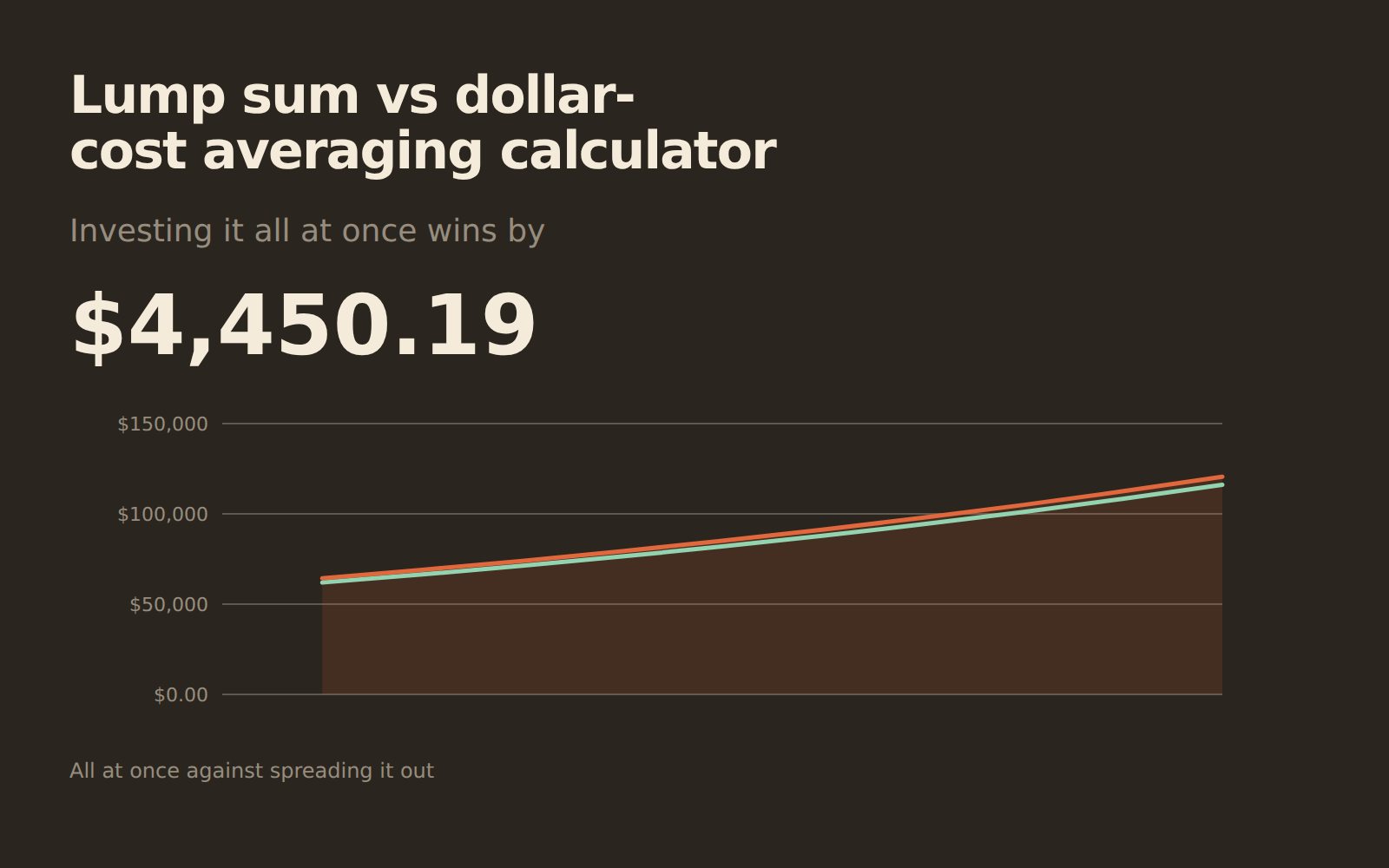
Lump sum vs dollar-cost averaging
Investing a windfall all at once against drip-feeding it in — the cost of waiting when markets rise, and why people still wait.
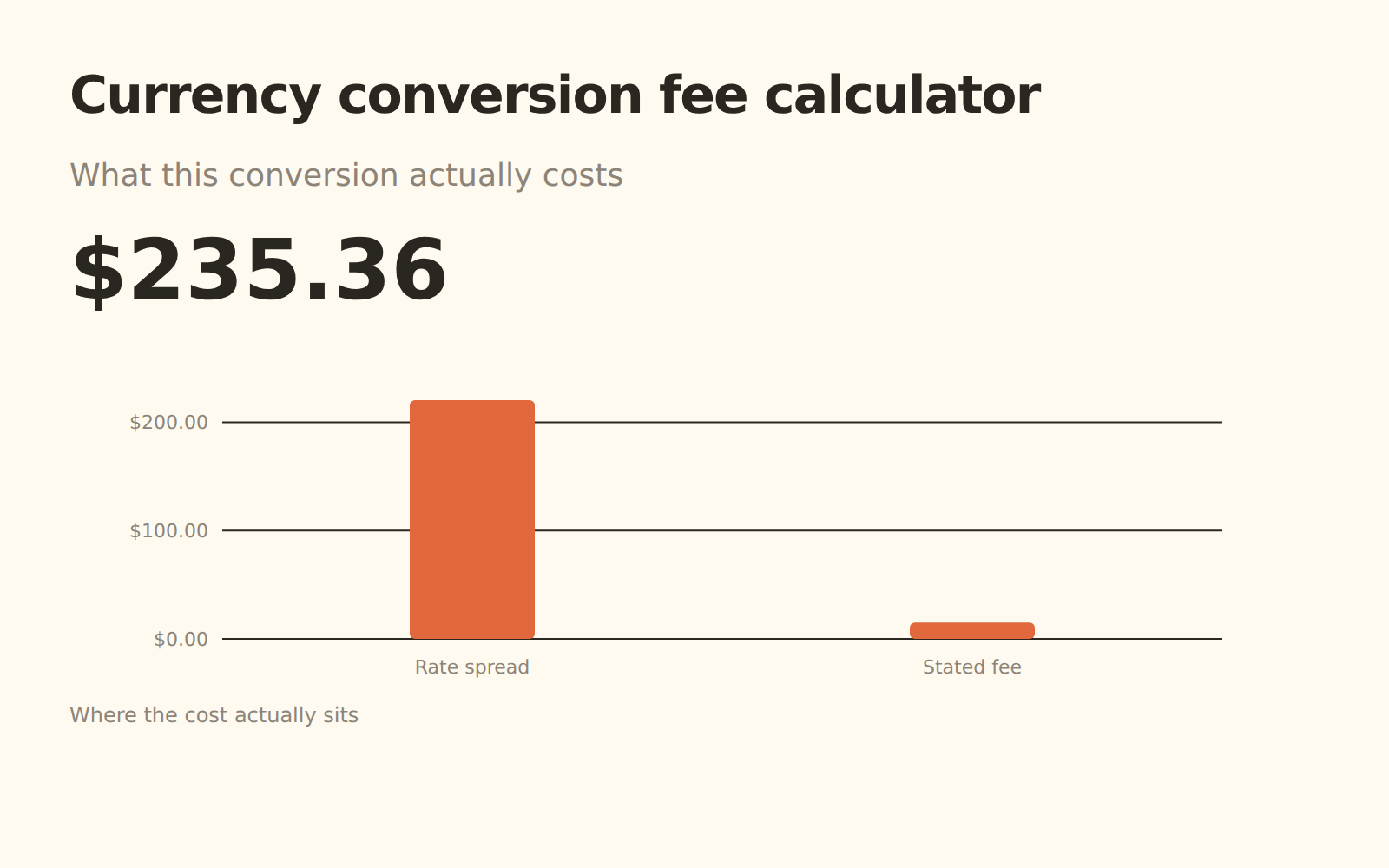
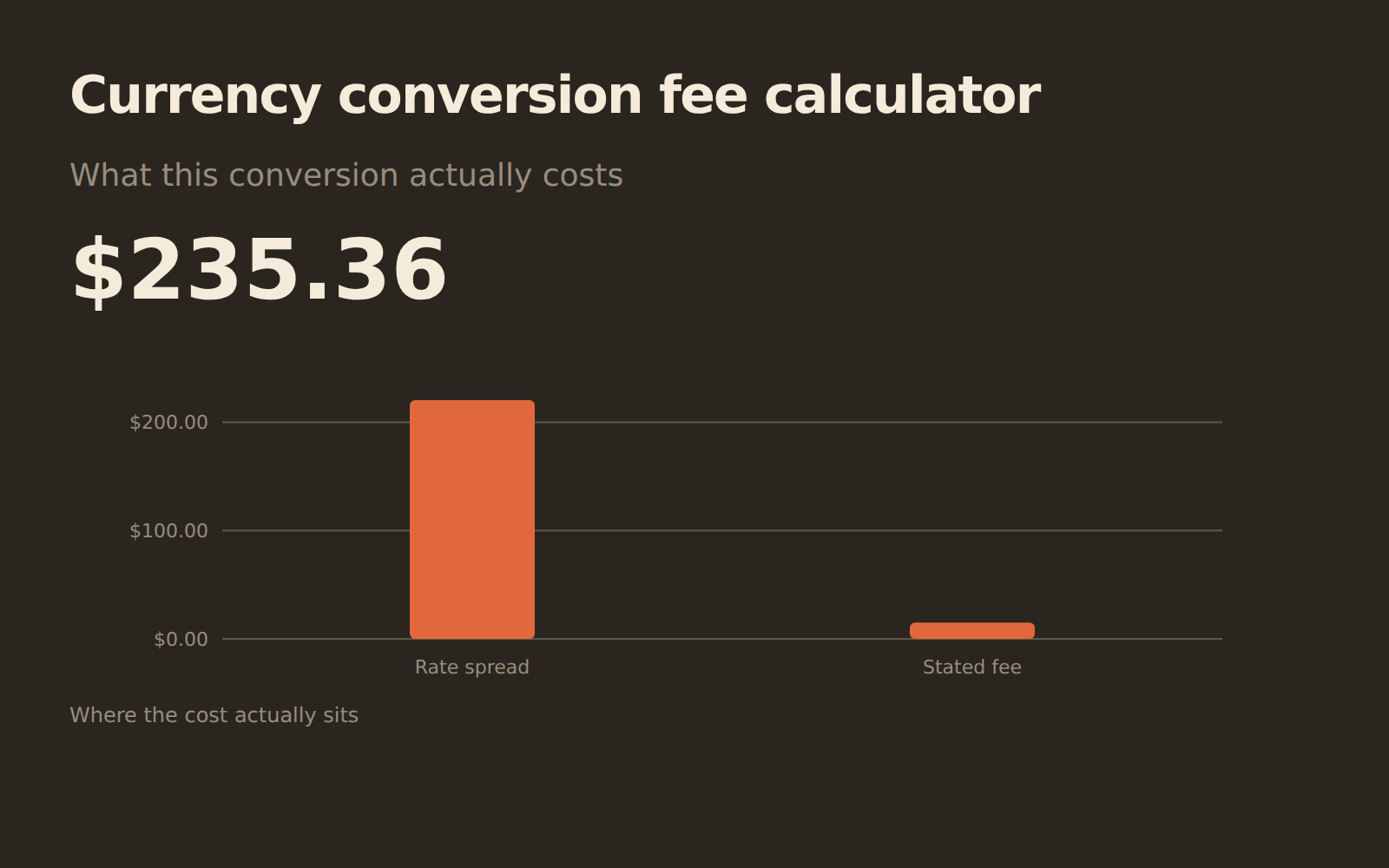
Currency conversion fee
The true cost of a conversion: the stated fee plus the margin hidden in the exchange rate you were given.
Rates, GST, break-even, and runway.
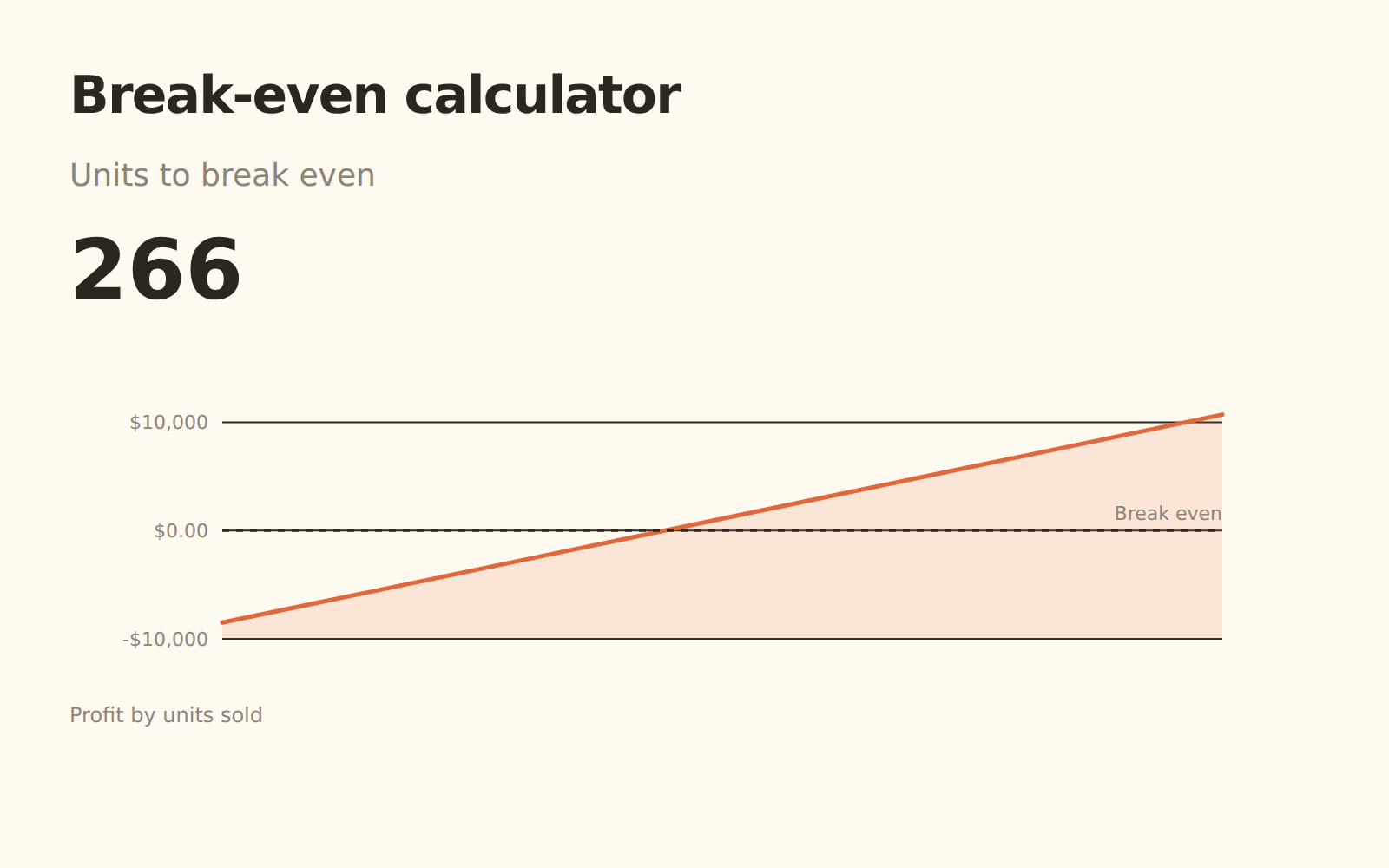
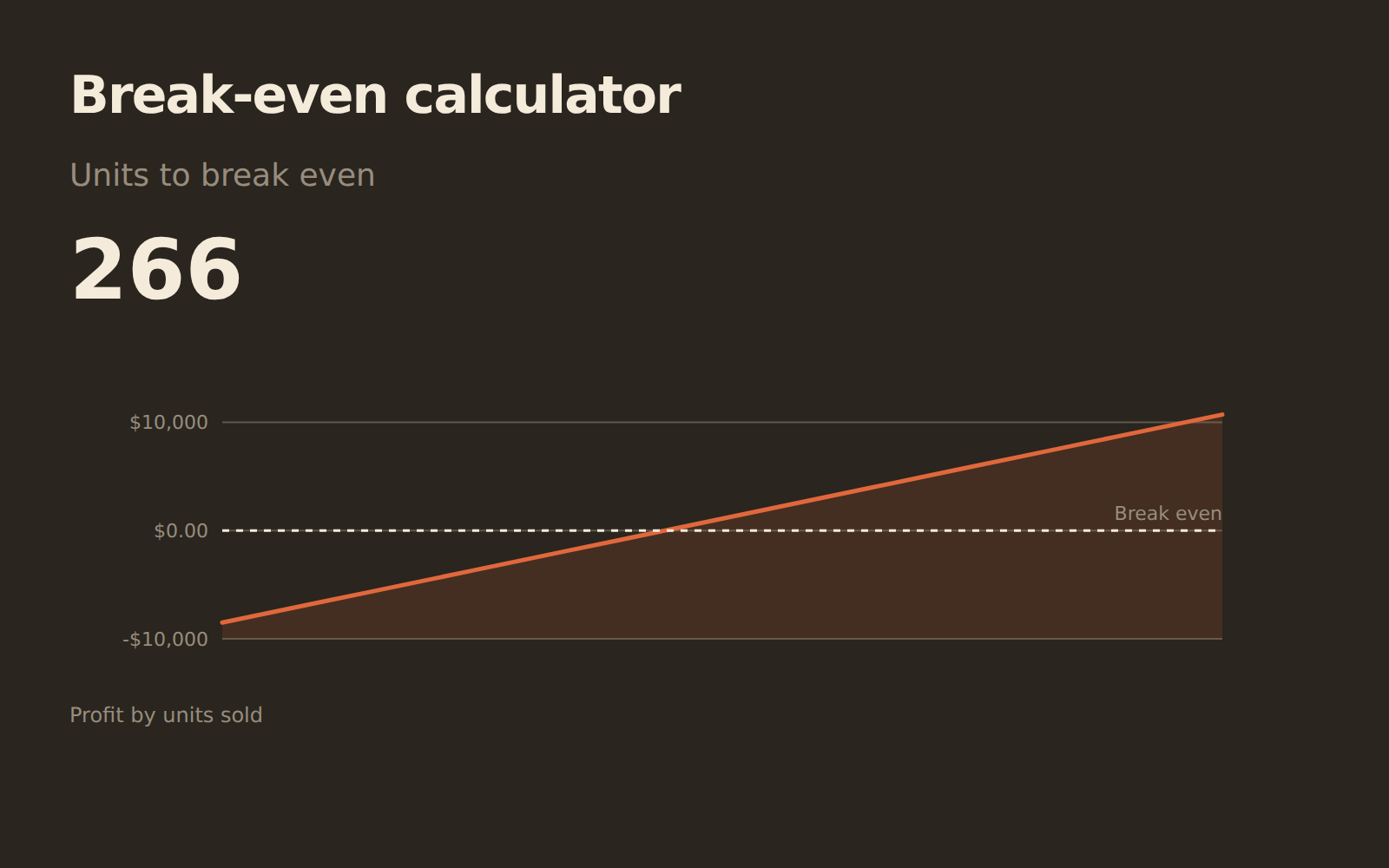
Break-even
How many units cover your fixed costs, and how many get you to the profit you actually want.
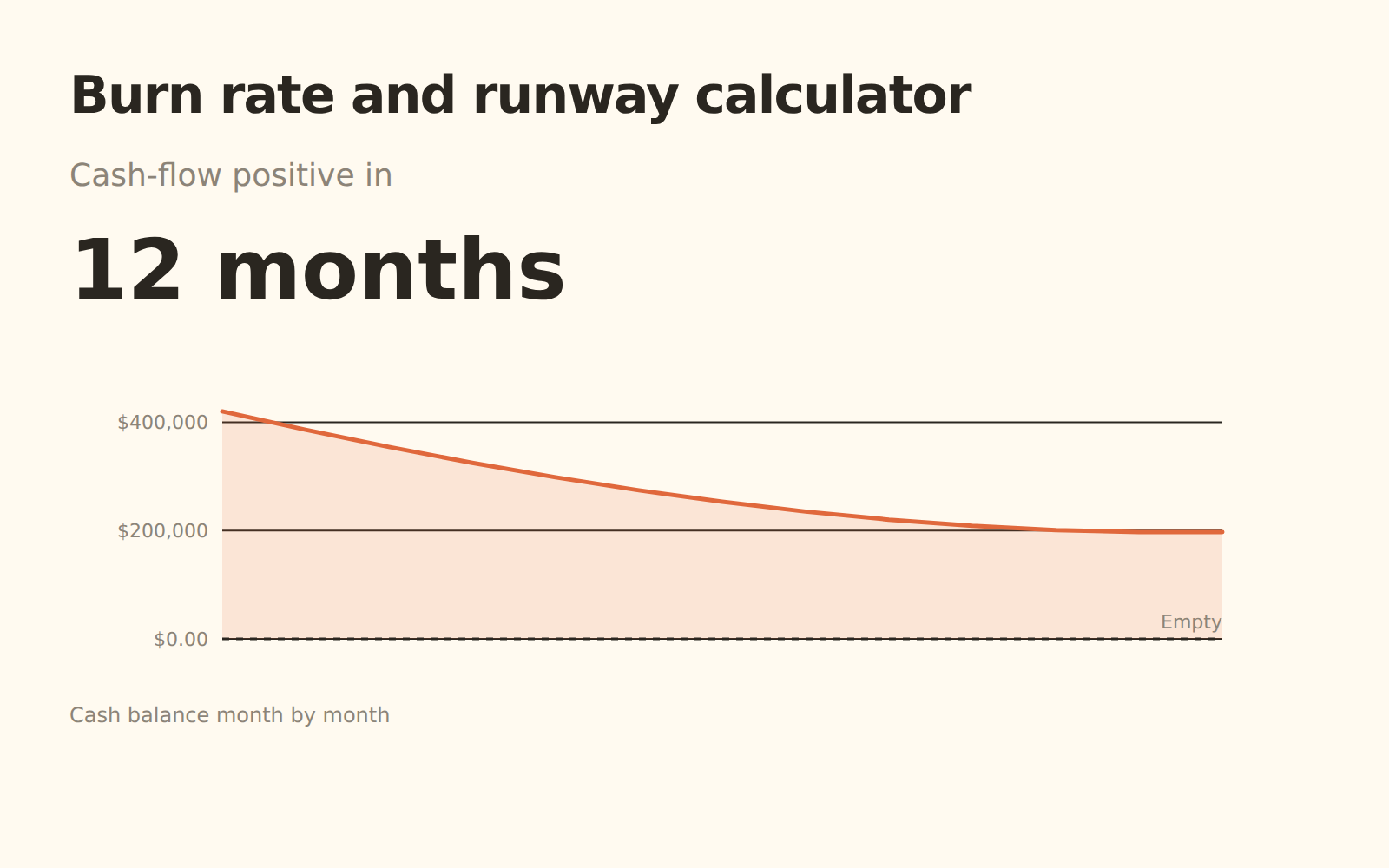
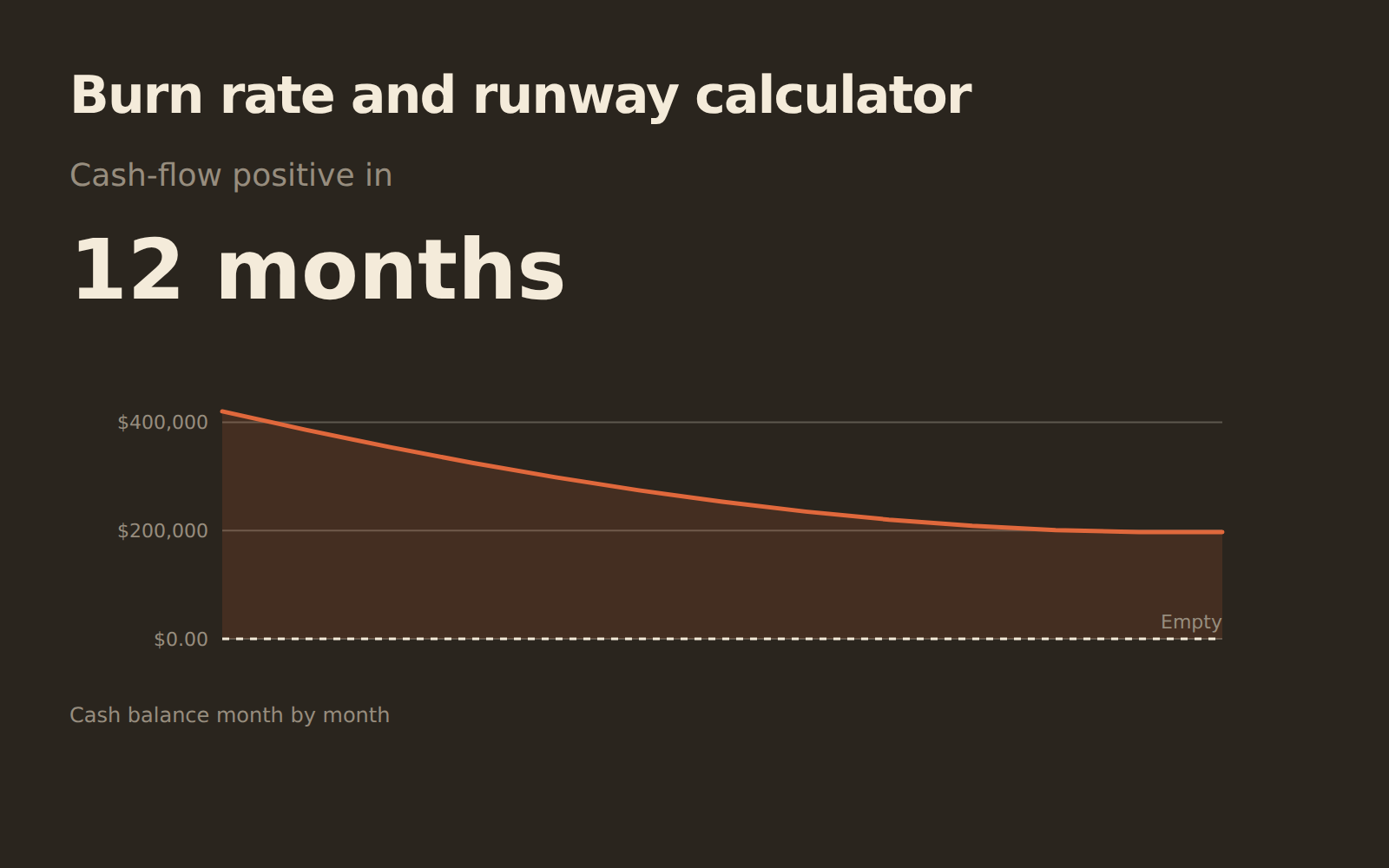
Burn rate and runway
How long the cash lasts at your current burn, and whether revenue growth gets there before the balance does.
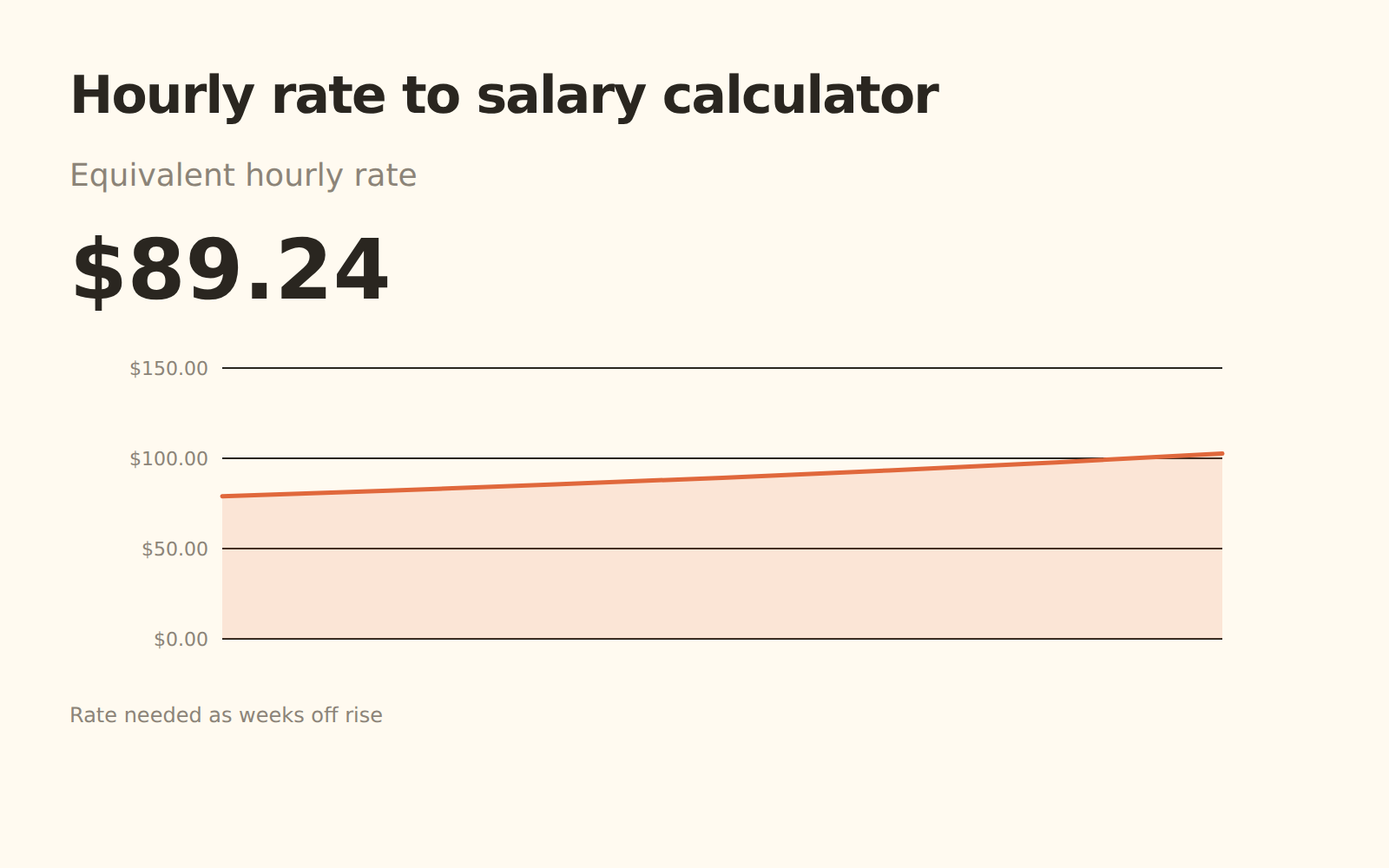
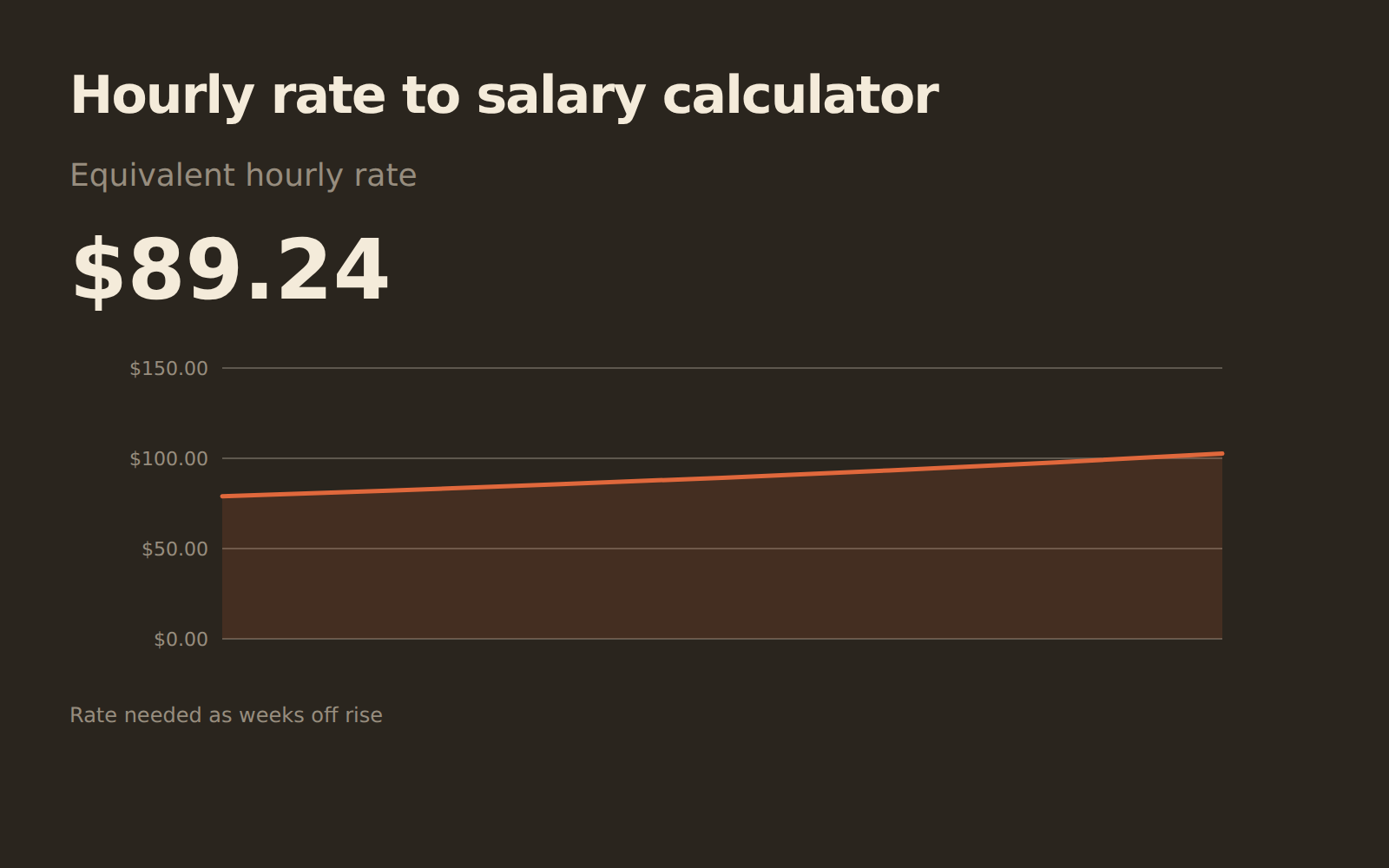
Hourly rate to salary
Convert a salary into the contract rate that actually matches it, including the weeks you will not bill and the costs an employer used to cover.
Contributions, caps, drawdown, and pension entitlements.
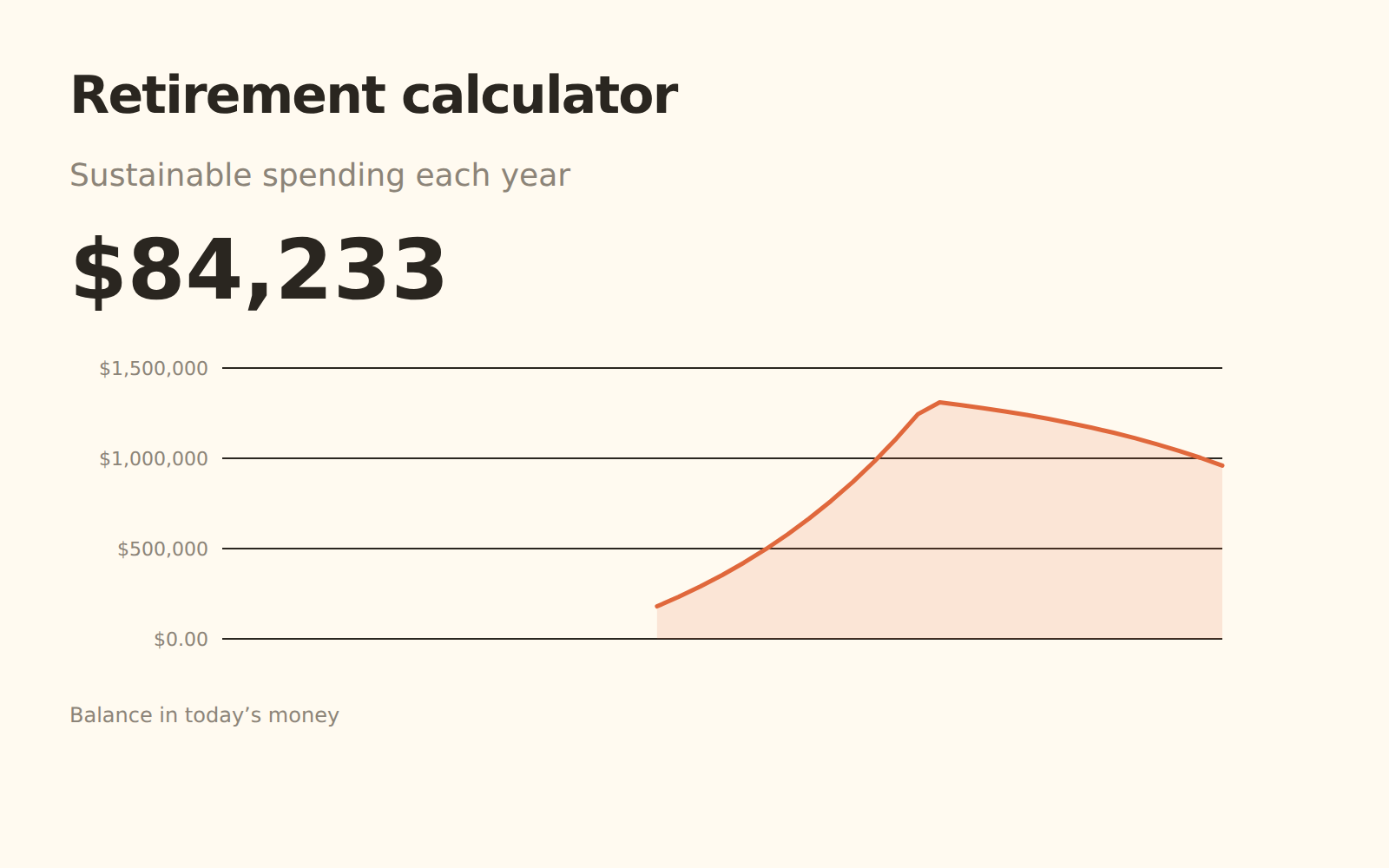
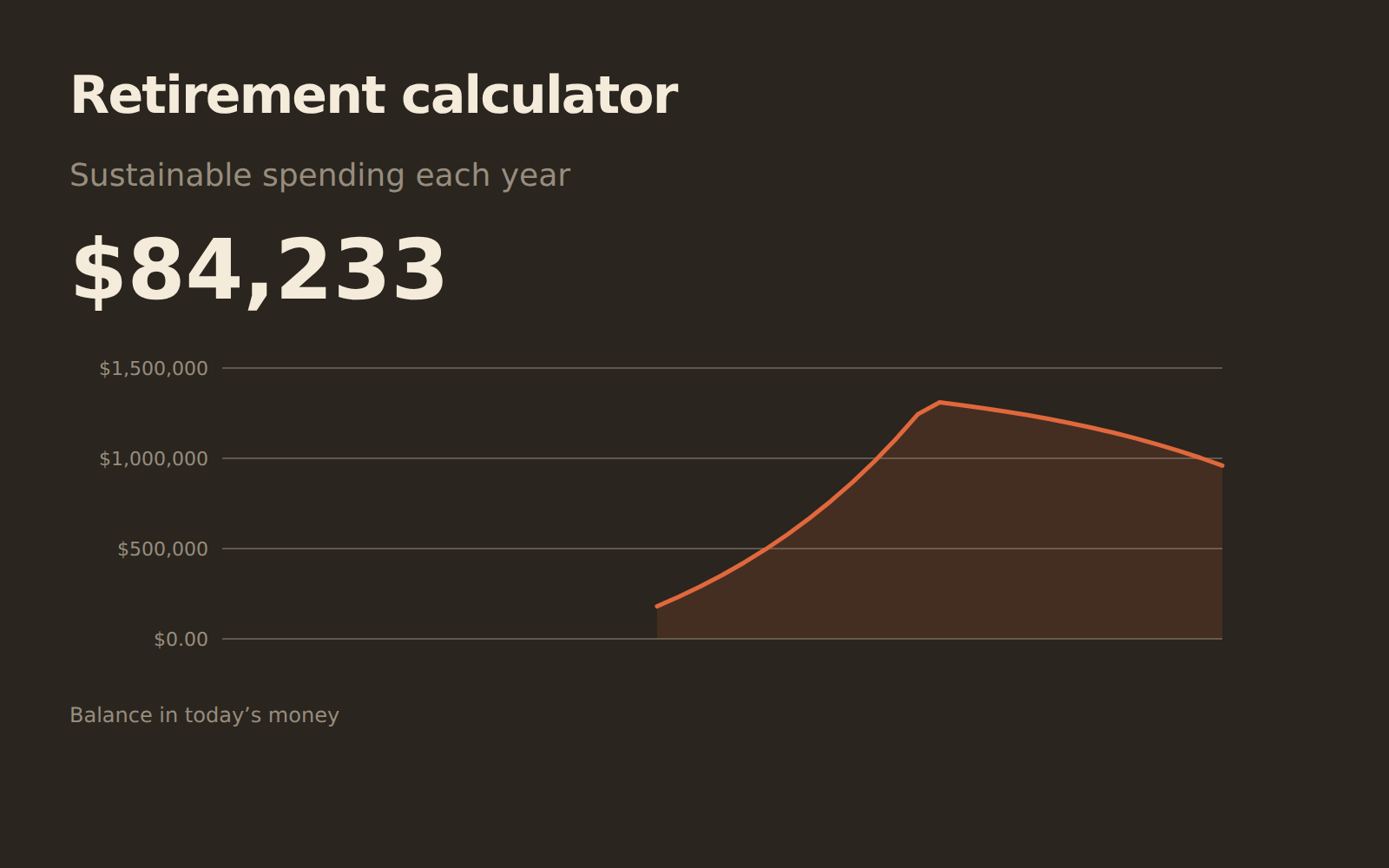
Retirement
What your savings will support in retirement, in today’s money — the balance you reach, the spending it sustains, and the age it runs out if you spend more.
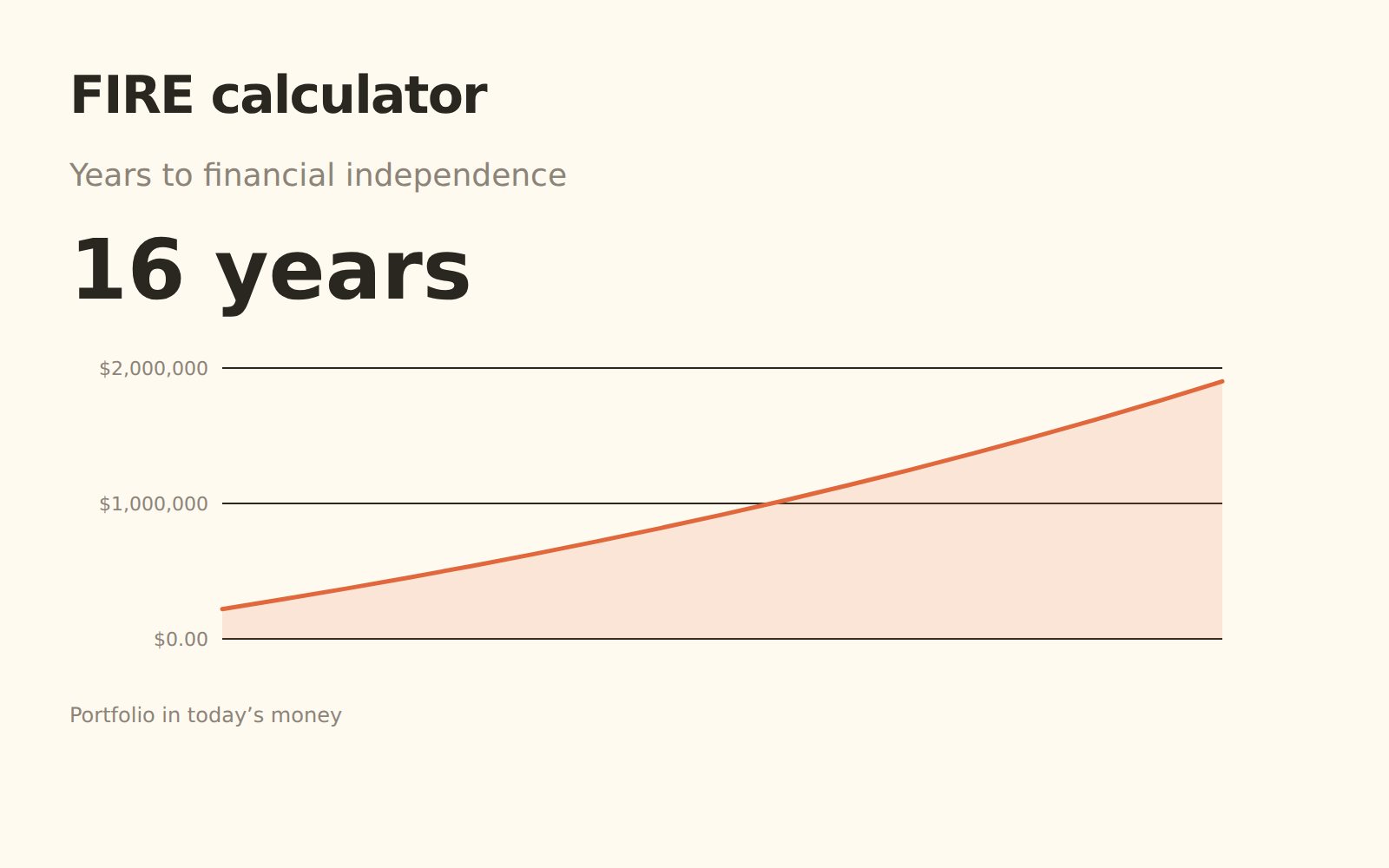
FIRE
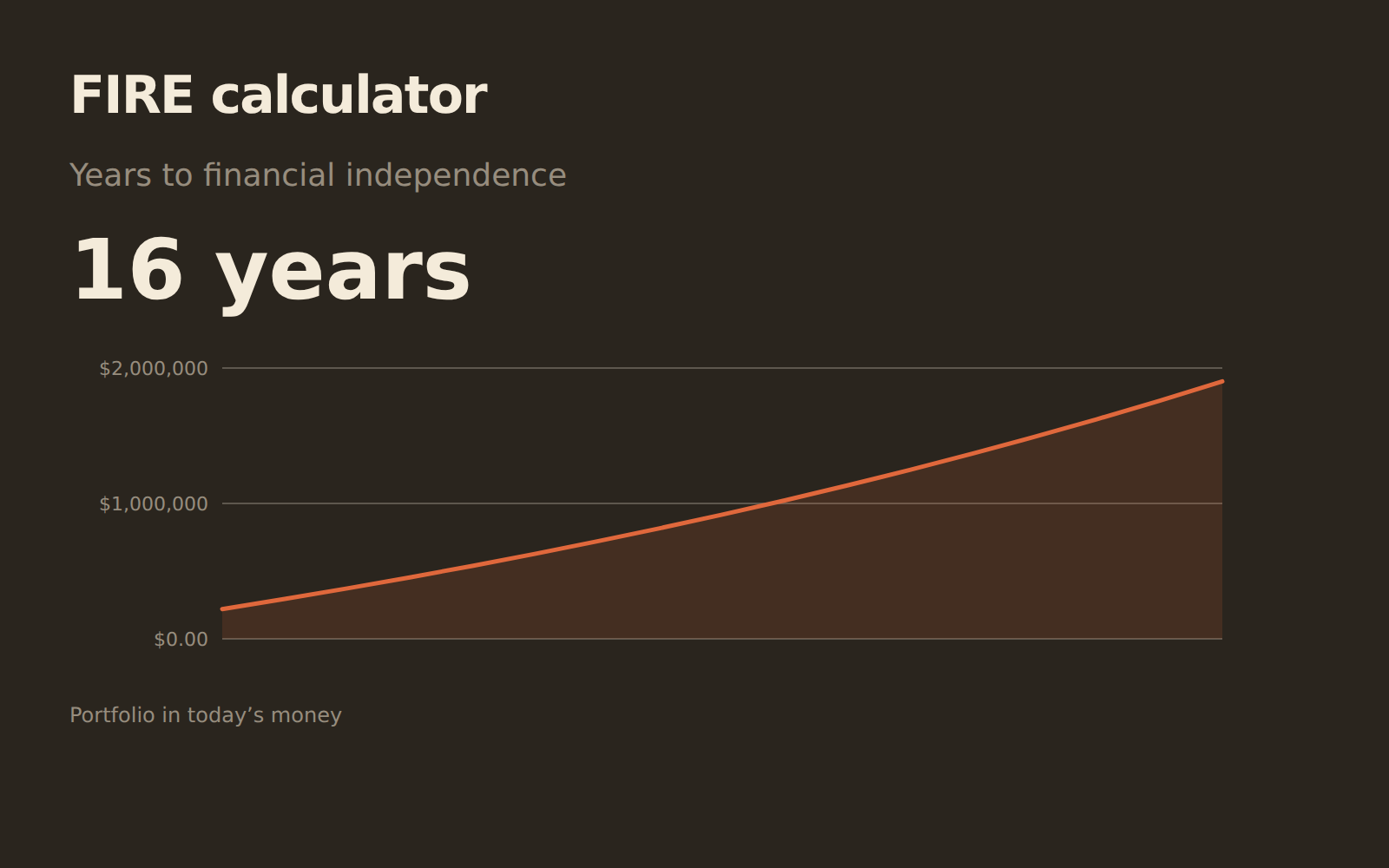
How long until your portfolio covers your spending, based on your savings rate and the withdrawal rate you are willing to rely on.
Tax
1Income tax, capital gains, and what you actually take home.