
A landlord’s money rarely sits in one place. Rent may land in a collection account. Mortgage payments leave another. Repairs, travel and letting costs can end up on a credit card.
A spreadsheet can still be the right system. The key is to stop collecting the data manually and to preserve enough context that a transaction can be traced to the right account, property and review decision.
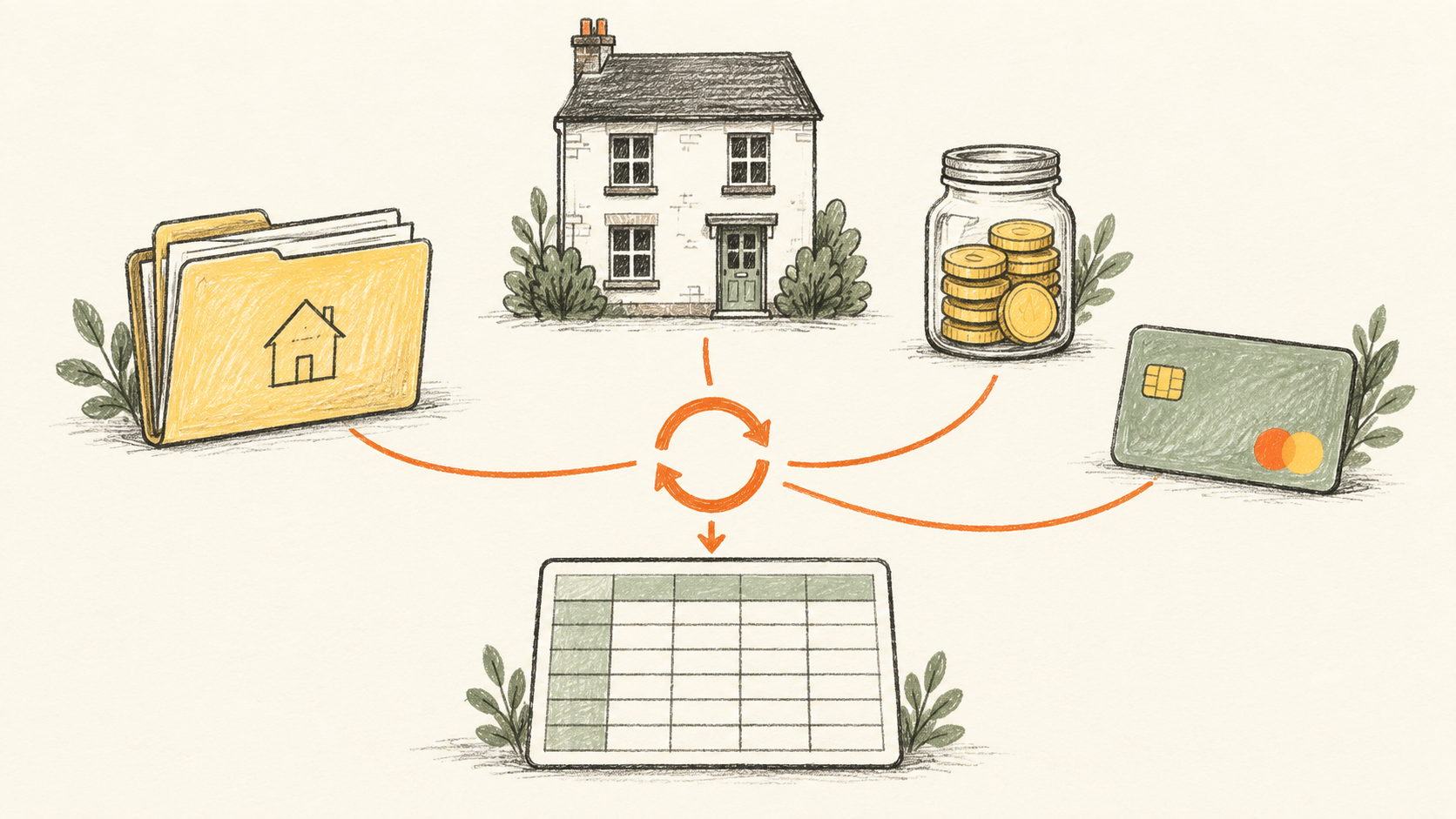
Set up a landlord transaction spreadsheet
Choose the accounts that genuinely belong in the view
Connect only the supported rent, mortgage, card and operating accounts required for the property or portfolio. Keep personal accounts separate unless you have a clear reason to include them.
Create one raw-data tab
Send every account into a controlled transaction tab with date, description, amount, currency, source account, institution and stable transaction ID.
Add property and activity fields outside the source data
Use separate fields for property, transaction type, supplier, repair status and evidence status. Preserve the original bank description.
Classify the obvious recurring items
Apply rules for known rent receipts, mortgage payments, agents and recurring utilities. Send uncertainty to a review queue rather than forcing a guess.
Treat transfers and card repayments carefully
Preserve both sides of a movement between owned accounts, but identify it as a transfer so it does not appear as income or spending twice.
Review the exceptions every month
Check new suppliers, mixed-use spending, large repairs and missing evidence before relying on your property totals.
One spreadsheet, three useful views
Use the transaction tab as evidence, then build views around it:
- By property: filter income, mortgage interest, repairs and running costs for a single address or entity.
- By account: find the origin of each entry when a charge needs explaining.
- Review queue: track items that need an invoice, receipt, allocation or accountant decision.
Keep the source amount and original description alongside any cleaned merchant name or category. It is much easier to review a repair or rent receipt later when you can see exactly what the institution supplied.
A bank feed does not decide tax treatment
Transaction data helps assemble the record. It does not decide whether a cost is allowable, capital, personal or apportioned. Check current requirements and retain the supporting documents. Where a figure affects a return or a material decision, get advice from an accountant or tax adviser.
Useful fields for a rental-property spreadsheet
| Field | Use |
|---|---|
| Source account | Distinguish rent, mortgage, credit-card and operating activity. |
| Property or entity | Allocate a transaction without changing the original bank record. |
| Transaction type | Separate rent, finance, repair, utilities and transfers for review. |
| Evidence status | Show where an invoice, receipt or explanation is still needed. |
The raw bank fields provide traceability; the review fields make the spreadsheet useful.