
Spreadsheets are not the problem. Stale source data is.
If your VAT workings already live in Excel or Google Sheets, replacing them before a deadline adds risk. The more useful move is to keep the workbook, give it a controlled bank-data source, and preserve the downstream process your team or adviser already trusts.
BankSync gives the spreadsheet a recurring feed of authorised bank transactions. Your bridging tool remains the separate, HMRC-recognised product responsible for its own filing workflow.
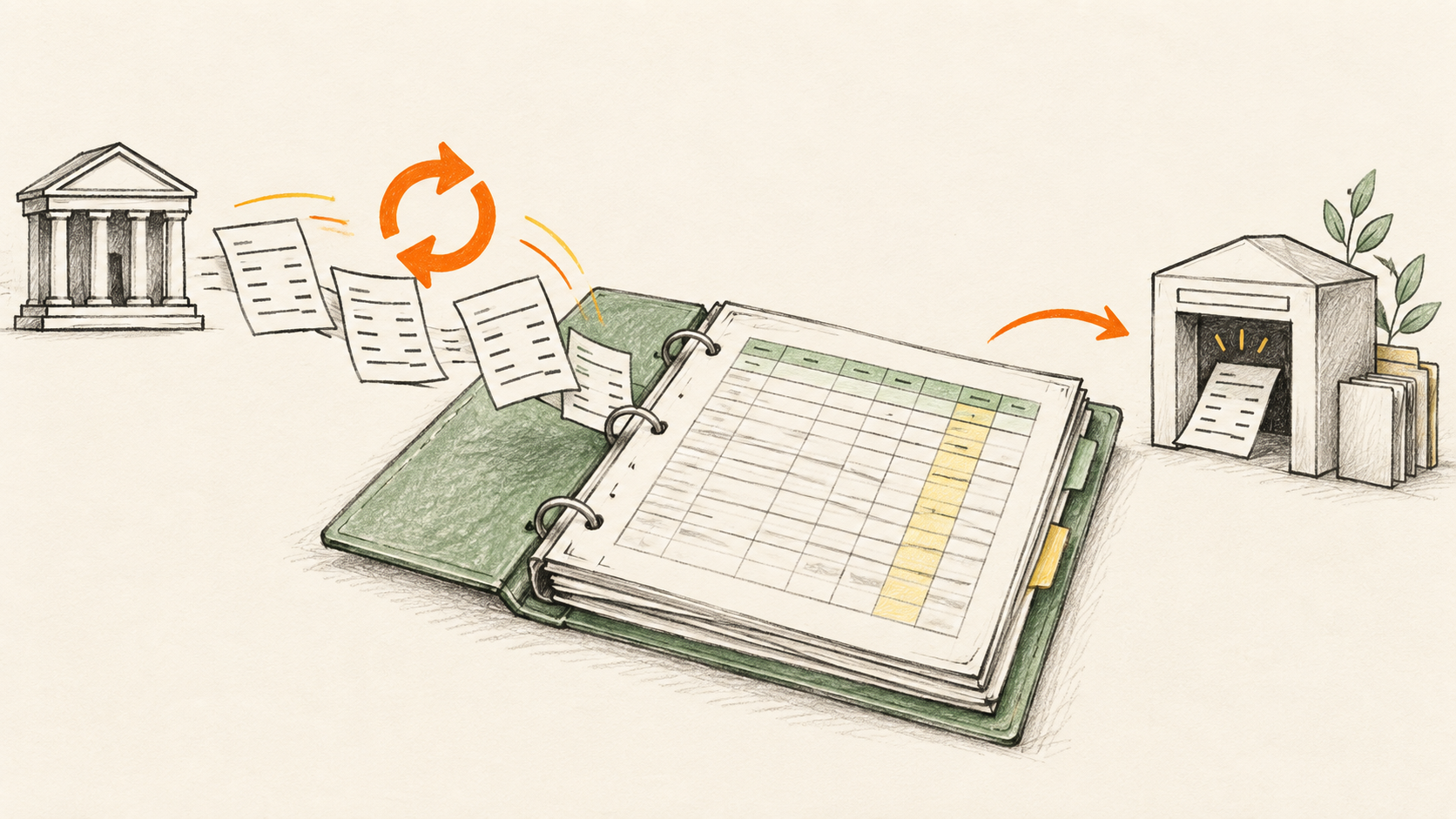
Use a bank feed without replacing the VAT spreadsheet
Keep a protected master workbook
Make the working file clear, versioned and accessible to the people who review it. Do not put a feed into the final summary or filing cells.
Create a raw transaction tab
Use a dedicated tab for authorised bank data. Keep formulas, adjustment journals, VAT workings and accountant notes elsewhere.
Connect supported accounts through Open Banking
Choose the required UK accounts and complete the provider-hosted, read-only consent flow.
Map the source fields once
Map dates, descriptions, amounts, currency, account and transaction ID into the columns your workbook expects.
Run and verify the initial history
Check opening and closing dates, material items and transfer handling before your spreadsheet consumes the new rows.
Use your bridging tool separately
Follow the provider's current instructions for the digital link, VAT return and submission. Confirm that its exact workflow meets your requirements.
Keep the digital path clear
Treat the feed as source evidence. Treat the spreadsheet as the calculation and review layer. Treat the bridging tool as the separate submission layer. That makes responsibilities clearer when a number needs explaining later.
A safe workbook keeps raw bank rows append-oriented and traceable. Add classification, VAT treatment and exceptions in separate columns or tabs. Do not overwrite original descriptions or stable transaction identifiers.
What to check before a filing
- the bank history covers the required period;
- transfers between your own accounts are not counted as spending or income twice;
- pending, reversed and late-posting card items have been considered;
- invoices, receipts, payroll and non-bank adjustments are included where needed;
- the bridging tool remains HMRC-recognised for the relevant return and its requirements are met.
BankSync does not determine VAT treatment or submit a return. For filing decisions, use the deadline and official guidance that apply to you, and seek professional advice where needed.