BankSync Tables template
Debt Payoff
When each card and loan is clear, what the interest costs, and which to pay off first.
 BankSyncVerified by BankSyncVerified by BankSync Verified
Item 1 of 1: What you owe, the road to zero, and which debt to pay off first.
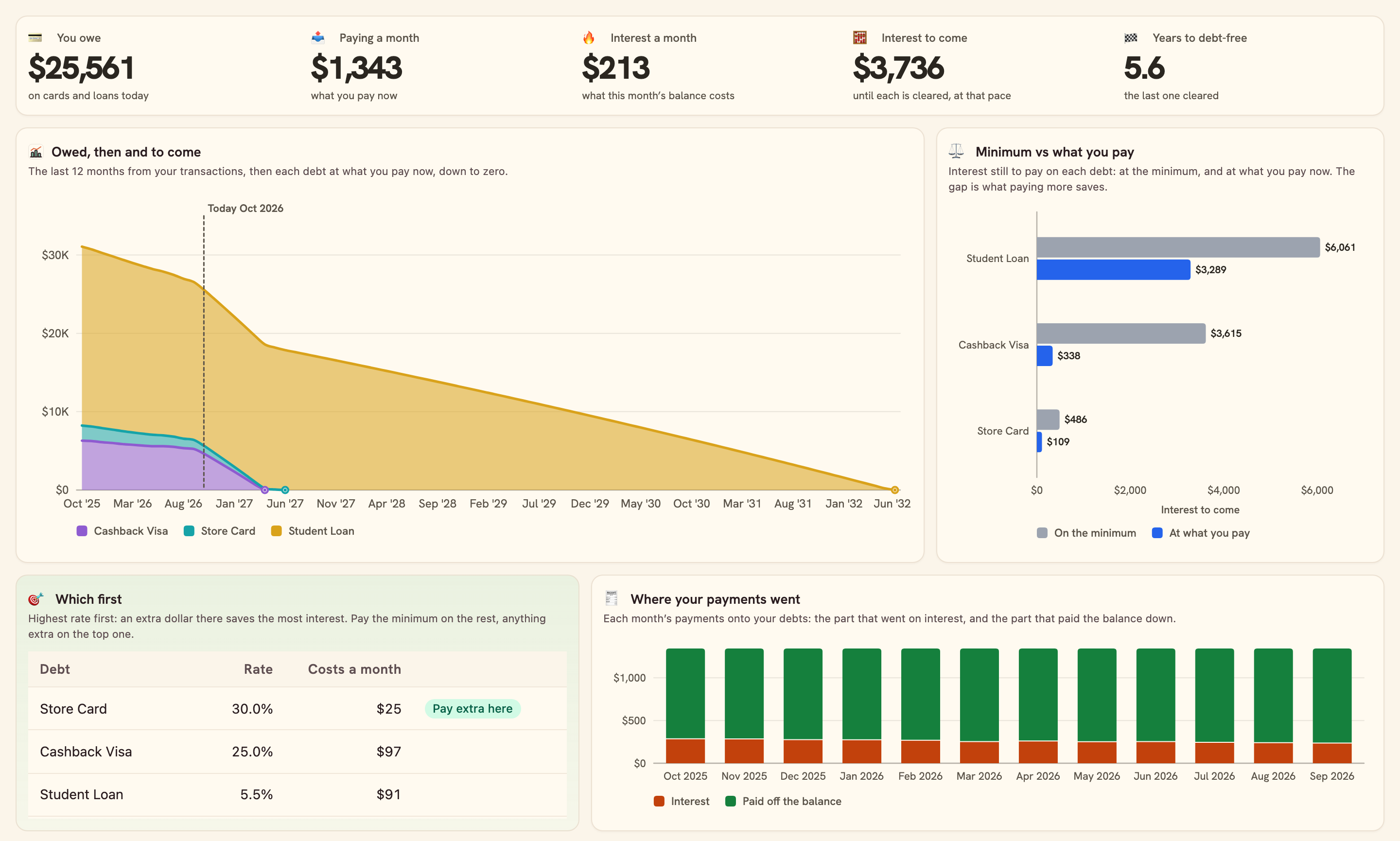
What you owe, the road to zero, and which debt to pay off first.
Overview
Debt Payoff turns what your bank already knows about your cards and loans — balance, rate, minimum, last payment — into a plan: when each is clear, what the interest is costing, and where an extra dollar goes furthest.
What you see
- Your debts: what you owe, what you pay a month, what the interest costs a month and in all, and years to debt-free.
- Owed, then and to come: the last year from your transactions, then each debt down to zero.
- Which first: highest rate first, with what each costs a month.
- Every debt: rate, owed, payment, minimum and when it is clear, flagged when a payment is the minimum or does not cover the interest.
- Where your payments went: interest against what paid the balance down, month by month, and minimum vs what you pay.
Set up in two minutes
- Pick the bank your cards or loans are with. You can connect one right there in the install.
- Install. BankSync sets up a Debts table your bank keeps current (balance, rate, minimum, last payment), an Accounts table with every balance, your Transactions, a sync each morning and the dashboard.
- Want to see what paying more does? Set a Planned payment on a debt in the Debts table: the dates and interest move with it.
- Switch on the monthly note if you would like what you owe on the 1st.
Good to know
- Only debts your bank reports as cards or loans with their rate are planned. A card, loan or line of credit it reports only a balance for (an auto loan or HELOC often) is counted in what you owe and drawn, but not planned: it says “No rate from your bank”. A mortgage is listed under Every debt but left out of the plan and its totals: Net Worth tracks your home.
- The plan assumes the same payment and rate every month; a card’s minimum often falls as the balance does, so “at the minimum” is at today’s minimum.
- History is rebuilt from the debt accounts’ transactions: it reaches as far back as your bank sends them, and a month nothing moved on a debt keeps its balance (a debt with no transactions synced is drawn level).
- A payment that does not cover the month’s interest never clears the debt, and the dashboard says so.
- Totals and the balances chart add the currency most of what you owe is in; a debt in another currency is listed in its own, not added.
- The monthly note arrives on the 1st at 08:00 your time, and only after you switch it on.
- Planning
- Monthly
- Trend
- Consumer
What you get
- DashboardA dashboard laid out and wired to your data.
- AutomationAn automation. Off until an owner or admin approves it.
- Bank feedA bank feed that keeps the data flowing in on its own.
- TableA table with the columns already set up.
- EnrichmentAn enrichment that tidies and categorises as data arrives.
Works with BankSync Tables.
More from BankSync
View profile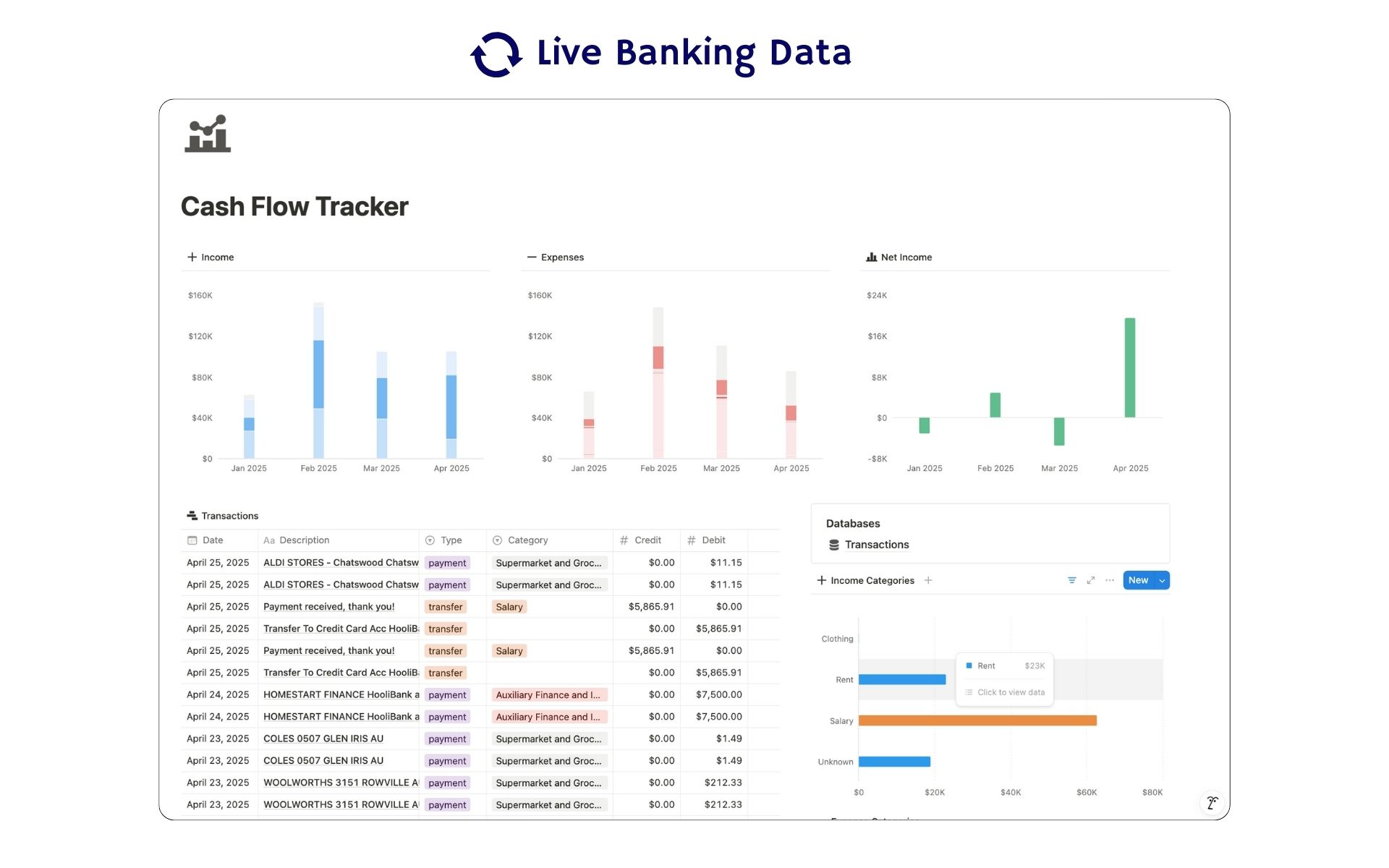 Featured
Cash Flow Tracker
Cash flow in Notion: your transactions imported for you, with monthly statements.
ByBankSyncVerified by BankSync- External template
Free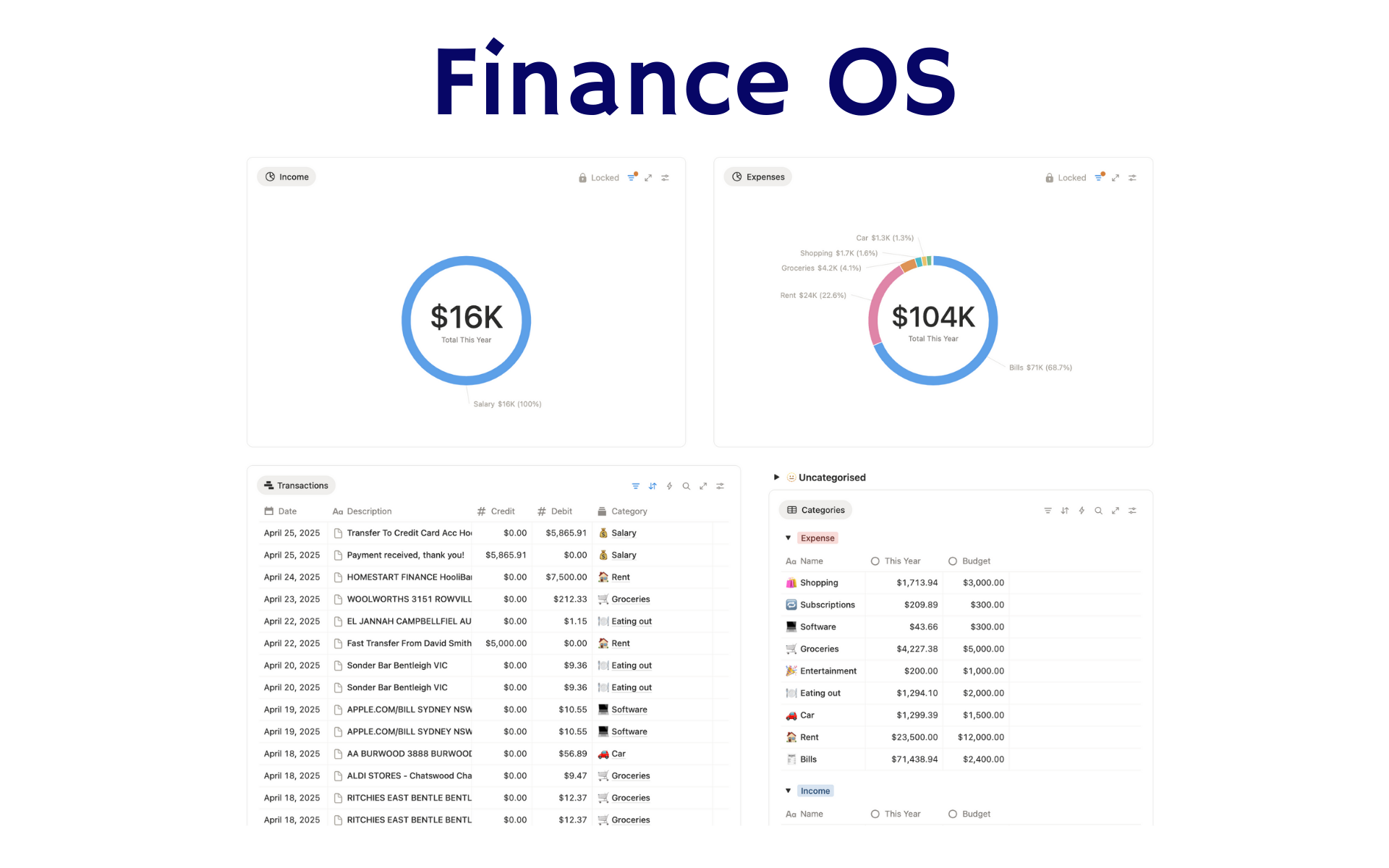 Featured
Finance OS
Your whole financial life in one Notion workspace: goals, investments, net worth and debt.
ByBankSyncVerified by BankSync- External template
Pro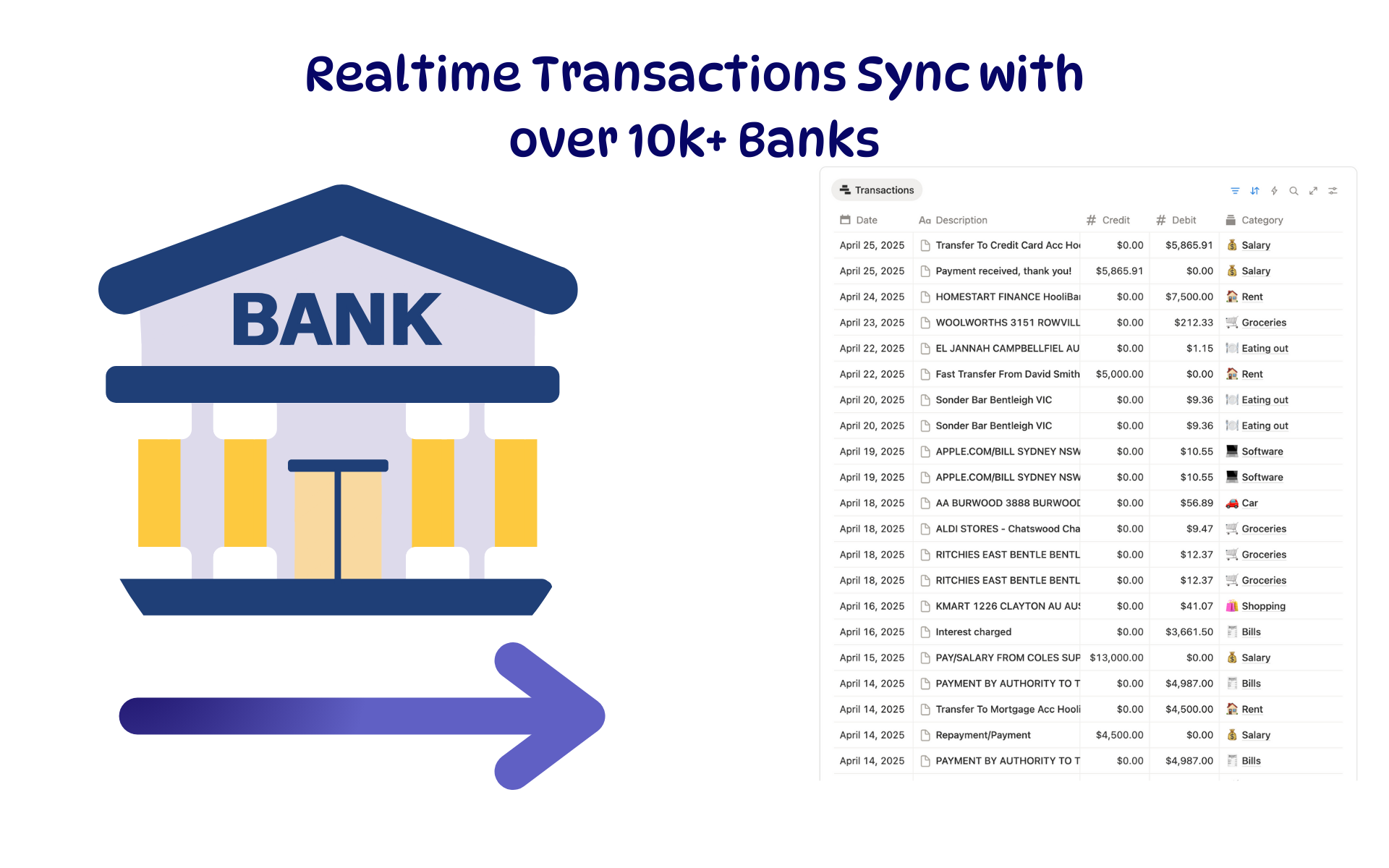 Featured
Budget Tracker
A Notion budget kept current by bank sync: spending against budget, month by month.
ByBankSyncVerified by BankSync- External template
Free